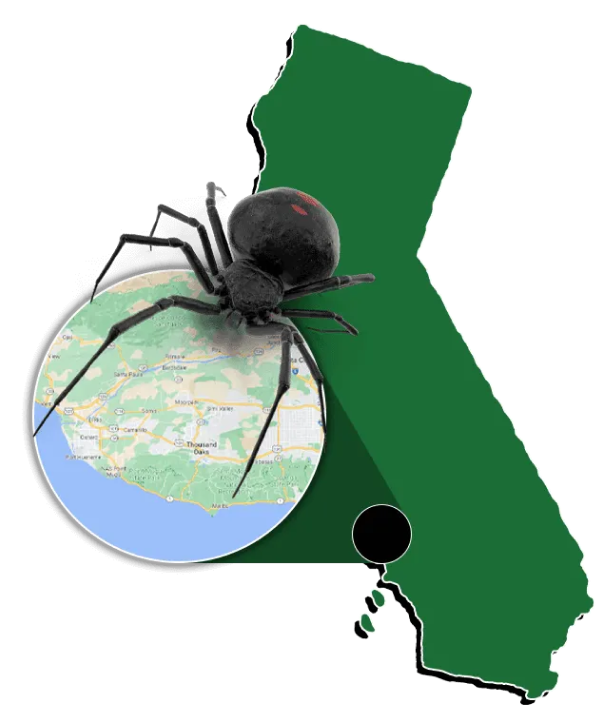


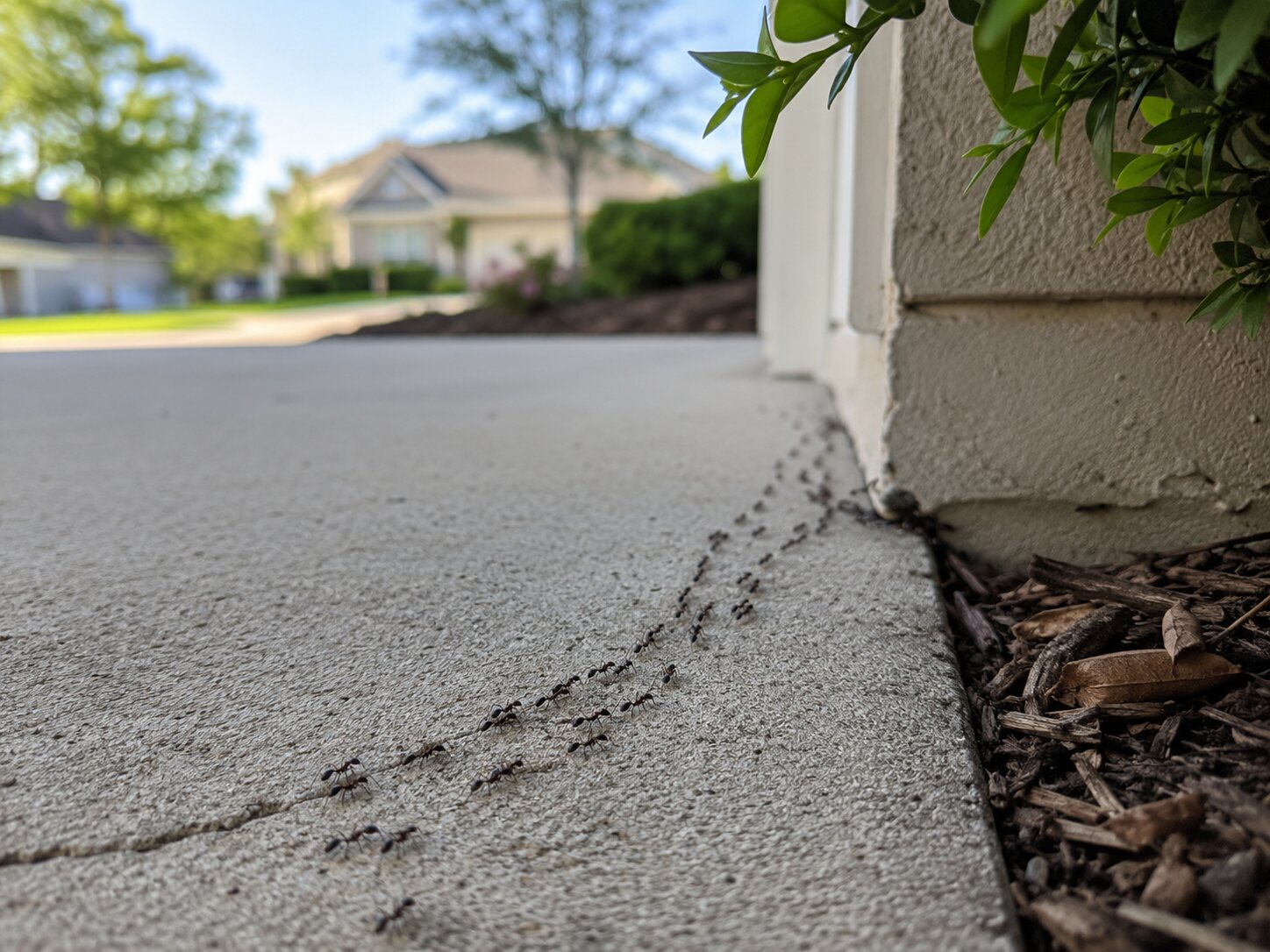

Ants have a way of showing up quietly at first. Maybe you notice a thin line of tiny workers moving along the patio edge. A few days later, they’re near the sliding glass door. Then, almost overnight, they’ve found the kitchen, bathroom, garage, or pet food bowl. For homeowners in Ventura County, especially in areas like Newbury Park, Thousand Oaks, Camarillo, Simi Valley, Moorpark, and Oxnard, pavement ants and Argentine ants are two of the most common ant problems around homes.
Insight Pest Management helps Southern California homeowners stop ant activity before a small trail turns into a larger infestation. Led by Associate Certified Entomologist Israel Alvarez, Insight Pest Management uses science-based inspections, targeted treatments, and prevention-focused strategies to help protect homes from persistent ant colonies.
Ant trails are not random. They’re communication highways. When ants find food, water, or shelter, they leave behind pheromone trails that guide more ants to the same location. That’s why a few ants on the counter can quickly become hundreds. The faster you act, the easier it is to interrupt that trail and keep ants from settling in.
Why Are Pavement Ants and Argentine Ants So Common in Ventura County?
Southern California’s climate creates ideal conditions for ants. Mild winters, warm summers, irrigated landscaping, drought stress, and suburban development all contribute to steady ant activity around homes. Even when the weather feels dry, ants can survive by nesting near sprinkler lines, patios, mulch beds, foundations, and shaded soil.
Pavement ants often build nests near sidewalks, driveways, patios, foundation cracks, and other hardscaped areas. They get their name because they frequently nest under pavement or along the edges of concrete. Homeowners may notice small piles of displaced soil near cracks in driveways or walkways.
Argentine ants are especially frustrating because they form massive interconnected colonies. Instead of one small nest, they may operate as part of a much larger network. This makes them difficult to control with basic sprays or store-bought bait products. If one part of the colony is disturbed, ants may simply relocate or split into new nesting areas.
Ventura County homes often have the exact conditions these ants need:
- Irrigated lawns and garden beds
- Fruit trees, flowering plants, and aphid activity
- Cracks around patios, doors, and foundations
- Outdoor trash cans and recycling bins
- Pet food bowls inside or outside
- Kitchens with crumbs, spills, or open pantry items
- Moisture near bathrooms, laundry rooms, and plumbing lines
When these conditions line up, ants don’t just visit. They start treating your home as part of their foraging route.
What Do Ant Trails Mean?
An ant trail is a sign that scouts have found something worth sharing with the colony. Ants communicate through chemical signals called pheromones. When a scout ant finds a food or water source, it lays a scent trail back to the nest. Other ants follow that trail and strengthen it as they move back and forth.
That’s why wiping away the ants you see may only provide temporary relief. If the pheromone trail remains, more ants may return. If the colony remains active outside, new scouts can find another entry point.
Ant trails are often seen:
- Along baseboards
- Around windowsills
- Near sliding glass doors
- Across countertops
- Along plumbing lines
- Near electrical outlets
- Around trash cans
- Outside along driveways, patios, and foundation edges
In Ventura County homes, ants often move indoors when outdoor conditions change. During dry weather, they may come inside looking for moisture. After rain or heavy irrigation, they may move to higher or drier areas. During heat waves, indoor kitchens and bathrooms can become attractive because they offer both water and food.
No one wants to wake up and find ants circling the coffee maker or crawling near the sink. But when ants appear inside, it usually means there’s a larger issue nearby that needs to be addressed.
Are Pavement Ants Dangerous?
Pavement ants are not usually considered dangerous in the same way as stinging insects or rodents, but they can still create problems. They can contaminate food surfaces, invade pantry items, and make outdoor living areas uncomfortable. Their nests can also appear along concrete edges, pavers, and cracks, making the property look messy.
The biggest issue is persistence. Pavement ants may keep returning if the nest is not identified and treated properly. Surface sprays may kill the visible ants, but they often do little to address the colony. In some cases, sprays can scatter ant activity and make the problem harder to track.
Pavement ants are often attracted to:
- Sugary spills
- Grease and proteins
- Pet food
- Crumbs under appliances
- Outdoor dining areas
- Trash and compost bins
- Moisture near foundations
If you’ve cleaned the kitchen repeatedly but ants keep coming back, the problem probably isn’t your housekeeping. It’s likely that the colony has a reliable entry point and a well-established trail.
Why Are Argentine Ants So Hard to Control?
Argentine ants are one of the most challenging ant species for homeowners in Southern California. They are small, fast-moving, and highly organized. Unlike some ant species that live in separate colonies and compete with one another, Argentine ants often cooperate across large colony networks.
This means a single property may be affected by ants nesting in multiple nearby areas, including neighboring yards, retaining walls, irrigation zones, and landscaping beds. That’s one reason DIY treatments often fail. You may kill the ants you see today, but another group may appear tomorrow from a connected nesting site.
Argentine ants are also highly sensitive to environmental changes. When outdoor food and water sources dry up, they may move indoors. When over-the-counter sprays disrupt their trails, they may shift routes instead of disappearing. When baits are placed incorrectly, they may ignore them completely.
Owner and operator Israel Alvarez brings nearly 20 years of professional pest management experience to inspections and treatments like these. That experience matters because ant control is not just about applying a product. It’s about understanding the species, locating activity patterns, choosing the right treatment strategy, and helping homeowners reduce the conditions that invite ants back.
How Can Homeowners Stop Ant Trails Quickly?
When you see ants inside, the first instinct is usually to spray them. That may feel satisfying in the moment, but it can make long-term control more difficult. Sprays may repel ants, scatter trails, or cause Argentine ants to shift their activity. A better first step is to observe, clean, and reduce access.
Here’s what homeowners can do right away:
- Wipe up visible trails with soap and water
- Store pantry foods in sealed containers
- Clean crumbs from counters, floors, and under appliances
- Rinse sticky bottles, cans, and jars before recycling
- Empty indoor trash regularly
- Move pet food bowls when pets are done eating
- Fix small leaks around sinks, toilets, and laundry areas
- Trim vegetation away from exterior walls
- Seal obvious gaps around doors and windows
Try to follow the trail before wiping it away. Look where ants are entering. Are they coming from a window frame, a baseboard gap, a patio door track, or a plumbing penetration? That information can help a professional identify the source faster.
Avoid placing random bait stations everywhere without knowing the ant species. Some ants prefer sugar-based bait, while others may respond better to protein or grease-based products. Their preferences can also change seasonally. That’s why professional identification makes a difference.
When Do You Need Professional Ant Control?
A few ants may not seem urgent, but repeated trails are a sign that the colony is active and connected to your home. Professional ant control is especially helpful when ants return after cleaning, appear in multiple rooms, or show up in large numbers.
You should schedule an inspection if:
- Ants keep coming back after DIY treatment
- Trails appear near food prep areas
- Ants are entering through multiple locations
- You see activity outdoors along patios, driveways, or foundations
- Ants are appearing in bathrooms or near moisture sources
- You’re dealing with ants at a rental, restaurant, office, or commercial space
- You’re unsure whether the ants are pavement ants, Argentine ants, or another species
Commercial properties should act quickly because ant activity can affect customer trust, employee comfort, and sanitation standards. Restaurants, office kitchens, break rooms, warehouses, and retail spaces are all vulnerable when ants find food or water.
Insight Pest Management provides residential and commercial pest control plans tailored to the property, pest species, and local conditions. The goal is not just to knock down visible ants. It’s to understand why they’re there and create a smarter plan to keep them from coming back.
What Happens During a Professional Ant Inspection?
A professional inspection starts with understanding where ants are active and what may be attracting them. The Insight team looks at both the inside and outside of the property because indoor ant trails often begin outdoors.
During an inspection, the technician may check:
- Foundation edges
- Door thresholds and window frames
- Patio and driveway cracks
- Irrigation lines and damp soil
- Mulch, planters, and landscaping beds
- Trash and recycling areas
- Kitchens, bathrooms, and laundry rooms
- Plumbing penetrations
- Garage storage areas
- Pet feeding zones
Led by Associate Certified Entomologist Israel Alvarez, Insight Pest Management provides science-based pest solutions tailored to California homes. Israel has held his Associate Certified Entomologist credential since 2013 and earned his California Pest Control Operators License in 2014. As Vice Chair of the Pest Control Operators of California–Ventura District, he helps keep the Insight team connected to safe, effective, and current pest management practices.
That expertise helps homeowners get answers, not just treatment. Many people want to know why ants chose their home, what they can do differently, and whether the issue is seasonal or ongoing. A good ant control plan should explain the “why” behind the problem.
How Does Insight Pest Management Treat Pavement and Argentine Ants?
The right ant treatment depends on the species, location, nest behavior, and severity of the infestation. Insight Pest Management may use a combination of targeted treatments, baiting strategies, exclusion recommendations, and prevention steps.
For pavement ants, treatment may focus on nesting zones near concrete, cracks, foundations, and exterior entry points. For Argentine ants, the strategy may involve identifying major trails, reducing conducive conditions, and using treatment methods that work with their feeding and colony behavior.
A professional plan may include:
- Ant species identification
- Interior and exterior inspection
- Targeted treatment around activity zones
- Strategic bait placement when appropriate
- Crack, crevice, and entry-point recommendations
- Moisture and sanitation guidance
- Follow-up recommendations for recurring pressure
- Prevention planning for high-activity seasons
Insight Pest Management takes an educational approach because homeowners play an important role in long-term prevention. Small changes, like trimming plants away from the home or correcting excess irrigation, can make treatments more effective.
How Can You Prevent Ants From Returning?
Ant prevention works best when it combines treatment with habitat reduction. Ants need food, water, and shelter. Remove those conditions, and your home becomes less attractive.
Here’s a simple prevention checklist for Ventura County homeowners:
- Keep kitchen counters clean and dry
- Store sugar, cereal, pet food, and snacks in sealed containers
- Rinse recyclables before placing them in bins
- Keep trash lids closed tightly
- Repair dripping faucets and plumbing leaks
- Avoid overwatering landscaping near the foundation
- Trim shrubs and tree branches away from the house
- Seal gaps around doors, windows, and utility lines
- Keep patio areas free of food debris
- Schedule routine pest inspections if ants return seasonally
Because Argentine ants can travel from neighboring areas, prevention is not always a one-time fix. Regular monitoring is important, especially during warm weather, drought conditions, and seasonal pest shifts.
Imagine opening your garage door on a hot afternoon and seeing ants moving along the wall toward stored pet food. Or walking into the kitchen at night and finding a trail across the sink. These problems are common, but they don’t have to become normal.
Call Insight Pest Management for Fast Ant Control in Ventura County
Pavement ants and Argentine ants can move quickly from outdoor trails to indoor problems. When ants find food, water, or shelter, they leave chemical pathways that bring more ants behind them. The sooner you address the issue, the easier it is to protect your home.
Insight Pest Management helps homeowners throughout Ventura County with science-based ant control, detailed inspections, and prevention-focused service. Founded and operated by Israel Alvarez, Insight Pest Management has become a trusted name in Southern California pest control by combining expert knowledge with friendly, customer-focused care.
Call Insight Pest Management today for expert ant control solutions in Newbury Park, Thousand Oaks, Camarillo, Simi Valley, Moorpark, Oxnard, and surrounding Ventura County communities. Schedule your inspection with certified entomologist Israel Alvarez and the Insight team, and protect your home with proven, science-backed pest control plans.