


A pest problem in a commercial kitchen can quickly become much more than a sanitation issue. One cockroach near a prep station, a mouse dropping in a storage area, or a line of ants near a beverage counter can damage customer trust, disrupt operations, and put a business’s reputation at risk.
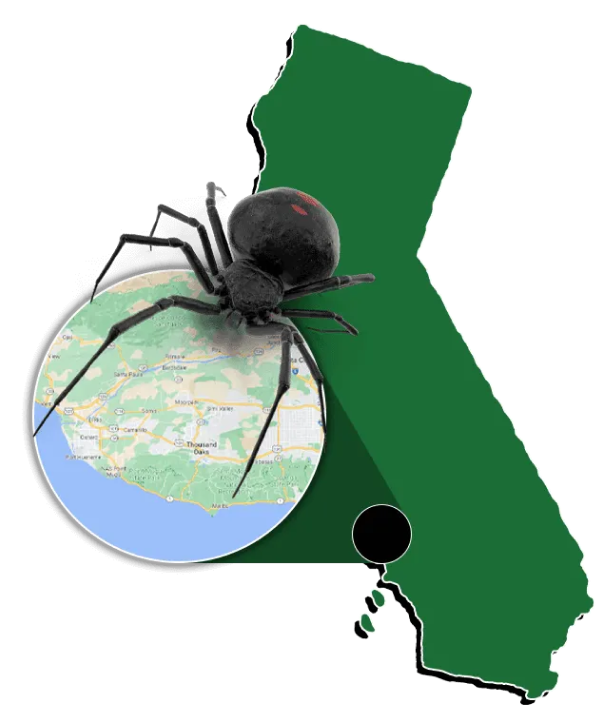
Insight Pest Management helps restaurants, cafés, bakeries, catering facilities, food-processing spaces, and other Ventura County businesses protect their kitchens with science-based commercial pest management. Led by Associate Certified Entomologist Israel Alvarez, the Insight team focuses on identifying the source of pest activity, correcting the conditions that support it, and creating prevention plans designed around the property.
For food-service businesses in Newbury Park, Thousand Oaks, Camarillo, Simi Valley, Moorpark, Oxnard, and nearby Southern California communities, proactive pest control is an important part of protecting both public health and the customer experience.
Why Are Commercial Kitchens So Attractive to Pests?
Commercial kitchens provide nearly everything pests need to survive: food, water, warmth, and shelter.
Even a well-maintained kitchen can develop pest pressure because of the amount of food being stored and prepared each day. Crumbs can fall beneath equipment. Grease can collect in floor drains and along walls. Moisture may build around sinks, dishwashing stations, refrigerators, or plumbing lines. Deliveries can also introduce insects or provide rodents with an opportunity to enter.
Common pest-attracting conditions include:
- Food debris beneath appliances
- Grease buildup near cooking equipment
- Standing water around sinks or drains
- Leaking faucets and plumbing lines
- Open trash or recycling containers
- Unsealed dry goods
- Cardboard boxes stored for long periods
- Gaps around doors, pipes, and utility lines
- Cluttered storage rooms
- Exterior dumpsters located too close to the building
- Damaged door sweeps or window screens
Southern California’s mild climate can make these issues more challenging. Many insects and rodents remain active throughout the year, and warm weather can accelerate breeding. A small problem may become a larger infestation before employees realize what is happening.
Which Pests Commonly Invade Commercial Kitchens?
Commercial kitchens can attract several types of pests, but cockroaches, rodents, flies, and ants are among the most common.
Each pest creates different risks and may require a different inspection and treatment strategy.
Cockroaches
Cockroaches are especially concerning in food-service environments because they can move through drains, trash areas, grease buildup, cardboard, and other unsanitary locations before crawling across food-preparation surfaces.
They often hide during the day in cracks, equipment motors, wall voids, cabinets, and other dark spaces. If employees begin seeing cockroaches during normal business hours, the population may be larger than it appears.
Cockroaches can also be introduced through shipments, boxes, used equipment, and shared walls.
Rodents
Mice and rats can enter buildings through surprisingly small gaps. Once inside, they may nest in storage rooms, wall voids, ceilings, utility areas, and spaces beneath equipment.
Signs of rodent activity can include:
- Droppings
- Gnawed packaging
- Grease marks along walls
- Scratching sounds
- Damaged insulation
- Shredded nesting material
- Unusual odors
- Food bags with small holes
Rodents can contaminate food and surfaces while also damaging wiring, packaging, and parts of the building.
Flies
Fruit flies, drain flies, house flies, and other flying insects are often attracted to moisture, decaying organic matter, food residue, and trash.
A few flies around a beverage station or drain may seem minor, but they can multiply quickly. The visible flies are often only part of the problem. Breeding material may be hidden inside a drain, beneath a floor mat, behind equipment, or in a trash-handling area.
Ants
Ants may enter kitchens while searching for sugar, grease, protein, or water. A few worker ants can lead employees toward a larger trail, but spraying the visible ants may not eliminate the colony.
Some ant colonies can divide or move when disturbed, which makes professional identification important. The treatment must match the species and nesting behavior.
How Can a Pest Sighting Damage Customer Trust?
Customers expect commercial kitchens to be clean, organized, and professionally managed. When they see a pest, they may immediately question the safety of the food and the condition of areas they cannot see.
That impression can be difficult to reverse.
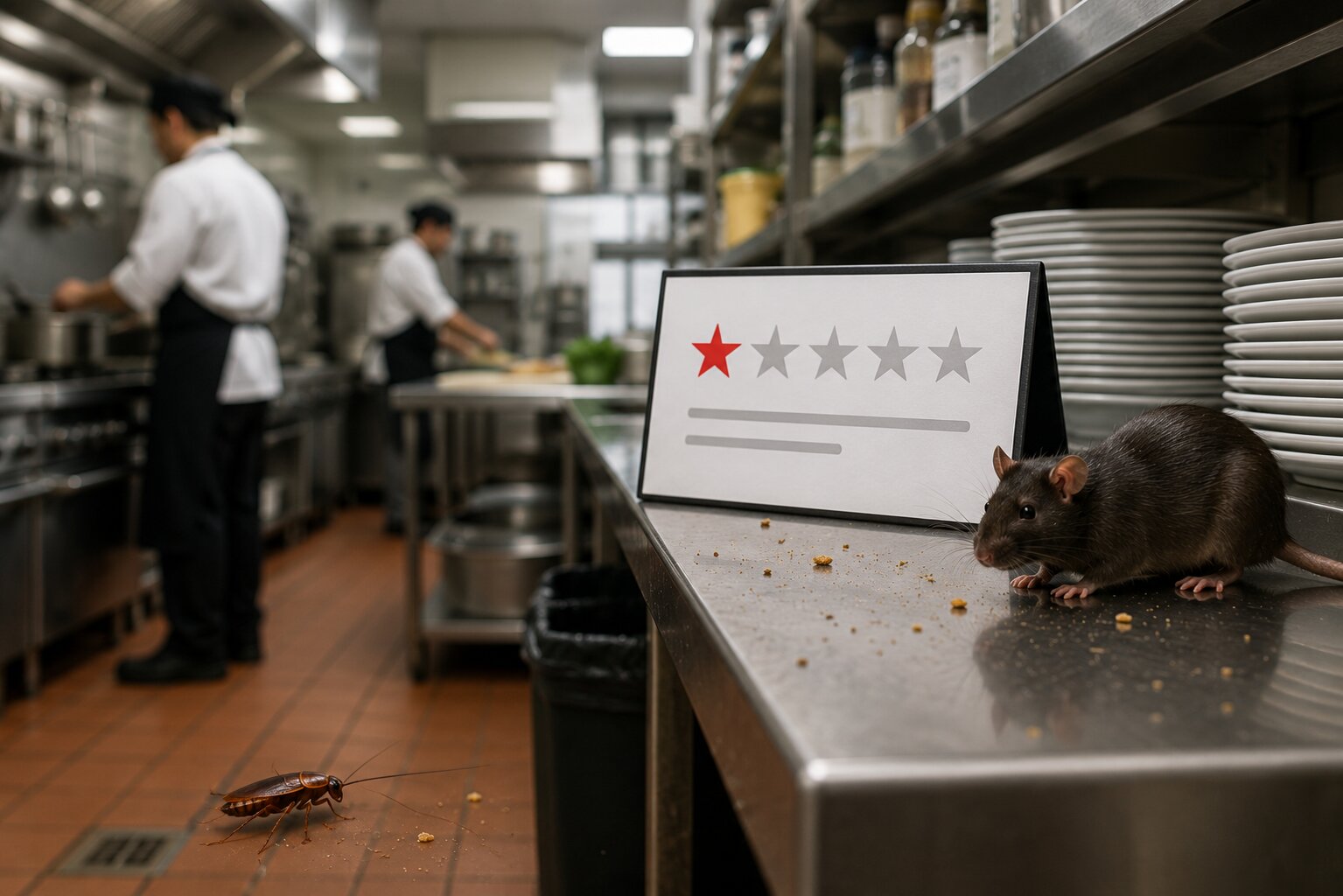
A customer may not know whether the sighting came from a delivery, an open door, or a neighboring property. They only know that they saw a pest where food was being served. Even an isolated incident can lead to complaints, refund requests, negative reviews, or social media posts.
Online reviews can spread a local incident far beyond the customers who were present. A photo or video of a cockroach, rodent, or fly activity can influence people who have never visited the business.
For a restaurant or food-service company, reputation is built over time but can be damaged within minutes.
Can Kitchen Pests Affect Health and Food Safety?
Pests can create contamination risks when they travel across dirty areas, food products, utensils, equipment, and preparation surfaces.
Cockroaches, flies, and rodents may carry bacteria or other microorganisms on their bodies. Rodent urine, droppings, and nesting material can contaminate food-storage areas. Insects can also enter open ingredients or packaged goods.
Pest activity may affect:
- Food products
- Cooking tools
- Storage containers
- Prep counters
- Shelving
- Dishwashing areas
- Ice machines
- Beverage stations
- Packaging
- Employee break areas
Commercial kitchens must respond promptly because contamination may not always be visible. An opened bag with no obvious damage could still have been exposed to pest activity.
A proactive pest management plan helps reduce these risks by identifying activity early and addressing the conditions that allow pests to remain.
Why Are DIY Pest Treatments Risky in Commercial Kitchens?
When an employee sees a pest, the first reaction may be to reach for an over-the-counter spray. That response can create additional problems.
Aerosol sprays may scatter cockroaches deeper into cracks or wall voids. Strong odors can affect the kitchen environment. Products may also be used in areas where they are not labeled or appropriate.
DIY treatments often focus only on the visible pest rather than the source of the infestation.
For example, killing a few ants does not remove the colony. Catching one mouse does not seal the opening it used to enter. Spraying a fly does not eliminate the breeding material inside a drain.
Commercial pest management should be performed carefully and strategically. The treatment must account for food-handling areas, equipment, employee safety, customer exposure, and operational schedules.
How Does a Professional Commercial Kitchen Inspection Work?
The first step in commercial kitchen pest control is a detailed inspection.
Owner and operator Israel Alvarez brings nearly 20 years of professional pest management experience to every inspection and treatment plan. His background as an Associate Certified Entomologist helps the Insight team evaluate pest biology, behavior, and environmental conditions rather than relying on a one-size-fits-all treatment.
A commercial kitchen inspection may include:
- Checking beneath cooking and refrigeration equipment
- Inspecting floor drains and plumbing areas
- Examining food and dry-goods storage
- Looking behind shelves and cabinets
- Checking door sweeps and exterior openings
- Inspecting dumpsters and waste-handling areas
- Reviewing delivery and receiving zones
- Searching for droppings, egg cases, nesting material, or trails
- Evaluating moisture and sanitation conditions
- Checking areas shared with neighboring businesses
The inspection helps determine what pest is present, where it is hiding, how it entered, and what is allowing it to survive.
What Is Integrated Pest Management for Restaurants?
Integrated Pest Management, or IPM, combines prevention, monitoring, sanitation, exclusion, and targeted treatment.
Instead of applying products everywhere, an IPM plan focuses on the exact conditions contributing to pest activity. This approach is especially valuable in commercial kitchens because it supports ongoing prevention while reducing unnecessary applications.
A restaurant IPM program may include:
- Regular inspections
- Monitoring traps
- Rodent stations
- Drain recommendations
- Exclusion repairs
- Sanitation guidance
- Targeted bait placement
- Crack-and-crevice treatments
- Pest activity logs
- Follow-up service
The plan should be updated as conditions change. Seasonal weather, nearby construction, new suppliers, staff turnover, and changes in trash handling can all influence pest pressure.
How Can Employees Help Prevent Kitchen Pests?
Employees play an important role in pest prevention because they see the kitchen every day.
Staff should know which signs to report and whom to contact when they notice activity. Quick reporting allows the pest management provider to investigate before the problem spreads.
Helpful employee practices include:
- Cleaning spills immediately
- Keeping ingredients in sealed containers
- Rotating stock
- Inspecting deliveries
- Discarding damaged packaging
- Emptying trash regularly
- Cleaning beneath movable equipment
- Keeping mop sinks and drains clean
- Reporting leaks
- Keeping exterior doors closed
- Avoiding food storage in cardboard
- Reporting droppings, gnawing, or insect sightings
Employees should not move traps, bait stations, or monitoring devices without approval. Their location may be part of the treatment plan.
Training also helps employees understand that pest sightings should never be hidden. Reporting a problem early protects the business.
Why Should Businesses Inspect Deliveries?
Deliveries are a common way pests enter commercial kitchens.
Cockroaches can hide in cardboard seams. Pantry pests may arrive inside dry goods. Rodents may be attracted to loading areas where food is briefly left outside. Used appliances and equipment may also contain hidden insects.
Employees should inspect deliveries before bringing them into storage or preparation areas.
A basic delivery inspection should include:
- Looking for torn packaging
- Checking for droppings
- Examining boxes for insect activity
- Rejecting wet or damaged products
- Removing unnecessary cardboard
- Rotating food by date
- Keeping receiving areas clean
Cardboard should be broken down and removed promptly because it can provide food and shelter for cockroaches and other pests.
How Important Are Trash and Grease Management?
Trash and grease are two of the strongest pest attractants around commercial kitchens.
Indoor trash should be removed frequently, especially at the end of each shift. Containers should have tight-fitting lids and be cleaned regularly. Residue that builds beneath liners or around the bottom of a container can support flies and cockroaches.
Exterior dumpsters should be:
- Kept closed
- Positioned away from entry doors when possible
- Cleaned around regularly
- Placed on a washable surface
- Checked for leaks
- Emptied often enough to avoid overflow
Grease traps, floor drains, mats, and areas beneath fryers should also be cleaned according to a consistent schedule. Pest management works best when sanitation and treatment support one another.
What Are the Signs of a Hidden Infestation?
Not every infestation begins with a customer seeing a pest.
Kitchen managers should watch for subtle warning signs, including:
- Small droppings in corners or cabinets
- A musty or oily odor
- Damaged food packaging
- Cockroach egg cases
- Grease marks along walls
- Small flies near drains
- Ant trails near water or food
- Scratching sounds after closing
- New holes around pipes
- Employees reporting repeated sightings
Any of these signs should be investigated quickly. Waiting until pest activity becomes obvious can make control more difficult and increase the risk of a public incident.
Why Are Regular Pest Control Visits Better Than Emergency Calls?
Emergency pest control may be necessary when activity suddenly becomes severe, but prevention is usually more effective than reacting after the infestation is established.
Regular commercial service allows the pest management provider to identify small changes before they become major problems. Monitoring devices can reveal activity even when employees do not see pests. Entry points can be addressed before rodents move inside. Sanitation issues can be corrected before they support a fly or cockroach population.
Routine service also creates documentation. A pest activity log can help managers track trends, complete corrective actions, and show that the business follows an organized prevention program.
Protect Your Kitchen and Your Reputation
Commercial kitchen pests can affect food safety, employee confidence, customer trust, and the reputation of the entire business. The best defense is a prevention-first program built around inspections, monitoring, sanitation, exclusion, and targeted treatments.
Founded and operated by Israel Alvarez, Insight Pest Management provides commercial pest management plans tailored to Ventura County businesses. Israel has been an Associate Certified Entomologist since 2013 and holds a California Pest Control Operators License. As Vice Chair of the Pest Control Operators of California–Ventura District, he helps ensure the Insight team stays informed about safe and effective pest control practices.
Don’t wait for a customer to be the first person who notices a pest. Call Insight Pest Management today to schedule a commercial kitchen inspection and create a science-backed plan that protects your property, your customers, and your reputation.