
'/%3E%3Cpath%20fill='%23b2b2b2'%20d='M241%20382q0%2016%2017%2026%2017%2011%2042%2011t42-11q16-11%2017-26V269H241'/%3E%3Cpath%20fill='%239f7e00'%20d='M241%20379q0%2014%208%2023%209%209%2021%209%2014%200%2021-9%209-9%209-23V269h-59'/%3E%3Cpath%20d='M241%20339v-70h59v110q0%2014-9%2023l-6%205v-68h-15v72q-8%200-14-4v-68zm59%2040c0%2022%2015%2032%2029%2032%2021%200%2030-18%2030-32v-40h-59'/%3E%3Cpath%20fill='%239f7e00'%20d='M266%20277v5h2v12h-3v-5h2v-5h-9v5h2v5h-4v9h3v18h-5v10h34v-10h-5v-18h3v-9h-4v-5h2v-5h-9v5h2v5h-3v-12h2v-5zm42%20101q0%2010%206%2017%206%206%2015%207%2010-1%2016-7%206-7%206-17v-29h-43'/%3E%3Ccircle%20fill='%230044ad'%20cx='329.5'%20cy='372'%20r='6'/%3E%3Cellipse%20fill='%230044ad'%20cx='300'%20cy='340'%20rx='16'%20ry='21'/%3E%3C/svg%3E)
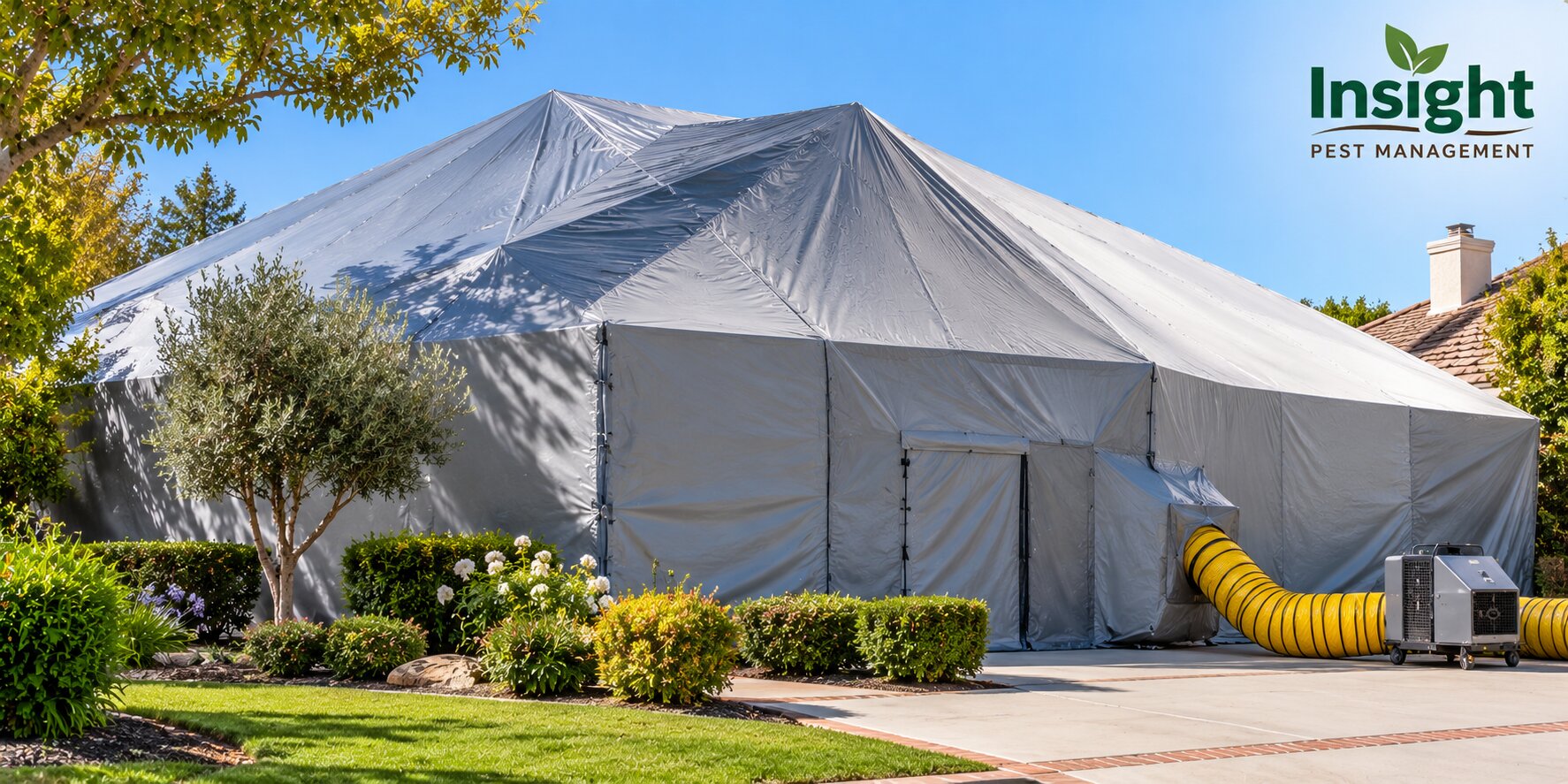

When homeowners hear the word “fumigation,” they often picture a house covered by a large tent and wonder what’s actually happening underneath it. For many Southern California homeowners, fumigation can feel intimidating simply because the process is unfamiliar.
Insight Pest Management helps homeowners throughout Ventura County understand what to expect before, during, and after termite treatment. Led by Associate Certified Entomologist Israel Alvarez, Insight Pest Management takes a science-based, educational approach to pest control so homeowners can make informed decisions about protecting their property.
Whole-home fumigation is generally used when pests, especially drywood termites, have spread into areas that are difficult to reach with localized treatment. The process involves carefully enclosing the structure, introducing a fumigant, allowing it to circulate, ventilating the property, and professionally clearing the home for re-entry.
Here is a step-by-step look at how home fumigation works.
Why Would a Home Need Fumigation?
Not every termite problem requires whole-structure fumigation.
Fumigation is generally considered when drywood termite activity is widespread, appears in multiple areas, or exists inside wood that cannot be reliably accessed with localized treatment.
Drywood termites are particularly challenging because they live directly inside wooden materials rather than maintaining colonies in the soil.
They may infest:
- Roof framing
- Attic beams
- Fascia boards
- Wall framing
- Door frames
- Window frames
- Decorative wood
- Structural lumber
- Wooden furniture
In some cases, a homeowner may only notice a small pile of termite pellets near a window or baseboard. That visible evidence may represent only one portion of a much larger infestation.
A professional inspection is therefore the first step in determining whether fumigation is necessary.
Step 1: A Professional Termite Inspection Is Performed
Before anyone starts preparing a home for fumigation, a pest professional should evaluate the property.
The goal is to identify the pest and determine how extensive the infestation appears to be.
During a termite inspection, professionals may examine areas such as:
- Attics
- Garages
- Eaves
- Fascia boards
- Window frames
- Door frames
- Exterior wood
- Accessible structural framing
- Crawl spaces when applicable
- Interior trim and baseboards
The inspector may look for termite frass, damaged wood, discarded wings, swarmers, galleries, or other evidence of activity.
This inspection helps determine whether a localized treatment may be appropriate or whether the infestation is extensive enough that fumigation should be considered.
Owner and operator Israel Alvarez brings nearly 20 years of professional pest management experience to Insight Pest Management. As an Associate Certified Entomologist, Israel approaches infestations by considering pest biology, behavior, and the specific conditions around each property.
Step 2: The Homeowner Receives Preparation Instructions
If fumigation is recommended, homeowners receive detailed preparation instructions before the scheduled treatment.
Following those instructions carefully is an important part of the fumigation process.
Requirements can vary depending on the treatment and property, so homeowners should always follow the specific instructions provided by the licensed fumigation professionals handling their home.
Preparation may include addressing:
- Food
- Medications
- Plants
- Pets
- Vehicles
- Personal belongings
- Outdoor landscaping
- Locked areas of the home
- Access points around the structure
Some food and consumable products may need to be removed or secured according to professional instructions.
Pets and people must leave the structure before treatment begins.
Homeowners may also need to make arrangements for temporary accommodations because the property cannot be occupied during fumigation.
Step 3: The Property Is Prepared for Tenting
Before the fumigation tent is installed, professionals prepare the exterior of the property.
This may require creating adequate access around the building so tarps can be positioned properly.
Homeowners may be instructed to trim or move certain landscaping away from the structure.
The goal is to create a secure enclosure around the home.
Specialized tarps are then placed over the building and sealed.
This creates a controlled environment that allows the fumigant to remain within the structure during treatment.
The tent is one of the most recognizable parts of the process, but it is only one component of a carefully controlled professional treatment.
Step 4: The Home Is Secured
Once the structure is enclosed, additional safety procedures are followed to ensure the property remains secured during fumigation.
Nobody can remain inside the home during the treatment period.
Homeowners, children, visitors, and pets must stay away until the structure has gone through the required aeration process and has been professionally cleared for re-entry.
Professional fumigation involves regulated procedures designed to protect both occupants and workers.
That is why fumigation should always be performed by appropriately licensed professionals rather than attempted as a DIY project.
Step 5: The Fumigant Is Introduced
After the structure has been properly enclosed and prepared, the fumigant is introduced.
The fumigant is a gas rather than a surface spray.
This distinction is important because gas can move through enclosed spaces and reach areas that may be inaccessible to traditional pest control applications.
For drywood termites, this can include the interior of:
- Wall framing
- Roof supports
- Ceiling joists
- Wooden beams
- Door frames
- Window frames
- Other structural wood
This ability to move throughout the structure is one reason fumigation can be effective when termite activity is widespread.
Step 6: The Fumigant Circulates Through the Structure
Once introduced, the fumigant is allowed to circulate throughout the enclosed home for a prescribed period.
Exact treatment time depends on the fumigation plan and specific conditions.
During this stage, the fumigant reaches termites inside wood and other concealed areas.
This is one of the primary differences between fumigation and spot treatment.
Spot treatment focuses on known areas of termite activity. Whole-structure fumigation is designed to address termites throughout the enclosed building.
For homeowners with activity in multiple inaccessible areas, this broader reach can be an important advantage.
Step 7: The Fumigant Is Removed and Aeration Begins
After the required treatment period, the structure begins the aeration process.
The home is ventilated so the fumigant can dissipate.
This step is carefully controlled.
Homeowners cannot simply remove the tent and immediately return inside. The structure must be adequately ventilated and tested before occupancy is allowed.
Professional equipment and procedures are used to confirm when the home meets the requirements for re-entry.
Step 8: The Home Is Professionally Tested
Before anyone returns to the house, professionals must determine that the property is ready for re-entry.
Testing is a critical part of the process.
Homeowners should never attempt to enter a property before receiving clearance from the professionals responsible for the fumigation.
Once the necessary testing has been completed and the structure has been officially cleared, residents can return.
Step 9: Homeowners Can Return to the Property
After receiving professional clearance, homeowners and pets may re-enter the structure.
Many homeowners wonder whether they will need to scrub every surface or perform extensive cleaning before returning.
Specific post-fumigation instructions depend on the treatment used, so homeowners should follow the guidance provided by their fumigation professional.
If you are unsure whether an item needs to be cleaned, washed, discarded, or handled in a particular way, ask before making assumptions.
Clear instructions are one reason working with knowledgeable pest professionals matters.
How Long Does Home Fumigation Take?
There is no single timeline that applies to every property.
The total length of the process can depend on factors such as:
- Size of the home
- Structure design
- Pest being treated
- Treatment requirements
- Environmental conditions
- Aeration requirements
- Preparation needs
Homeowners should plan to be away from the property throughout the treatment and clearance process.
The professional handling the fumigation should provide specific scheduling information before treatment begins.
What Happens to Termites During Fumigation?
During fumigation, the gas moves through spaces throughout the home, including wood where drywood termites may be living.
Unlike a localized treatment, the fumigant does not depend on finding every individual termite gallery from the outside.
This makes fumigation particularly useful when infestations exist inside inaccessible wood.
However, fumigation addresses the termites present during treatment. It does not permanently prevent termites from ever entering the home again.
That means prevention and future inspections remain important.
Does Fumigation Damage Your Home or Belongings?
One of the most common homeowner concerns is whether the fumigation process itself will damage furniture, electronics, flooring, or other belongings.
Properly performed structural fumigation is designed to treat pests throughout the home without requiring most household belongings to be removed.
Certain items, especially food, medicine, plants, and living things, may require special preparation or removal.
That is why homeowners receive detailed preparation instructions before treatment.
Following those instructions helps ensure the process goes as smoothly as possible.
Do You Have to Remove Everything From Your Home?
Usually, homeowners do not have to empty the entire house.
Furniture, clothing, electronics, and many personal belongings may remain inside, depending on the instructions provided for the specific fumigation.
Certain consumable or sensitive items may need special preparation.
Rather than guessing, homeowners should work through the fumigation preparation checklist carefully.
A good pest management provider should help homeowners understand exactly what must be done before treatment day.
What Should You Do Before Leaving the House?
Before leaving for fumigation, homeowners should double-check the preparation instructions.
A typical checklist may involve making sure:
- Everyone has left the home
- Pets have been removed
- Plants have been relocated when required
- Food and medications have been handled correctly
- Locked rooms or compartments are accessible
- Exterior areas are prepared
- Vehicles are moved if necessary
- Important daily items have been taken with you
Planning ahead can reduce stress on treatment day.
If you’re unsure about any preparation requirement, ask your pest professional before the fumigation begins.
Can Termites Come Back After Fumigation?
Yes, future termite activity is possible.
Fumigation is designed to address an existing infestation within the treated structure. It does not create permanent protection against every future drywood termite colony.
New termite swarmers may eventually reach the property again.
That is why ongoing prevention is important.
Homeowners can help protect their properties by:
- Scheduling regular termite inspections
- Watching for termite swarmers
- Checking for frass
- Maintaining exterior wood
- Addressing damaged materials
- Monitoring attics and eaves
- Keeping up with property maintenance
- Scheduling inspections when suspicious signs appear
Finding a new infestation early may provide more treatment options.
Why Are Termite Inspections Important in Ventura County?
Southern California homes can experience pest activity throughout much of the year.
Ventura County communities such as Newbury Park, Thousand Oaks, Camarillo, Simi Valley, Moorpark, and Oxnard contain many homes with wood framing, decorative wood features, eaves, and other areas that may become vulnerable to termite activity.
Because drywood termites spend most of their lives hidden inside wood, infestations aren’t always obvious.
A homeowner may notice something as small as a few termite pellets near a windowsill.
That small clue deserves attention.
Professional inspections can help determine whether activity is confined to one location or appears in multiple parts of the structure.
Why Work With a Certified Pest Professional?
Fumigation should never begin with a guess.
A thorough inspection and accurate identification should come first.
Insight Pest Management is led by Israel Alvarez, an Associate Certified Entomologist since 2013 who also holds a California Pest Control Operators License. With nearly two decades of professional pest management experience, Israel brings both practical field knowledge and an understanding of pest biology to the inspection process.
His involvement with the Pest Control Operators of California–Ventura District also helps keep the Insight team connected with professional pest management practices in the region.
This expertise matters because the goal isn’t simply to eliminate visible pests. It’s to understand how they are living in the structure and determine the treatment strategy that makes sense for the specific infestation.
Is Fumigation the Right Choice for Your Home?
That depends on what an inspection finds.
Fumigation may be appropriate when drywood termites are widespread or located in inaccessible areas throughout a structure.
Localized treatment may make more sense when activity is confined to a limited, identifiable location.
Homeowners shouldn’t have to make this decision alone.
A professional inspection can help answer important questions:
- What pest is present?
- Where is the infestation located?
- How extensive is the activity?
- Can all affected areas be accessed?
- Would spot treatment be sufficient?
- Is whole-structure fumigation appropriate?
- What can be done to reduce future pest activity?
Understanding those answers makes it much easier to choose a treatment confidently.
Schedule a Termite Inspection With Insight Pest Management
Whole-home fumigation is a detailed process designed to reach pests hiding in areas that conventional localized treatments may not reach. From the initial inspection and preparation process to tenting, treatment, aeration, and clearance, every stage should be performed carefully and professionally.
If you’ve discovered termite frass, swarmers, wood damage, or other signs of termite activity, start with an inspection.
Insight Pest Management provides science-based termite inspections and pest control solutions throughout Ventura County and surrounding Southern California communities.
Schedule your inspection with Insight Pest Management today to learn what’s happening in your home, whether fumigation may be necessary, and what treatment options are available for protecting your property.