


Hearing scratching in the attic, finding droppings in the garage, or noticing gnaw marks around stored food can be unsettling. But removing the rats you see is only part of solving the problem. If the opening that allowed them inside remains accessible, new rodents can continue entering the home.
That is why professional rat control often begins with a detailed search for entry points.
Insight Pest Management helps homeowners throughout Ventura County identify how rats are accessing homes and develops science-based strategies for removal and exclusion. Led by Associate Certified Entomologist Israel Alvarez, Insight Pest Management combines pest biology, property inspection, and nearly two decades of professional experience to address both the rodents inside a structure and the conditions that allowed them to enter.
Professional exterminators look for more than obvious holes. They examine roofs, vents, utility lines, foundations, garages, landscaping, and other areas where rats may be able to squeeze into a building.
Here is how that inspection process works.
Why Is Finding Rat Entry Points So Important?
Removing rats without addressing their entry points can leave a home vulnerable to another infestation.
Rats are constantly searching for three basic resources:
- Food
- Water
- Shelter
A home can provide all three.
Once rats discover a reliable way inside, they may continue using the same route. Other rodents may also follow scent trails or take advantage of the same structural opening later.
Professional rodent control therefore focuses on two separate questions:
- Where are the rats currently living?
- How are they getting into the structure?
Both questions need answers for long-term control.
How Small of an Opening Can a Rat Use?
Rats can take advantage of surprisingly small gaps.
They are skilled climbers, gnawers, and problem-solvers. Openings around rooflines, vents, pipes, garage doors, or damaged building materials may provide enough space for a rat to enter.
Professionals do not only look for large holes.
They also search for:
- Loose vent screens
- Gaps around pipes
- Openings beneath roof tiles
- Damaged fascia
- Broken screens
- Garage door gaps
- Openings where utilities enter
- Damaged siding
- Construction gaps
A small structural weakness can become a regular rodent entrance.
Where Does a Professional Rat Inspection Begin?
The inspection generally begins by gathering information from the homeowner.
A technician may ask questions such as:
- Where have you heard scratching?
- When do you usually hear the activity?
- Where have you found droppings?
- Have you seen a live rat?
- Have you noticed damaged food packaging?
- Is the activity mainly in the attic, garage, kitchen, or another area?
- Have you had previous rodent problems?
These observations help narrow the search.
For example, repeated scratching above a bedroom ceiling may suggest attic activity, while droppings near a garage wall may point toward an entry route closer to ground level.
The technician can then inspect those areas more closely.
How Do Exterminators Inspect the Exterior of a Home?
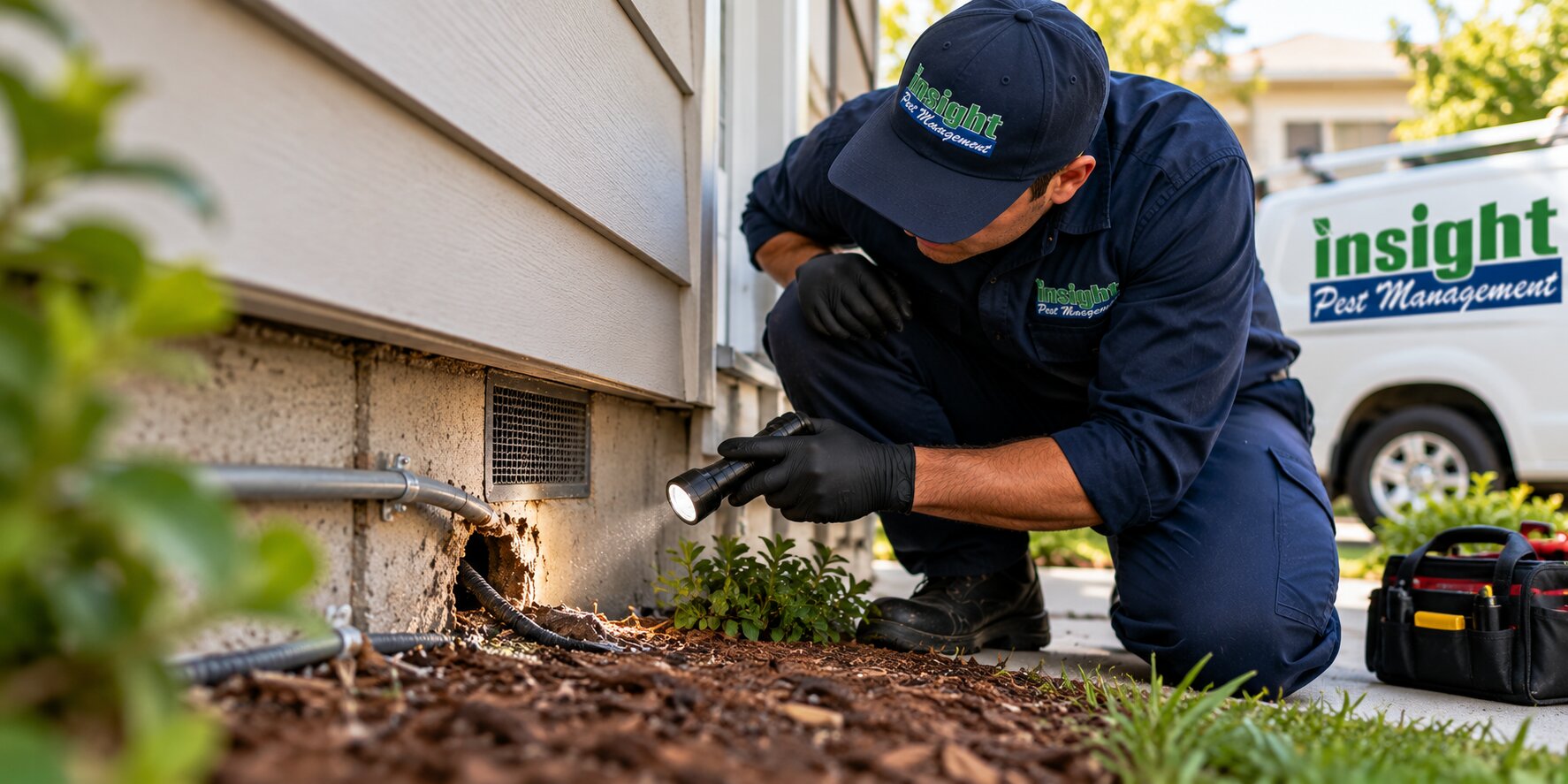
A professional rodent inspection usually includes a careful examination of the home’s exterior.
The technician may walk the perimeter and look from the foundation upward.
Areas of interest often include:
- Rooflines
- Eaves
- Fascia boards
- Vents
- Doors
- Garage doors
- Utility penetrations
- Pipes
- Siding
- Foundation areas
- Crawl space openings
The goal is to identify gaps, damage, or construction features that rats could use to enter.
A professional may also look for physical evidence that suggests rodents are actively using an opening.
What Signs Reveal an Active Rat Entry Point?
An opening alone does not always mean rats are currently using it.
Professionals look for additional evidence.
Possible signs include:
- Grease or rub marks
- Droppings
- Gnawing
- Tracks
- Hair
- Disturbed insulation
- Nesting material
- Damage around an opening
- Repeated pathways
Rats often use the same routes repeatedly.
As their bodies pass through an opening, oils and dirt from their fur can sometimes leave dark marks around the area.
Gnaw marks can also indicate that rodents enlarged an opening to make it easier to pass through.
Why Do Exterminators Inspect the Roof?
Many homeowners think rodents must enter near the ground.
That is not always the case.
Some rats are excellent climbers and may gain access to roofs through:
- Trees
- Vines
- Fences
- Utility lines
- Adjacent structures
- Exterior architectural features
Once they reach the roof, they may look for openings around:
- Roof vents
- Eaves
- Fascia
- Roof intersections
- Gaps beneath roofing materials
- Attic ventilation points
This is one reason a complete rat inspection should include the upper portions of the structure whenever safely accessible.
A small roofline opening can provide direct access to an attic.
Can Tree Branches Help Rats Get Into the Attic?
Yes.
Tree branches and dense vegetation can sometimes give rodents easier access to a roof.
A branch that reaches toward the structure may function like a bridge.
Once on the roof, rats can search for vulnerable areas around vents, eaves, or damaged materials.
During an inspection, a pest professional may recommend trimming vegetation when it creates an obvious rodent pathway.
Other possible access routes include:
- Vines on exterior walls
- Trellises
- Fences touching the house
- Stacked materials
- Nearby sheds
- Utility lines
Exclusion is not only about sealing holes. It can also involve reducing the routes rodents use to reach those holes.
How Are Attics Inspected for Rat Activity?
If homeowners hear nighttime scratching or movement above the ceiling, an attic inspection can provide valuable clues.
Professionals may look for:
- Droppings
- Urine staining
- Nesting material
- Chewed insulation
- Gnawed wires
- Runways
- Tracks
- Food debris
- Disturbed insulation
- Entry points near eaves or vents
Rat activity often creates patterns.
Repeated travel through insulation may produce visible pathways. Droppings may be concentrated near nesting areas or travel routes.
The technician can compare interior evidence with exterior structural conditions to identify likely entry points.
Why Do Rats Enter Through Garages?
Garages can provide relatively easy access compared with other areas of a house.
Possible entry locations include:
- Gaps beneath garage doors
- Damaged weather stripping
- Open side doors
- Utility penetrations
- Wall gaps
- Roofline openings
Garages also frequently contain attractive resources.
These may include:
- Pet food
- Bird seed
- Stored snacks
- Garbage
- Cardboard
- Clutter
- Water sources
A rat that enters a garage may eventually find a route into wall voids, ceilings, or living areas.
A professional inspection therefore considers both the garage’s exterior access and its connection to the rest of the structure.
How Do Utility Lines Create Entry Points?
Homes have numerous places where pipes, cables, vents, and other utilities pass through walls.
If those penetrations are not properly sealed, rodents may take advantage of the gaps.
Common locations include:
- Plumbing lines
- Electrical conduits
- Air conditioning lines
- Cable penetrations
- Gas lines
- Drain lines
An opening may look insignificant to a homeowner but still be worth inspecting.
Professionals evaluate whether a gap is large enough to allow rodent access and whether there is evidence of use.
Can Rats Get In Through Vents?
Yes.
Damaged or improperly protected vents can become rodent entry points.
Potential areas include:
- Attic vents
- Crawl space vents
- Roof vents
- Dryer or exhaust openings
Professionals may inspect screens and covers for damage.
A loose, broken, or missing barrier can create an opportunity for rodents to enter.
Any corrective work should maintain the intended function and airflow of the vent while preventing pest access.
Why Do Exterminators Look for Gnaw Marks?
Rats’ teeth continually grow, so gnawing is a normal part of their behavior.
That ability also allows them to enlarge weak openings.
A small construction gap may become a usable entrance after repeated gnawing.
Professionals may find chew damage around:
- Wood
- Plastic
- Weather stripping
- Door edges
- Vent materials
- Containers
- Utility openings
Fresh-looking gnaw marks may help identify an active area.
They can also show where repairs or exclusion materials are needed.
How Can Droppings Help Identify Rat Travel Routes?
Droppings provide important clues about where rodents spend time.
A few droppings in one location may suggest occasional travel, while a larger concentration can indicate an area used frequently.
Professionals may compare droppings found in:
- Attics
- Garages
- Storage rooms
- Kitchens
- Crawl spaces
- Wall-adjacent areas
Their location can help establish a likely route between nesting areas, entry points, and food sources.
The inspection considers the whole pattern rather than relying on a single piece of evidence.
What Are Rat Rub Marks?
Rats often follow consistent travel routes along walls or structural edges.
As they repeatedly pass through tight areas, oils and dirt from their fur may transfer to nearby surfaces.
These darkened areas are sometimes called rub or grease marks.
They may appear near:
- Holes
- Beams
- Pipes
- Wall edges
- Openings
- Regular travel paths
Rub marks can help an experienced technician recognize an established route.
Combined with droppings, gnawing, and other signs, they can help identify where exclusion work should focus.
Do Professionals Use Traps to Find Entry Points?
Traps are primarily a control tool, but trap activity can also provide useful information.
Where rodents are captured can help professionals understand where rats are traveling.
For example, repeated activity near one attic wall may support other evidence pointing toward a nearby roofline entry.
Monitoring devices can also help professionals determine whether rodent activity continues after exclusion work.
Rat control is often most effective when trapping, monitoring, and structural inspection work together.
What Is Rodent Exclusion?
Rodent exclusion is the process of correcting openings that allow rats or mice into a structure.
Depending on the property, exclusion recommendations may involve addressing:
- Roofline gaps
- Damaged vents
- Utility penetrations
- Garage door gaps
- Openings around pipes
- Damaged exterior materials
- Crawl space access points
The goal is to make it harder for rodents to regain access after the existing infestation has been addressed.
Exclusion is an important distinction between simply catching rats and solving the entry problem.
Should Entry Points Be Sealed Immediately?
Timing matters.
Homeowners should be careful about sealing suspected openings without first understanding whether rodents remain inside.
Closing every opening while rats are still occupying the structure can potentially trap animals indoors.
A professional treatment plan should coordinate removal and exclusion so the rodent population is handled appropriately.
This is another reason DIY sealing can sometimes create new problems.
The correct sequence depends on the layout of the home and the nature of the infestation.
Why Doesn’t Poison Alone Solve Rat Entry Problems?
A product that removes individual rats does not repair a hole in the building.
If the entry point remains accessible, other rats may enter later.
Long-term rodent management therefore requires more than population reduction.
An effective strategy generally considers:
- Current rodent activity
- Entry points
- Food availability
- Water
- Shelter
- Exterior conditions
- Structural repairs
- Follow-up monitoring
The goal is to make the property less accessible and less attractive to rodents over time.
What Attracts Rats to a Property in the First Place?
Entry points explain how rats get inside, but environmental conditions can explain why they remain around the property.
Common attractants may include:
- Unsecured garbage
- Fallen fruit
- Bird seed
- Pet food
- Outdoor feeding areas
- Standing water
- Dense vegetation
- Clutter
- Accessible food storage
Professionals may recommend correcting these conditions as part of a larger rodent management plan.
Even a well-sealed home benefits from reducing resources that encourage rodent activity around the property.
Why Is Rat Control Important Beyond the Noise?
Scratching sounds are annoying, but rodents can create additional concerns.
Rats may:
- Contaminate stored food
- Damage packaging
- Leave urine and droppings
- Chew building materials
- Damage insulation
- Gnaw wiring
- Create nesting areas in attics or walls
Finding the entry point helps prevent repeated access and limits the opportunity for additional property damage.
How Does Insight Pest Management Approach Rat Inspections?
Insight Pest Management takes a prevention-focused approach to rodent control.
Rather than looking only for a rat to trap, the Insight team examines how the infestation relates to the structure and surrounding property.
Owner Israel Alvarez brings nearly 20 years of professional pest management experience to that process.
Israel has held his Associate Certified Entomologist credential since 2013 and a California Pest Control Operators License since 2014. He also serves as Vice Chair of the Pest Control Operators of California–Ventura District.
His background helps the team evaluate pest behavior alongside real-world structural conditions.
For homeowners, that means the inspection is focused on both solving today’s problem and reducing the likelihood of another infestation.
What Rat Entry Points Are Common Around Ventura County Homes?
Homes throughout Newbury Park, Thousand Oaks, Camarillo, Simi Valley, Moorpark, Oxnard, and surrounding Southern California communities vary widely in age, architecture, roofing, landscaping, and construction.
Common vulnerable areas can include:
- Roof and attic vents
- Garage doors
- Eaves
- Fascia
- Utility penetrations
- Exterior wall gaps
- Crawl space openings
- Areas reached from landscaping
Southern California’s relatively mild climate can also allow rodent activity to remain a concern throughout much of the year.
Local knowledge helps pest professionals recognize how home design, vegetation, and pest behavior come together.
What Should You Do If You Hear Rats in Your Home?
If you hear scratching, gnawing, or movement in your attic, ceiling, or walls, start by documenting what you notice.
Pay attention to:
- Where the sound occurs
- What time you hear it
- Whether you see droppings
- Whether food has been disturbed
- Whether pets are reacting to certain areas
- Whether you see obvious exterior gaps
Avoid immediately sealing random openings.
Instead, schedule a professional inspection so the activity and likely entry routes can be evaluated together.
What Does a Professional Rat Inspection Help Determine?
A thorough inspection should help answer several important questions:
- Are rats actually present?
- Where are they active?
- Where might they be nesting?
- How are they entering the home?
- What exterior conditions are helping them gain access?
- Which openings need exclusion?
- What removal strategy makes sense?
- What prevention steps can reduce future activity?
Finding the entry point is often the difference between temporarily reducing rats and building a longer-term solution.
Schedule a Rat Inspection With Insight Pest Management
If you’re hearing scratching in the attic, finding droppings in the garage, or seeing signs of rats around your property, catching individual rodents is only part of the solution.
You also need to know how they are getting inside.
Insight Pest Management provides science-based rodent inspections, removal, and exclusion guidance throughout Ventura County and nearby Southern California communities.
Led by Associate Certified Entomologist Israel Alvarez, the Insight team examines both interior rodent activity and exterior structural conditions to identify likely access points and develop a practical control strategy.
Schedule an inspection with Insight Pest Management today to find out where rats are getting in, address the active infestation, and take steps toward keeping them out.