


Ant control in Wood Ranch helps homeowners protect their kitchens, bathrooms, outdoor living spaces, and other areas from persistent ant infestations. Insight Pest Management provides professional ant control services in Wood Ranch and surrounding Simi Valley communities, using science-based treatment strategies to address active colonies and reduce recurring pest problems.
Wood Ranch is known for its beautiful residential neighborhoods, mature landscaping, and proximity to the natural hillsides of Southern California. While these surroundings create an inviting place to live, they also provide favorable conditions for ants to establish colonies and search for food and water.
You might notice a few ants moving across your kitchen countertop in the morning. By the afternoon, a steady trail could be leading from a small opening near a window to a forgotten crumb or a pet’s food bowl.
For many homeowners, this frustrating pattern repeats even after the visible ants have been removed.
Led by Associate Certified Entomologist Israel Alvarez, Insight Pest Management helps homeowners understand why ants are entering their properties and provides targeted solutions designed around ant behavior and colony activity.
Contact Insight Pest Management to schedule professional ant control in Wood Ranch and get help addressing persistent ant activity.
Why Are Ants Such a Common Problem in Wood Ranch?
Ants are among the most frequently encountered household pests in Southern California. Their ability to locate food, exploit tiny entry points, and establish large colonies makes them especially challenging to manage without a comprehensive strategy.
Wood Ranch’s relatively mild temperatures allow many ant species to remain active throughout much of the year.
Irrigated landscaping, garden beds, patios, and outdoor vegetation can also provide moisture and shelter that support nearby colonies.
When ants discover an accessible food or water source inside a home, they may establish trails that bring additional workers into the structure.
Common conditions that attract ants include:
- Food residue: Crumbs, spills, grease, and unsecured pantry items can attract foraging ants.
- Moisture: Leaking pipes, damp soil, and condensation may provide dependable water sources.
- Exterior openings: Small gaps around windows, doors, and utility penetrations can allow ants to enter.
- Landscaping: Shrubs, mulch, and vegetation near foundations may create favorable nesting conditions.
- Pet food: Food bowls and feeding areas can provide easily accessible resources.
- Seasonal weather changes: Heat, rain, and dry conditions can influence ant movement and foraging behavior.
Understanding these contributing factors is essential because eliminating the ants you see doesn’t necessarily eliminate the colony responsible for the infestation.
What Types of Ants Are Common in Wood Ranch?
Several ant species can affect residential properties in Southern California. Correct identification matters because their nesting preferences, colony structures, and responses to treatment can differ.
Argentine Ants
Argentine ants are among the most persistent nuisance ants in Southern California neighborhoods.
These small, brown ants often form extensive colonies with multiple queens and interconnected nesting areas.
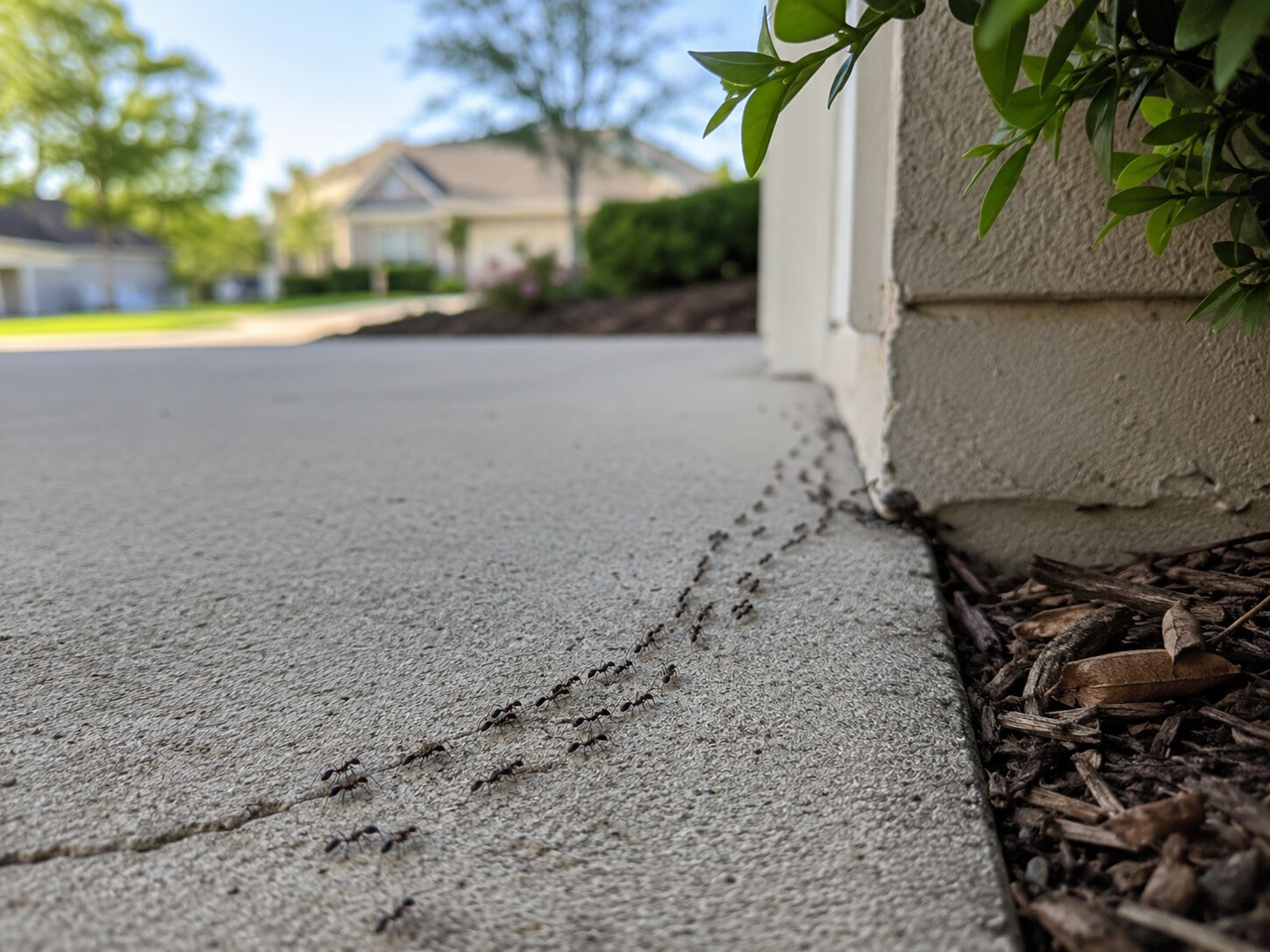
They commonly travel along foundations, walls, sidewalks, and landscaping edges while searching for food and moisture.
Argentine ants can be particularly frustrating because spraying visible trails may provide only temporary relief. Disturbing certain colonies can also cause workers and queens to relocate, potentially spreading activity.
Odorous House Ants
Odorous house ants are small, dark-colored ants known for producing an unpleasant odor when crushed.
They may nest outdoors beneath stones, mulch, or other protective materials and can also establish nesting areas inside structures.
These ants are frequently attracted to sweet foods and accessible moisture.
Pavement Ants
Pavement ants often establish nests beneath concrete slabs, sidewalks, driveways, and other hard surfaces.
Homeowners may notice workers emerging from cracks in pavement or traveling along exterior walls.
Although they commonly nest outdoors, pavement ants may enter kitchens and other areas when searching for food.
Carpenter Ants
Carpenter ants are larger than many common household ants and may establish nests in damp or damaged wood.
Unlike termites, carpenter ants don’t consume wood for nutrition. However, they excavate galleries for nesting, which can contribute to structural damage under certain conditions.
Because treatment methods vary depending on the species, professional identification is an important part of developing an effective ant control plan.
How Can You Tell If You Have an Ant Infestation?
An occasional ant indoors doesn’t always indicate a major infestation. However, repeated activity or large numbers of ants may suggest an established colony nearby.
Wood Ranch homeowners should watch for several signs.
Recurring Ant Trails
Ants often follow chemical trails established by other colony members.
If you repeatedly notice ants moving along the same countertop, wall, or window frame, they may be following a route between their colony and a food source.
Ant Activity Around Moisture
Bathroom sinks, kitchen plumbing, laundry rooms, and other damp areas can attract ants seeking water.
Activity around these locations may increase during hot or dry weather.
Ants Emerging From Small Openings
Workers entering through foundation gaps, baseboards, electrical outlets, or window frames may indicate access points between outdoor nesting areas and the interior.
Ant Activity Around Landscaping
Large numbers of ants moving through mulch, garden beds, or cracks in pavement can indicate outdoor colonies close to the home.
Repeated Problems After DIY Treatments
If ants disappear after cleaning or spraying but return several days later, the underlying colony may still be active.
A professional inspection can help determine where ants are coming from and which conditions are supporting their activity.
How Does Insight Pest Management Provide Ant Control in Wood Ranch?
Effective ant control begins with understanding the species involved, where colonies are located, and why workers are entering the property.
Insight Pest Management uses an inspection-driven approach that addresses existing ant activity while considering ways to reduce future infestations.
1. Property Inspection and Ant Identification
The first step is evaluating ant activity throughout accessible interior and exterior areas.
A professional inspection may include examining:
- Kitchens, bathrooms, and food preparation areas
- Window frames, baseboards, and door thresholds
- Foundation edges and exterior walls
- Irrigated landscaping and garden beds
- Patios, sidewalks, and driveway cracks
- Plumbing areas and potential moisture sources
- Visible ant trails and suspected nesting sites
Identifying the ant species helps determine which treatment methods are most appropriate.
For example, strategies that work for a localized pavement ant colony may differ from those required for widespread Argentine ant activity.
2. Customized Ant Treatment
After evaluating the property, the team can recommend an appropriate treatment strategy.
Depending on the species and infestation conditions, professional ant management may involve targeted baiting, carefully selected treatment materials, or other approved control techniques.
Baits can be particularly useful for certain ant species because foraging workers may carry the active ingredient back to the colony.
However, bait effectiveness depends on proper placement, the ants’ feeding preferences, and the presence of competing food sources.
This is why selecting a treatment based on ant biology is often more effective than repeatedly spraying visible workers.
3. Addressing Contributing Conditions
Ant colonies are more likely to remain active around properties where food, moisture, and shelter are readily available.
Insight Pest Management emphasizes identifying these conditions and helping homeowners understand how to reduce them.
Recommendations may include correcting moisture problems, improving food storage, managing vegetation near the structure, and addressing accessible entry points.
4. Monitoring and Ongoing Prevention
Some ant problems involve large outdoor colonies or repeated movement between neighboring properties.
In these situations, follow-up monitoring or ongoing pest management may be appropriate.
The goal is to evaluate treatment effectiveness and help limit the conditions that contribute to recurring activity.
Schedule an ant inspection with Insight Pest Management to receive guidance tailored to your Wood Ranch property.
Why Choose Insight Pest Management for Ant Control?
Ant control requires more than knowing which product to apply. Effective treatment depends on identifying the pest, understanding its biology, and selecting appropriate methods for the conditions surrounding the home.
Insight Pest Management is led by owner and operator Israel Alvarez, an Associate Certified Entomologist with nearly two decades of professional pest management experience.
Israel earned his Associate Certified Entomologist credential in 2013 and obtained his California pest control operator license in 2014.
His professional involvement also includes serving as Vice Chair of the Pest Control Operators of California’s Ventura District and participating in the National Pest Management Association’s Executive Leadership Program in 2019.
This background supports the company’s commitment to science-based pest control and practical homeowner education.
Local Knowledge of Southern California Pest Activity
Wood Ranch homeowners experience pest challenges shaped by warm temperatures, irrigation systems, residential landscaping, and nearby open spaces.
Insight Pest Management understands these regional conditions and considers them when evaluating residential pest problems.
Solutions Based on Ant Behavior
Different ant species require different management approaches.
Rather than treating every ant problem the same way, the company emphasizes species identification and targeted treatment recommendations.
A Prevention-First Philosophy
Insight Pest Management recognizes that ongoing pest prevention involves more than eliminating insects during a single service visit.
Identifying moisture issues, food sources, structural openings, and other contributing factors can help reduce future activity.
Customer Education and Approachable Service
Pest control should never leave homeowners confused about what is happening around their property.
The Insight team prioritizes clear communication and practical recommendations so customers understand the treatment process and ways to support long-term prevention.
Why Do Ant Problems Change With the Seasons in Wood Ranch?
Southern California’s climate creates conditions where ant activity can occur throughout the year, but seasonal weather changes often affect where colonies forage.
Spring
As temperatures rise, many ant colonies become more active and expand their search for food.
Homeowners may begin noticing trails around patios, kitchens, and exterior foundations.
Summer
Hot, dry weather can increase the importance of accessible moisture sources.
Irrigated landscaping, outdoor faucets, and indoor plumbing areas may attract foraging ants searching for water.
Fall
Changes in temperature and food availability can influence ant movement.
Some colonies continue to forage actively during Southern California’s generally mild fall weather.
Winter
Although cooler temperatures may slow certain species, ants can remain active during warm winter periods.
Heavy rainfall can also temporarily disrupt outdoor nesting areas, sometimes encouraging ants to seek protected locations.
Because ant activity responds to environmental conditions, year-round prevention can be beneficial for Wood Ranch properties.
What Can Wood Ranch Homeowners Do to Prevent Ants?
Small changes around your home can make a meaningful difference in reducing conditions that attract ants.
Consider the following prevention practices.
Keep Food Sources Controlled
Wipe down countertops, clean spills promptly, and store pantry items in sealed containers.
Pay special attention to sugary foods, grease, and pet feeding areas.
Reduce Excess Moisture
Repair leaking faucets or pipes, address persistent condensation, and avoid unnecessary standing water near the structure.
Seal Accessible Entry Points
Inspect gaps around doors, windows, and utility penetrations.
Appropriate sealing can reduce some of the routes ants use to enter the home.
Maintain Exterior Landscaping
Keep vegetation maintained and monitor mulch or dense ground cover near foundations.
Avoid allowing shrubs and branches to create continuous contact with exterior walls when practical.
Clean Up Ant Trails
Cleaning visible trails can help remove some of the chemical signals that guide other ants.
However, cleaning alone won’t necessarily eliminate a nearby colony.
Avoid Unnecessary Pesticide Applications
Repeated spraying without identifying the species or colony location may provide temporary results and can interfere with certain bait-based control strategies.
When infestations persist, professional assessment is generally the more effective next step.
Frequently Asked Questions About Ant Control in Wood Ranch
Why do ants keep coming back after I spray them?
Many sprays affect only the workers that contact the treatment. The colony, including reproductive ants, may remain active in another location. Some species can also respond to disturbance by relocating or splitting into additional nesting groups.
Are ants dangerous to my home?
Most common household ants are primarily nuisance pests. However, some species can contaminate food, and carpenter ants may damage wood through nesting activity. Proper identification helps determine the level of concern.
Can ants enter through closed windows and doors?
Yes. Ants can exploit extremely small gaps around frames, thresholds, and other structural openings, even when windows and doors appear closed.
Is professional ant control better than store-bought sprays?
Professional ant control can offer a more comprehensive approach because it considers species identification, colony behavior, treatment placement, and environmental conditions. Store-bought products may help in limited situations but don’t always address the underlying infestation.
How long does ant treatment take to work?
Results depend on the ant species, colony size, environmental conditions, and treatment method. Some treatments reduce visible activity relatively quickly, while colony-focused approaches may require additional time or monitoring.
Do I need recurring ant control services?
Not every property requires the same service schedule. Homes experiencing recurring infestations or significant outdoor ant pressure may benefit from ongoing monitoring and preventive pest management.
Schedule Professional Ant Control in Wood Ranch Today
Dealing with ants in your kitchen, bathroom, or outdoor living areas can be exhausting, especially when they continue returning after repeated cleaning and DIY treatments.
Insight Pest Management helps Wood Ranch homeowners identify the source of ant activity and develop practical solutions grounded in pest biology and local property conditions.
With guidance from Associate Certified Entomologist Israel Alvarez, the company combines experienced pest management, thoughtful inspections, and customer education to help protect Southern California homes.
Contact Insight Pest Management today to schedule ant control in Wood Ranch and discover a smarter, science-based approach to keeping unwanted ants out of your home.