


Rodent control in Winnetka, CA, helps homeowners and businesses address unwanted rats and mice, protect their properties from damage, and reduce the risk of recurring infestations. Insight Pest Management provides science-based rodent control solutions designed to identify activity, address existing rodent problems, and help prevent rodents from returning.
Hearing scratching sounds in your attic or discovering small droppings inside your kitchen cabinets can be unsettling. Rodents are skilled at finding food, water, and shelter, and even well-maintained Winnetka homes can experience infestations.
Southern California’s warm climate, established neighborhoods, and landscaped properties provide favorable environments for rats and mice. When outdoor conditions become less comfortable or food sources are limited, rodents may enter homes, garages, and commercial buildings in search of resources.
At Insight Pest Management, we understand that effective rodent control requires more than removing the animals you can see or hear. Identifying how rodents enter, where they nest, and what attracts them is essential for reducing future problems.
Led by owner and Associate Certified Entomologist Israel Alvarez, our team brings nearly two decades of professional pest management experience to residential and commercial properties throughout Southern California.
Whether you’ve noticed signs of rats in your attic, mice in your garage, or unexplained noises inside your walls, our goal is to help you understand the problem and find a practical solution.
Why Are Rodents a Problem in Winnetka, California?
Rodents are common throughout the San Fernando Valley, including residential communities like Winnetka.
Their ability to adapt to urban and suburban environments makes them especially successful around homes, apartment buildings, restaurants, and commercial properties.
Several local conditions can contribute to rodent activity.
Warm Weather Supports Year-Round Activity
Unlike regions with extended freezing winters, Winnetka experiences relatively mild winter temperatures and long, warm summers.
Rats and mice can reproduce and remain active throughout the year when adequate food, water, and shelter are available.
During particularly hot or dry periods, rodents may seek cooler, protected environments or dependable water sources near buildings.
Seasonal changes can also influence where rodents travel and establish nesting areas.
Landscaping Provides Shelter and Food
Trees, shrubs, gardens, and decorative landscaping are common around Winnetka properties.
These features can provide food sources, nesting areas, and protected pathways for rodents.
Fruit trees, dense vegetation, fallen produce, and outdoor pet food may attract rats and mice.
Overgrown branches near rooftops can also create access routes for climbing rodents.
Homes Offer Protected Nesting Locations
Attics, garages, crawl spaces, wall voids, and storage areas provide shelter from predators and changing outdoor conditions.
Once rodents discover an accessible entrance, they may begin exploring the structure for nesting opportunities.
Even relatively small gaps around utility lines, roof edges, and doors can provide access.
This is why professional rodent control focuses on both existing activity and the structural conditions that allow rodents to enter.
What Types of Rodents Are Common in Winnetka?
Identifying the rodent species affecting your property helps determine the most appropriate management strategy.
Different rodents have different nesting habits, travel patterns, and preferred food sources.
Roof Rats
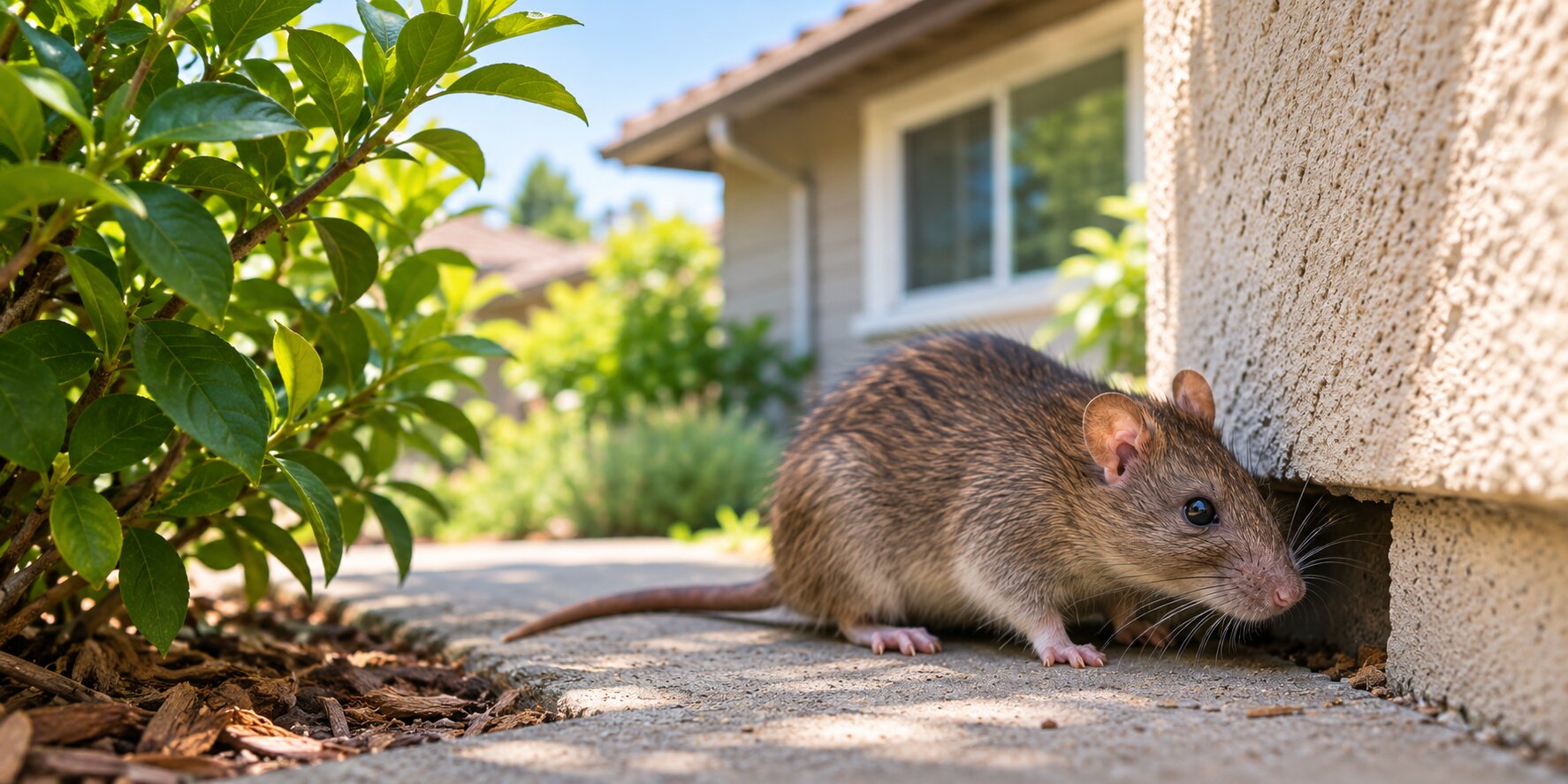
Roof rats are common in many Southern California neighborhoods, particularly areas with trees, fences, and connected rooflines.
These rodents are excellent climbers and frequently travel along branches, utility lines, and elevated structural features.
They may establish nests in:
- Attics
- Roof voids
- Dense vegetation
- Garages
- Elevated storage spaces
- Protected areas around exterior structures
Roof rats are often associated with scratching sounds above ceilings or evidence of activity near roof openings.
Norway Rats
Norway rats tend to spend more time near ground level.
They may burrow beneath structures, around landscaped areas, or near outdoor storage locations.
Potential activity areas include foundations, crawl spaces, retaining walls, and cluttered outdoor environments.
Norway rats are relatively large and may leave noticeable burrows, gnaw marks, and droppings.
House Mice
House mice are smaller than rats but can create significant problems once they establish themselves indoors.
Their small size allows them to enter through narrow openings, including gaps approximately the width of a pencil.
Mice may nest inside cabinets, wall cavities, garages, and stored materials.
Because they reproduce quickly under favorable conditions, early intervention is important.
An accurate species identification can help determine where to inspect, which control methods to use, and how to prevent future entry.
What Are the Signs of a Rodent Infestation?
Rodents often remain hidden during the day, making infestations difficult to recognize until activity increases.
Homeowners may notice indirect evidence long before seeing a live rat or mouse.
Common warning signs include:
- Droppings: Small, dark droppings appear inside cabinets, pantries, garages, or attic spaces.
- Scratching noises: Sounds of movement occur inside walls, ceilings, or beneath floors.
- Gnaw marks: Rodents chew through food packaging, wood, plastic, and other materials.
- Nesting materials: Shredded paper, fabric, insulation, or other soft materials accumulate in hidden areas.
- Unusual odors: Persistent musky smells may develop in enclosed spaces.
- Grease marks: Dark smudges appear along frequently traveled pathways.
- Damaged insulation: Insulation becomes disturbed, compressed, or contaminated.
- Outdoor burrows: Holes or disturbed soil appear near foundations and sheltered landscaping.
Why Do I Hear Scratching in My Attic at Night?
Many rodents are primarily active during nighttime hours, although they can move around during the day.
If you hear scratching, scurrying, or chewing sounds after dark, rodents may be traveling through attic spaces or wall cavities.
However, noises alone cannot confirm a rodent infestation. Other animals and structural conditions may produce similar sounds.
A professional inspection can help identify the source and determine whether rodent activity is present.
Imagine a Winnetka homeowner hearing occasional movement above the bedroom ceiling. At first, the sound might seem like branches rubbing against the roof.
A few days later, they discover droppings near stored boxes in the garage.
That combination of evidence could indicate that rodents are using multiple areas of the property.
Addressing the issue early may help prevent additional contamination and damage.
Contact Insight Pest Management to schedule a professional rodent inspection for your Winnetka home or business.
Why Is Professional Rodent Control Important?
Rodents aren’t simply an inconvenience. Their presence can create property damage, sanitation concerns, and ongoing frustration for homeowners.
Even a small infestation deserves attention because rodents may remain hidden while continuing to reproduce and explore the property.
Rodents Can Damage Electrical Wiring
Rats and mice have teeth that grow continuously, so gnawing is part of their natural behavior.
They may chew on electrical insulation, wood, plastic, and stored materials.
Damaged wiring can create electrical hazards, including an increased risk of fire.
If you discover exposed or damaged electrical wiring, contact a qualified electrician rather than attempting to handle the problem yourself.
Rodents Can Contaminate Living Spaces
Rodents leave droppings, urine, and nesting materials in areas they occupy.
Contaminated surfaces and materials can create sanitation concerns, particularly in kitchens, pantries, and storage spaces.
Some rodents can also carry pathogens that cause human illness.
Proper cleanup procedures are important because sweeping or vacuuming dry rodent droppings can release contaminated particles into the air.
Rodents Can Damage Insulation
Attics provide warmth, shelter, and nesting materials that may attract rodents.
They can disturb insulation, create nesting areas, and contaminate materials with waste.
Depending on the extent of the problem, professional cleaning or insulation replacement may be necessary after the infestation has been addressed.
Rodents Can Damage Stored Belongings
Garages, sheds, and storage rooms frequently contain cardboard boxes, fabric, paper, and other materials rodents can chew or use for nesting.
Stored decorations, clothing, and household supplies may become damaged or contaminated.
Rodents May Continue Returning
Removing individual rodents doesn’t necessarily prevent additional animals from entering.
If access points remain open and food sources are available, new rodents may occupy the same spaces.
Professional rodent management helps identify and address these underlying conditions.
How Does Insight Pest Management Handle Rodent Control?
Effective rodent management requires a combination of inspection, removal, exclusion, and prevention.
Simply placing traps without understanding how rodents enter a property may result in temporary relief rather than lasting improvement.
At Insight Pest Management, we follow an inspection-driven approach that addresses the source of the problem.
Step 1: Thorough Rodent Inspection
Our process begins with a detailed evaluation of the property.
Depending on the infestation, inspection areas may include:
- Attics and accessible crawl spaces
- Garages and storage rooms
- Exterior foundations
- Rooflines and eaves
- Plumbing and utility penetrations
- Doorways and damaged vents
- Landscaping and outdoor storage areas
- Potential nesting and feeding locations
We look for droppings, gnaw marks, nesting materials, travel pathways, and structural openings.
Identifying these conditions helps us understand how rodents are using the property and where control efforts should be concentrated.
Step 2: Identify Rodent Species and Activity
Rats and mice behave differently, making species identification important.
Roof rats may use elevated pathways and attic spaces, while Norway rats frequently travel closer to ground level.
House mice can occupy narrow interior spaces that larger rodents cannot access.
Understanding these differences helps determine appropriate trapping locations, exclusion strategies, and monitoring methods.
Step 3: Targeted Rodent Removal
Once we understand the infestation, we recommend appropriate control methods based on the property’s conditions.
Rodent removal may involve strategically placed traps and other suitable management measures.
We consider where rodents travel, which areas are accessible, and how to minimize risks to household members and pets.
Insight Pest Management also offers poison-free rodent control options that emphasize trapping, exclusion, and prevention.
Insight Pest Management™
The appropriate method depends on the species, infestation severity, and results of the inspection.
Step 4: Rodent Exclusion and Entry-Point Management
Removing existing rodents is only part of the solution.
If openings remain accessible, additional rodents may enter the property.
Rodent exclusion involves identifying and sealing suitable entry points with materials appropriate for the location.
Common problem areas include:
- Gaps beneath garage doors
- Damaged exterior vents
- Openings around plumbing pipes
- Cracks near foundations
- Roofline gaps
- Utility penetrations
- Damaged door sweeps
Our team evaluates these areas and recommends exclusion measures to reduce future access.
Importantly, entry points should be addressed as part of a coordinated removal plan so rodents aren’t unintentionally trapped inside occupied spaces.
Step 5: Prevention Recommendations
Rodents are attracted to properties that offer accessible food, water, and shelter.
We’ll explain which conditions may be encouraging activity and recommend practical improvements.
These may include adjusting food storage practices, securing trash, trimming vegetation, and organizing outdoor storage.
Step 6: Follow-Up and Monitoring
Some infestations require multiple visits to confirm that activity has decreased and that control measures are working.
Follow-up evaluations may include checking traps, reviewing evidence of activity, and reassessing potential access points.
Our goal is to address the immediate infestation while helping reduce the risk of repeated rodent problems.
What Is Rodent Exclusion, and Why Does It Matter?
Rodent exclusion is the process of closing or protecting openings that allow rats and mice to enter buildings.
It’s one of the most important components of a comprehensive rodent management strategy.
Imagine removing several rats from your attic but leaving a damaged roof vent unchanged.
Even if the original rodents are gone, new rats may eventually discover the same entrance.
Without exclusion, the infestation cycle can repeat.
Common Rodent Entry Points
Rodents can use existing construction gaps, damaged materials, and openings around utility systems.
Roof rats are particularly capable climbers and may reach elevated openings using trees, fences, and other structures.
House mice can squeeze through extremely small gaps, making detailed inspections especially important.
What Materials Help Keep Rodents Out?
Appropriate exclusion materials may include metal mesh, hardware cloth, metal flashing, and other durable materials.
The best solution depends on the size and location of the opening.
Ordinary foam or soft materials alone may be insufficient because rodents can chew through them.
Vents and other functional openings must also be protected without interfering with ventilation or building systems.
Does Exclusion Eliminate the Need for Trapping?
Not necessarily.
If rodents are already inside a structure, removal and exclusion must be coordinated.
Sealing openings without addressing the existing infestation may create additional problems.
A professional rodent management plan considers both current activity and future prevention.
Schedule your rodent inspection with Insight Pest Management and learn how professional exclusion can help protect your Winnetka property.
Why Choose Insight Pest Management for Rodent Control in Winnetka?
When rodents enter your home, you want more than a temporary solution.
You want a pest management company that understands rodent behavior, provides clear explanations, and takes the time to identify underlying problems.
Insight Pest Management combines technical knowledge with approachable, customer-focused service.
Led by Associate Certified Entomologist Israel Alvarez
Insight Pest Management is owned and operated by Israel Alvarez, who brings nearly two decades of professional pest management experience to the company.
His professional qualifications include:
- Associate Certified Entomologist credential since 2013
- California Pest Control Operators License obtained in 2014
- Vice Chair of the Pest Control Operators of California, Ventura District
- Completion of the National Pest Management Association Executive Leadership Program in 2019
His background supports a science-based approach to identifying pest activity, understanding behavior, and developing effective management recommendations.
Insight Pest Management™
Detailed Inspections
We don’t believe in treating every property the same way.
A house with roof rats entering through an attic vent requires a different strategy than a building with mice entering beneath exterior doors.
Our team evaluates the property before recommending a management plan.
Prevention-Focused Solutions
Removing rodents is important, but reducing the conditions that allow them to return is equally valuable.
We emphasize exclusion, property maintenance, and customer education alongside appropriate removal methods.
Friendly, Personalized Service
Rodent problems can be stressful, especially when you’re concerned about contamination or damage.
We explain what we find and help customers understand the next steps.
Our goal is to make the process straightforward, informative, and manageable.
How Can Winnetka Homeowners Prevent Rodent Infestations?
Homeowners can take several practical steps to make their properties less attractive to rats and mice.
While these measures don’t replace professional removal for an established infestation, they can support long-term prevention.
Store Food in Sealed Containers
Rodents can access food stored in cardboard boxes, thin plastic bags, and unsecured containers.
Use sturdy, tightly sealed containers for pantry foods and pet supplies.
Clean up crumbs and spills promptly, particularly in kitchens and garages.
Secure Outdoor Trash
Keep garbage containers closed and avoid allowing food waste to accumulate around the property.
Rinse recyclable containers when appropriate to reduce food residue that may attract pests.
Maintain Trees and Shrubs
Trim branches away from roofs and exterior structures when practical.
Roof rats may use nearby vegetation to access elevated areas of a building.
Reducing dense vegetation near foundations can also make rodent pathways less sheltered.
Remove Fallen Fruit
Fruit trees can attract rodents when ripe or fallen fruit remains accessible.
Collect fallen fruit regularly and avoid leaving large quantities on the ground.
Reduce Clutter
Organize garages, sheds, and storage areas to reduce potential nesting locations.
Keep stored materials off the ground when possible and avoid allowing piles of unused belongings to accumulate.
Address Moisture Sources
Repair leaking faucets, irrigation components, and plumbing fixtures.
Rodents need water, and reliable moisture sources can encourage them to remain near a property.
Inspect Exterior Openings
Look for damaged weatherstripping, gaps around doors, and openings near utility lines.
Avoid reaching into hidden spaces where rodents may be present.
A professional inspection can help identify openings that are difficult to recognize from the ground.
How Does Winnetka’s Climate Influence Rodent Activity?
Winnetka’s location in the western San Fernando Valley creates environmental conditions that can support rodent populations throughout the year.
Hot summers, irrigated landscaping, and relatively mild winters influence how rats and mice find resources.
During warmer months, rodents may seek reliable water sources and shaded shelter around buildings.
In cooler or wetter periods, protected attics, garages, and crawl spaces can become attractive nesting locations.
Seasonal landscaping changes may also affect rodent movement.
For example, fruit-bearing trees can provide temporary food sources, while overgrown vegetation may create concealed travel routes between neighboring properties.
Rodent prevention is most effective when homeowners recognize these environmental conditions and maintain their properties accordingly.
Can Rodents Affect Commercial Properties in Winnetka?
Commercial buildings can experience many of the same rodent problems as residential properties.
However, infestations in commercial environments may create additional concerns involving sanitation, inventory protection, employee comfort, and regulatory requirements.
Restaurants, retail stores, offices, warehouses, and property management facilities can all experience rodent activity.
A commercial rodent management program may involve:
- Routine property inspections
- Rodent activity monitoring
- Targeted trapping or other appropriate control methods
- Entry-point identification
- Exclusion recommendations
- Sanitation guidance
- Follow-up evaluations
Insight Pest Management provides commercial pest management plans developed around different property needs.
For businesses, consistent monitoring and preventative maintenance can help identify developing problems before they affect daily operations.
Frequently Asked Questions About Rodent Control in Winnetka
Rodent infestations can raise important questions about identifying rats and mice, choosing effective treatments, and preventing future activity. Below, Insight Pest Management answers common questions from Winnetka homeowners about rodent removal, trapping, safety precautions, and what to expect from professional rodent control services.
How Do I Know If I Have Rats or Mice?
Rats are generally larger than mice and often leave larger droppings.
However, droppings, gnaw marks, and noises aren’t always enough to confirm the species.
A professional inspection can help determine which rodent is present and identify likely nesting and entry locations.
How Long Does Rodent Control Take?
The timeline depends on infestation severity, the number of rodents present, building conditions, and available entry points.
Some situations can be addressed relatively quickly, while larger or established infestations may require multiple service visits.
Will Rodents Leave on Their Own?
Rodents may relocate when environmental conditions change, but homeowners shouldn’t assume an established infestation will disappear without intervention.
If food, water, and shelter remain available, rodents may continue occupying the property.
Are Rodent Traps Better Than Poison?
The most appropriate method depends on the property and infestation.
Trapping can provide targeted removal and may avoid some of the risks associated with rodenticides.
Rodenticides can pose hazards to pets, children, and wildlife if improperly used, and rodents dying in inaccessible spaces may create odor problems.
Insight Pest Management offers poison-free rodent control options for properties where this approach is appropriate.
Can Rodents Return After Professional Treatment?
Yes. New rodents can enter if structural openings remain accessible or attractive conditions persist.
This is why exclusion, sanitation, and follow-up monitoring are important parts of rodent management.
Is It Safe to Clean Rodent Droppings Myself?
Rodent droppings should be handled carefully.
Avoid sweeping or vacuuming dry droppings, which can release potentially contaminated particles.
Appropriate ventilation, protective equipment, and disinfecting procedures are important. Extensive contamination may require professional cleanup.
Does Homeowners Insurance Cover Rodent Damage?
Coverage depends on the insurance policy and the circumstances of the damage.
Many standard homeowners policies exclude damage caused directly by rodents, but specific provisions vary.
Contact your insurance provider to understand your coverage.
Does Insight Pest Management Offer Rodent Control in Winnetka?
Yes. Insight Pest Management lists Winnetka among its Southern California service communities and offers rodent exclusion and removal services.
Insight Pest Management™
Schedule Professional Rodent Control in Winnetka With Insight Pest Management
Discovering rats or mice in your home can feel overwhelming, but you don’t have to handle the problem alone.
Insight Pest Management provides science-based rodent control designed to identify activity, address existing infestations, and help reduce the risk of rodents returning.
From detailed inspections and targeted removal to exclusion recommendations and preventative maintenance, our team develops solutions around the needs of your property.
Founded and operated by Associate Certified Entomologist Israel Alvarez, Insight Pest Management brings professional knowledge, personalized attention, and a prevention-first approach to Southern California pest management.
Whether you’re hearing scratching sounds in your attic, finding droppings in your garage, or concerned about recurring rodent activity, we’re ready to help you understand the problem and take the next step.
Call Insight Pest Management at (805) 628-2881 or visit insight-pest.com to schedule your Winnetka rodent control inspection and protect your property with a science-backed pest management plan.