


Insight Pest Management is proud to serve Westlake Village homeowners with science-based ant control that goes after the colony, not just the ants you can see. You wipe the counter, and a few days later the trail is back. Sound familiar? In a community of green lawns, mature shrubs, and well-watered gardens, that cycle is one of the most common frustrations we hear about.
Led by Associate Certified Entomologist Israel Alvarez, Insight brings nearly 20 years of hands-on experience to every ant inspection. This page focuses on the conditions that shape ant activity in Westlake Village. For everything else we offer in town, visit our Westlake Village pest control hub. For our broader service across the region, see our Ventura County ant control service.
Why Are Ants So Common in Westlake Village?
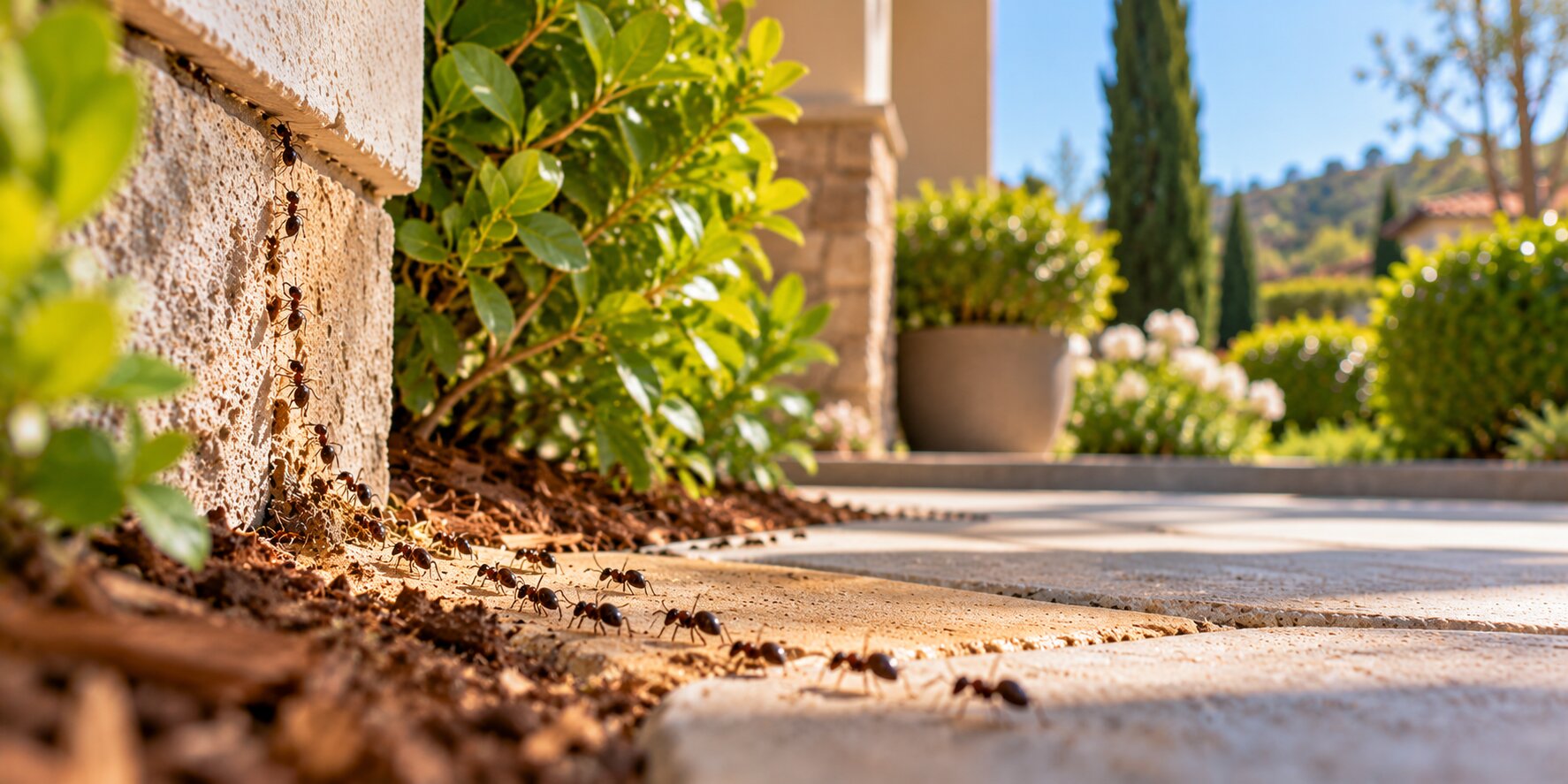
Ants follow food, water, and shelter, and landscaped properties tend to offer plenty of each. Irrigation keeps soil damp, ground cover and shrubs provide protected nesting spots, and gardens, pet bowls, and outdoor kitchens supply a steady meal.
The most familiar culprit in Southern California is the Argentine ant. It forms large colonies with many queens, builds extensive trails, and often nests outdoors in soil, mulch, and planter beds before sending foragers inside. Other ants can show up too, which is why identifying the species matters. Every property is different, and what’s driving ants at your house may not be what’s driving them next door.
How Do Landscaping and Irrigation Affect Ant Activity?
You don’t have to give up a beautiful yard to keep ants in check. It helps to know which features give them an advantage.
- Irrigation and moisture: Sprinklers, drip lines, and leaky valves keep soil damp near the foundation. Ants nest where moisture is reliable.
- Vegetation touching the structure: Branches, vines, and shrubs against walls or the roofline give ants a bridge into the house.
- Mulch and ground cover: Thick layers hold moisture and shelter colonies close to the building.
- Plants with honeydew: Aphids and other sap-feeding insects leave a sweet residue that ants harvest and protect, which can keep colonies thriving.
- Outdoor living areas: Crumbs, pet food, and drink spills on patios become easy meals.
- Cracks and gaps: Small openings around doors, windows, and utility lines let trails move indoors.
Where Do Ants Show Up Inside the Home?
Once a trail finds a way in, ants head for food and water. The most common spots include:
- Kitchens: Counters, pantries, pet dishes, and spots near the sink or dishwasher
- Bathrooms: Around sinks, tubs, and toilets, where moisture draws them in
- Window and door frames: Entry points where trails slip through small gaps
- Wall voids and baseboards: Hidden routes that explain why ants appear to come from nowhere
Picture a Westlake Village homeowner who finds a line of ants along the kitchen backsplash every morning. They clean it, spray it, and it vanishes for a few days. Then it’s back. A thorough inspection might show that the trail starts at an irrigated planter bed against the exterior wall and enters through a gap near a window frame. The ants in the kitchen were never the whole story.
How Does Ant Activity Change With the Seasons?
Ants respond to weather, and that’s why many people notice sudden surges.
- Dry spells and warm weather: When conditions outside get dry, ants often look for reliable water indoors, especially in kitchens and bathrooms.
- Heavy rain: Wet soil can push colonies out of their outdoor nests and send them searching for higher, drier shelter, including your home.
- Spring and summer growth: Warm temperatures and active irrigation support larger, busier colonies.
- Mild winters: Southern California rarely gets cold enough to shut ants down completely, so activity can continue year-round.
Why Doesn’t Treating Visible Ants Solve the Problem?
The ants on your counter are only a small fraction of the colony. Most of the population, including the queens, stays hidden in the nest. Killing the foragers you can see leaves the source untouched, and the colony simply sends out more.
Some household sprays can make things worse. Repellent products may cause certain colonies, especially Argentine ants, to split into multiple smaller groups, which can spread the problem instead of ending it. That’s one reason a well-planned approach works better than a quick fix.
The goal is to reach the colony, interrupt the trails, and change the conditions that made your property attractive in the first place.
How Does Insight Handle Ant Inspection, Treatment, and Prevention?
Insight Pest Management follows a clear, prevention-first process built around finding the source.
- Listen first. You tell us where you’ve seen ants, when, and what you’ve already tried.
- Inspect inside and out. We follow trails, check irrigation and moisture areas, and look at vegetation, foundations, and entry points.
- Identify the species. Different ants behave differently, so we confirm what we’re dealing with before choosing a method.
- Treat with precision. We use targeted, eco-friendly treatments placed where ants actually travel and nest, rather than blanketing your property.
- Monitor results. We check back to confirm activity is dropping and that the colony is responding.
- Prevent a repeat. We recommend practical steps, like trimming vegetation off the house, fixing irrigation leaks, and sealing entry points.
Israel Alvarez has been an Associate Certified Entomologist since 2013 and holds a California Pest Control Operators License (2014). As Vice Chair of the Pest Control Operators of California, Ventura District, he keeps our team current on safe, effective practices.
Schedule your inspection with certified entomologist Israel Alvarez and the Insight team.
Frequently Asked Questions About Ant Control in Westlake Village
Moisture changes can push ants out of their nests or draw them toward damp areas near your home. Wet soil may send them looking for dry shelter, while irrigation keeps nesting areas hospitable.
In many cases, the colony is outdoors and the trail leads in. An inspection follows the trail to the source so treatment targets the right place.
It may remove the ants you see, but it usually doesn’t reach the colony. Some repellents can also scatter certain colonies, making the problem more widespread.
No. We’ll help you identify specific changes, like fixing a leaky line or shifting irrigation away from the foundation, that reduce ant pressure without sacrificing your yard.
It depends on the species, the size of the colony, and the conditions on your property. We monitor activity after treatment to make sure it’s working.
We use an eco-friendly, prevention-first approach and targeted methods wherever possible. We’ll explain what’s being applied and any precautions that apply.
Wipe up food and drink spills, store pantry items in sealed containers, trim vegetation away from the house, and fix moisture problems. Seasonal check-ins help catch changes early.
Ready to Stop Ants in Your Westlake Village Home?
You shouldn’t have to wipe down the same trail every morning. Founded and operated by Israel Alvarez, Insight Pest Management has become a trusted name in Southern California pest control, and we’re ready to find where your ants are really coming from.
Call Insight Pest Management in Westlake Village today at (805) 628-2881 for expert ant control solutions.