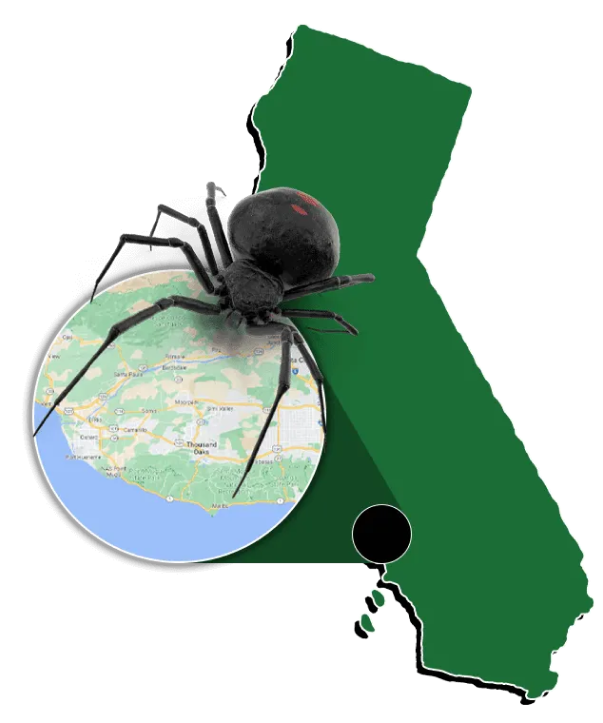


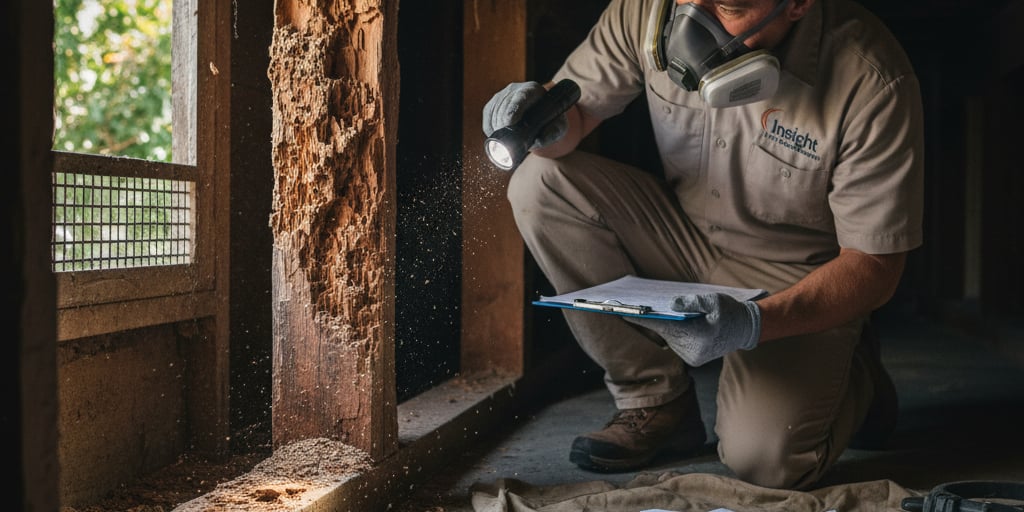

Termite control in Simi Valley is essential for protecting homes and businesses from wood-destroying insects that can cause extensive damage without obvious warning signs. Insight Pest Management proudly serves Simi Valley and surrounding Ventura County communities with professional termite inspections and science-based treatment solutions designed to identify infestations, address active termite colonies, and help protect properties from future damage.
Unlike many household pests, termites can remain hidden inside walls, flooring, and structural wood for extended periods. Homeowners may not realize there’s a problem until they discover damaged wood, discarded wings, or other signs of termite activity.
Led by Associate Certified Entomologist Israel Alvarez, Insight Pest Management combines nearly 20 years of pest management experience with detailed inspections and thoughtful treatment recommendations. Our team focuses on understanding the type of termite infestation, evaluating vulnerable areas, and recommending solutions appropriate for each property.
Contact Insight Pest Management today to schedule a professional termite inspection in Simi Valley.
Why Is Termite Control Important for Simi Valley Homes?
Simi Valley’s warm Mediterranean climate creates conditions where termites can remain active throughout much of the year.
Residential properties throughout Ventura County may contain wood framing, fencing, decks, and other cellulose-based materials that termites can use as food sources.
Because these insects typically feed within concealed areas, infestations may develop before homeowners recognize the warning signs.
Termite activity can affect:
- Structural framing: Termites may damage wooden supports, studs, and other structural components.
- Flooring and subfloors: Hidden feeding activity can weaken wood beneath finished surfaces.
- Doors and window frames: Termite damage may contribute to deterioration or changes in how wooden components fit.
- Decks and fences: Exterior wooden structures can provide food sources and potential nesting locations.
- Property maintenance costs: Undetected termite activity can lead to repairs that become increasingly expensive over time.
Termites don’t necessarily stop feeding because a home is occupied or well maintained.
Professional inspections are important because they can reveal evidence of activity that isn’t readily visible during everyday home maintenance.
What Types of Termites Are Found in Simi Valley?
Identifying the termite species is one of the most important steps in choosing an effective treatment.
Southern California properties can experience different types of termite infestations, each with distinct nesting behaviors and moisture requirements.
Subterranean Termites
Subterranean termites typically live in soil and travel between their colonies and food sources through protected pathways.
They often construct mud tubes along foundations, concrete surfaces, or structural materials to maintain suitable moisture conditions.
These termites can enter buildings through small openings and feed on wood that may be concealed behind walls or beneath flooring.
Subterranean termite colonies can contain large populations, making early detection particularly important.
Drywood Termites
Drywood termites establish colonies directly within wood and don’t require continuous contact with soil.
They may infest wooden framing, furniture, doors, window trim, and other dry wood components.
A common sign of drywood termite activity is the presence of small, pellet-like droppings called frass.
Because drywood termites can remain inside wooden materials, identifying the full extent of an infestation often requires a thorough inspection.
Dampwood Termites
Dampwood termites are generally associated with wood containing elevated moisture levels.
They are more likely to be found in persistently damp or decaying wood than in dry, well-maintained structural materials.
Moisture problems, leaks, and wood-to-soil contact can contribute to conditions that support this type of activity.
Understanding which termite species is present helps determine whether localized treatment, a broader treatment approach, or moisture correction should be recommended.
What Are the Warning Signs of a Termite Infestation?
Termites are often called silent destroyers because significant activity can occur before obvious damage appears.
Knowing what to look for can help Simi Valley homeowners recognize a potential infestation earlier.
Discarded Termite Wings
Reproductive termites, commonly called swarmers, leave established colonies to search for new nesting opportunities.
After landing, they shed their wings.
Piles of similarly sized wings near windows, doors, or light fixtures can indicate termite swarming activity.
Mud Tubes Along Foundations
Subterranean termites construct narrow, soil-colored tubes that allow them to travel between underground colonies and food sources.
These tubes may appear on foundations, crawl-space supports, or other structural surfaces.
Their presence should be evaluated by a qualified pest professional.
Small Piles of Termite Droppings
Drywood termites produce distinctive pellet-shaped droppings known as frass.
These pellets may accumulate beneath infested wood, around windowsills, or near wooden trim.
Homeowners sometimes mistake termite frass for sawdust or ordinary household debris.
Hollow or Damaged Wood
Wood affected by termites may sound hollow when tapped or show blistering, cracks, or unusual surface changes.
However, wood damage isn’t always visible, and similar symptoms can result from other moisture or structural problems.
Swarming Termites Indoors
Seeing winged termites emerging inside a home can indicate that a colony is established within or near the structure.
Swarmers are sometimes confused with flying ants, but the insects have different physical characteristics.
Professional identification helps determine whether termite treatment is necessary.
If you’ve noticed suspicious wood damage, discarded wings, or unexplained pellets around your property, arranging an inspection is a practical next step.
How Does Insight Pest Management Handle Termite Control?
Insight Pest Management approaches termite infestations through careful evaluation and treatment planning.
Our goal is to identify the type of termite activity, determine the areas involved, and recommend an effective strategy based on the property’s specific conditions.
Step 1: Comprehensive Termite Inspection
Our team evaluates accessible areas where termite activity or conducive conditions may be present.
Depending on the structure, an inspection may include:
- Exterior foundations and siding
- Accessible attics and crawl spaces
- Wooden framing and structural components
- Door frames, baseboards, and window trim
- Decks, fences, and attached wooden structures
- Areas affected by plumbing leaks or excess moisture
Inspectors look for termite activity, damaged wood, mud tubes, discarded wings, frass, and other evidence.
The objective is to develop a clearer picture of where termites may be present and which conditions could support continued activity.
Step 2: Identify the Termite Species and Extent of Activity
Not every termite infestation requires the same response.
Drywood termites can establish colonies within individual wooden components, while subterranean termites typically maintain connections to soil-based colonies.
Correct identification helps guide the treatment recommendation.
Our team also considers the accessibility of affected areas, the construction of the property, and any evidence of previous termite activity.
Step 3: Recommend an Appropriate Treatment Strategy
Termite treatment options depend on the species, severity, distribution, and location of the infestation.
Depending on the inspection findings, potential approaches may include:
- Localized wood treatments: Appropriate for certain accessible, limited infestations.
- Subterranean termite treatments: Methods intended to interrupt or control termite activity associated with soil-based colonies.
- Termite baiting systems: In appropriate situations, baiting can target foraging termites and help manage colonies over time.
- Whole-structure treatment evaluation: Widespread drywood termite activity may require consideration of structural fumigation or other comprehensive methods.
- Moisture and structural recommendations: Correcting conditions that favor termite activity can complement direct treatment.
No single treatment method is appropriate for every termite problem.
Our team explains recommended options and the reasons behind them so customers can make informed decisions.
Step 4: Address Contributing Conditions
Termite management isn’t only about treating active insects.
Conditions such as moisture accumulation, drainage problems, damaged wood, and soil-to-wood contact can increase a property’s vulnerability.
Where appropriate, we recommend improvements that help reduce these conditions.
Step 5: Develop a Long-Term Monitoring Plan
After treatment, periodic inspections can help identify new activity or potential vulnerabilities.
The appropriate follow-up schedule depends on the termite species, treatment method, property characteristics, and ongoing risk factors.
Schedule a termite inspection with Insight Pest Management to understand your property’s risks and explore appropriate treatment options.
Why Choose Insight Pest Management for Termite Control in Simi Valley?
Termite treatment requires careful identification, technical knowledge, and an understanding of how wood-destroying insects interact with different structures.
Insight Pest Management combines professional expertise with customer education and personalized service.
Led by an Experienced Entomologist
Owner and operator Israel Alvarez brings nearly two decades of professional pest management experience to the company.
Israel has held the Associate Certified Entomologist credential since 2013 and earned his California Pest Control Operators License in 2014.
He also serves as Vice Chair of the Pest Control Operators of California’s Ventura District and completed the National Pest Management Association’s Executive Leadership Program in 2019.
His background supports the company’s emphasis on pest identification, responsible treatment selection, and effective management practices.
Local Knowledge of Ventura County Properties
Southern California’s climate, building materials, irrigation systems, and landscaping conditions can influence termite activity.
Our familiarity with Simi Valley and neighboring communities helps us evaluate the risks that local homeowners may encounter.
Detailed Inspections and Clear Explanations
We understand that discovering termites can be stressful.
Our team prioritizes explaining the inspection findings, identifying concerns, and discussing potential next steps without unnecessary confusion.
Science-Based, Prevention-First Solutions
Effective termite management begins with accurate information.
We focus on identifying the infestation, selecting appropriate control strategies, and helping homeowners address conditions that could contribute to future problems.
How Can Simi Valley Homeowners Reduce the Risk of Termites?
Although no prevention method can guarantee that termites will never appear, certain maintenance practices can reduce conditions that favor infestations.
Helpful steps include:
- Repair plumbing leaks: Address water leaks and moisture accumulation promptly.
- Improve drainage: Direct excess water away from the building’s foundation.
- Reduce wood-to-soil contact: Avoid storing untreated lumber directly against the home or on bare soil.
- Inspect exterior wood: Monitor fences, decks, and trim for deterioration or unusual changes.
- Maintain gutters: Keep gutters and downspouts functioning properly.
- Monitor landscaping: Avoid excessive irrigation directly against the foundation.
- Schedule periodic inspections: Professional evaluations can identify potential activity before obvious damage develops.
These measures are particularly relevant in Simi Valley, where irrigation and landscaping can create localized moisture conditions even during dry weather.
When Is Termite Activity Most Common in Simi Valley?
Termite activity can occur throughout the year in Southern California, although visible swarming patterns vary by species and environmental conditions.
Subterranean termite swarms are often associated with favorable temperatures and moisture conditions, including periods following rainfall.
Drywood termite swarming can occur during warmer portions of the year, depending on the species.
Homeowners should remember that the absence of swarmers doesn’t mean termites are absent.
Established colonies may continue feeding within concealed wooden materials even when no visible insects are present.
Frequently Asked Questions About Termite Control in Simi Valley
How do I know whether I have termites or flying ants?
Termite swarmers typically have straight antennae, relatively uniform bodies, and two pairs of wings that are similar in length.
Flying ants usually have elbowed antennae, narrow waists, and wings of unequal lengths.
A professional inspection can confirm which insect is present.
Can termites damage a home without being seen?
Yes. Termites commonly feed inside wood or concealed structural spaces, allowing infestations to develop without obvious exterior symptoms.
Visible damage may appear only after activity has continued for some time.
Does termite treatment require leaving my home?
That depends on the treatment method.
Certain localized treatments may not require occupants to leave, while structural fumigation requires the property to be vacated according to the fumigator’s instructions.
Your pest professional should explain any preparation and reentry requirements before treatment.
How long does termite treatment take?
Treatment time varies depending on the termite species, affected areas, property size, and selected method.
Some treatments can be completed during a single service appointment, while baiting or monitoring programs may require multiple visits.
Will termites return after treatment?
Future termite activity is possible, particularly when new colonies encounter suitable conditions.
Periodic inspections, moisture management, and appropriate preventive measures can help reduce the risk of recurring infestations.
Should I get a termite inspection before buying a home in Simi Valley?
A termite inspection is a valuable part of evaluating a property’s condition before purchase.
It can identify visible evidence of wood-destroying pest activity and potential concerns that may require additional evaluation or treatment.
Schedule Professional Termite Control in Simi Valley Today
Termite damage can develop quietly, making early identification and appropriate treatment especially important.
Insight Pest Management provides professional termite inspections and science-based control recommendations designed to help protect homes and businesses from wood-destroying insects.
Led by Associate Certified Entomologist Israel Alvarez, our locally owned company proudly serves Simi Valley, Moorpark, Thousand Oaks, Newbury Park, Camarillo, and surrounding Ventura County communities.
Whether you’ve discovered suspicious wood damage, noticed termite swarmers, or simply want greater confidence in your property’s condition, our team can help you understand the next steps.
Call Insight Pest Management today to schedule your termite inspection and take a proactive step toward protecting your Simi Valley property.