


Termite control in Malibu is essential for protecting homes and businesses from insects that can quietly damage wooden structures. Insight Pest Management provides professional termite inspections and treatment solutions in Malibu, helping property owners identify termite activity, understand potential risks, and protect their investments with science-based pest management strategies.
Malibu’s coastal climate, hillside neighborhoods, and distinctive architectural styles create conditions where termites can become a persistent concern. From oceanfront properties to homes surrounded by natural vegetation, termites can find opportunities to establish colonies and damage vulnerable wood.
Led by Associate Certified Entomologist Israel Alvarez, Insight Pest Management brings nearly two decades of professional pest management experience to Southern California properties. Our approach emphasizes detailed inspections, accurate termite identification, customized treatment recommendations, and practical prevention strategies.
Whether you’ve discovered suspicious wood damage or simply want reassurance about your property’s condition, our team can help you take the next step.
Why Is Termite Control Important for Malibu Homes?
Termites feed on cellulose, an organic material found in wood and other plant-based products. Unfortunately, many structural components of residential and commercial buildings contain the materials termites need to survive.
Unlike some pests that make themselves obvious, termites often remain hidden inside walls, wood framing, and other concealed spaces.
A homeowner might first notice a small pile of wood-colored pellets near a window or a damaged section of trim. What appears to be a minor cosmetic issue could indicate termite activity that requires closer examination.
Malibu properties face several environmental conditions that may support termite infestations.
Coastal Moisture and Humidity
Marine air, coastal fog, and localized moisture can contribute to conditions that are attractive to certain termites, particularly where wood remains damp.
Wood-Framed Construction
Many California homes contain wood framing, decks, fencing, and exterior trim. These materials can become vulnerable when termites find accessible food sources.
Landscaping and Vegetation
Mulch, tree stumps, stored lumber, and wood-to-soil contact can create favorable conditions for termites around a property.
Year-Round Termite Activity
Southern California’s relatively mild climate allows termite activity to continue throughout much of the year. Different species may become more noticeable during particular seasons, especially when reproductive termites swarm.
Understanding these conditions helps homeowners recognize why routine inspections matter.
What Types of Termites Are Common in Malibu?
Different termite species require different management strategies. Correct identification is one of the most important parts of effective termite control.
Subterranean Termites
Subterranean termites generally live in soil and access structures through concealed pathways.
They need moisture and may construct mud tubes to travel between their colonies and wood sources.
Common warning signs include:
- Mud tubes along foundations or other structural surfaces
- Damaged or weakened wood
- Swarming winged termites
- Discarded wings near windows or doors
- Evidence of hidden damage in accessible structural areas
Subterranean termites can affect wood framing, support structures, and other vulnerable building components.
Drywood Termites
Drywood termites live directly inside relatively dry wood and do not require continuous contact with soil.
They may infest exposed framing, wooden furniture, trim, and other structural or decorative materials.
Common warning signs include:
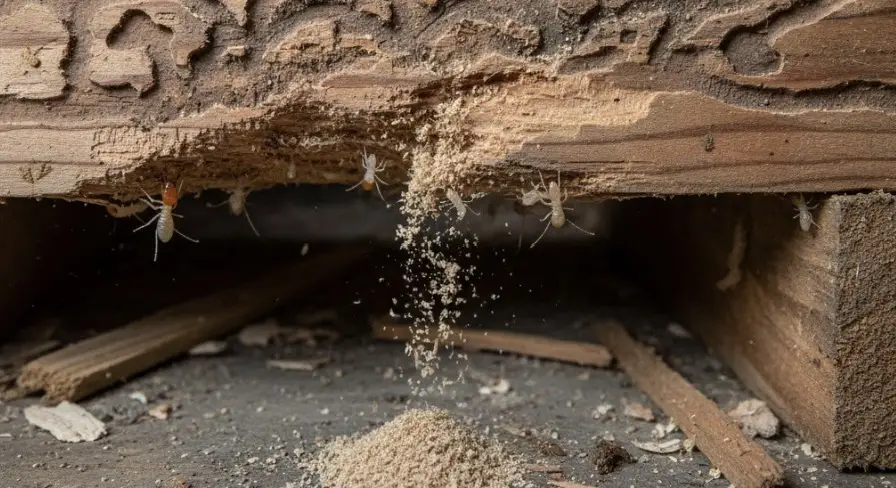
- Small piles of hard, pellet-shaped droppings called frass
- Tiny openings in infested wood
- Discarded termite wings
- Hollowed or damaged wood
- Swarming termites around the property
Drywood termite colonies can remain undetected for extended periods because activity often occurs inside the wood.
Dampwood Termites
Dampwood termites are associated with wood containing elevated moisture.
They may be found in decaying timber, water-damaged materials, or locations with persistent moisture problems.
Although their behavior differs from subterranean and drywood termites, they can still indicate conditions that deserve professional attention.
Accurate species identification matters because termite treatment isn’t one-size-fits-all. The right solution depends on which termites are present, where they’re active, and how extensively the structure is affected.
How Can You Tell If Your Malibu Property Has Termites?
Termites can be difficult to detect without specialized knowledge, but certain warning signs should prompt further investigation.
Discarded wings
Reproductive termites shed their wings after swarming. Finding similar-sized wings near windows, doors, or light fixtures may indicate a recent swarm.
Wood damage
Some termite activity creates internal galleries that weaken wood while leaving portions of the exterior looking relatively normal.
Termite droppings
Drywood termites produce small, hard pellets that may accumulate beneath infested wood.
Mud tubes
Subterranean termites use mud tubes to maintain protected travel routes between the soil and food sources.
Blistering or distorted surfaces
Changes in painted wood or trim may indicate underlying moisture damage, termite activity, or another structural issue that warrants investigation.
Visible swarmers
Winged termites emerging inside a building may signal an established infestation.
Not every suspicious sign confirms termites. Carpenter ants, wood-boring beetles, water damage, and other conditions can produce similar symptoms.
A professional inspection helps distinguish these problems and determine whether termite treatment is necessary.
Contact Insight Pest Management to schedule a termite inspection in Malibu before hidden damage becomes a larger concern.
How Does Professional Termite Control Work?
Effective termite management begins with understanding the property, locating evidence of activity, and selecting appropriate treatment methods.
At Insight Pest Management, our science-based approach is built around careful evaluation and recommendations tailored to the structure.
1. Comprehensive Termite Inspection
The first step is identifying potential termite activity and conditions that could make infestation more likely.
Depending on accessibility, inspection areas may include:
- Exterior foundations
- Wood framing and exposed structural components
- Accessible attics and crawl spaces
- Window and door frames
- Decks, fencing, and other wooden features
- Areas with excessive moisture
- Locations where wood contacts soil
Our team looks for live termites, mud tubes, frass, damaged wood, and other diagnostic evidence.
2. Termite Species Identification
Once suspicious activity is located, identifying the termite species helps determine the most appropriate management options.
For example, treatments designed for drywood termites may differ significantly from methods used against subterranean colonies.
Accurate identification helps avoid unnecessary or ineffective treatment.
3. Customized Termite Treatment Recommendations
Termite treatments vary depending on the species, infestation location, structural accessibility, and severity.
Potential approaches may include:
- Localized wood treatments: Targeted applications for certain accessible infestations.
- Subterranean termite treatments: Methods designed to interrupt termite access or manage colonies in and around the soil.
- Termite baiting systems: Where appropriate, monitored stations that target subterranean termites.
- Whole-structure treatment: An option that may be considered for certain widespread or inaccessible drywood termite infestations.
Not every method is suitable for every infestation, and availability depends on the inspection findings and applicable licensing requirements.
Our goal is to explain the options clearly so property owners understand what each treatment is intended to accomplish.
4. Addressing Contributing Conditions
Treating existing termites is important, but correcting vulnerable property conditions can also help reduce future risk.
Recommendations may involve:
- Repairing leaks and other moisture sources
- Improving drainage around the foundation
- Removing unnecessary wood-to-soil contact
- Replacing severely damaged wooden materials
- Correcting water-damaged exterior trim
- Reducing accumulations of wood debris
These measures help make a property less hospitable to certain termite species.
5. Follow-Up and Long-Term Monitoring
Depending on the treatment method, additional monitoring or follow-up inspections may be appropriate.
Long-term termite management includes watching for new evidence of activity and maintaining conditions that discourage reinfestation.
Why Choose Insight Pest Management for Termite Control in Malibu?
When protecting a home from termites, knowledge and accurate identification matter.
Insight Pest Management is a family-owned Southern California pest management company built around education, professional expertise, and customer-focused service.
Owner and operator Israel Alvarez has nearly 20 years of hands-on pest management experience and has held the Associate Certified Entomologist credential since 2013.
His professional background includes:
- California Pest Control Operators License, obtained in 2014
- Vice Chair of the Pest Control Operators of California, Ventura District
- National Pest Management Association Executive Leadership Program, 2019
- Extensive experience identifying pests and developing science-based management strategies
This expertise helps guide thorough inspections and thoughtful recommendations.
Our team believes homeowners should understand what’s happening inside and around their properties. We explain the signs of termite activity, the conditions contributing to the problem, and the reasoning behind recommended management approaches.
We emphasize communication, practical prevention, and solutions based on actual inspection findings rather than assumptions.
How Does Malibu’s Environment Affect Termite Activity?
Malibu’s environment creates distinctive considerations for property maintenance.
Homes near the coastline may experience marine moisture and salt-laden air, while hillside properties may have wooden decks, retaining features, and vegetation near structures.
Properties in neighborhoods such as Malibu Colony, Point Dume, Carbon Beach, and areas along the Malibu hillsides may have different construction features and site conditions.
For example, a home with an elevated wooden deck might require careful evaluation of exposed supports and connections. Another property surrounded by landscaping may need attention to irrigation, drainage, and moisture accumulation.
Seasonal termite swarms can also help reveal infestations that previously remained unnoticed.
Rather than assuming every Malibu home faces the same risk, professional inspection considers the specific building and surrounding conditions.
How Can Malibu Homeowners Help Prevent Termites?
Termite prevention starts with reducing conditions that attract termites and recognizing signs of activity early.
Practical preventive steps include:
- Repair plumbing leaks: Eliminate persistent moisture wherever possible.
- Improve drainage: Direct unnecessary water away from foundations.
- Keep wood away from soil: Avoid direct contact between vulnerable wood and the ground when practical.
- Maintain exterior wood: Inspect decks, fencing, siding, and trim for damage.
- Remove wood debris: Avoid storing scrap lumber or unnecessary wooden materials against the home.
- Monitor crawl spaces: Address moisture problems and damaged materials.
- Schedule professional inspections: Periodic evaluations can identify signs of termite activity that may otherwise go unnoticed.
No prevention strategy can guarantee a property will never develop termites, but consistent maintenance and inspections can help identify problems before significant damage occurs.
Frequently Asked Questions About Termite Control in Malibu
How do I know if I need termite treatment?
You may need treatment if an inspection confirms active termites. Warning signs such as frass, mud tubes, damaged wood, or discarded wings should be evaluated to determine the cause and appropriate next steps.
Are termites common in Malibu?
Yes. Southern California supports several termite species, including drywood and subterranean termites. Malibu’s climate, construction materials, and environmental conditions can contribute to termite activity.
Can termites damage a home without being noticed?
Yes. Termites may feed inside wooden materials for extended periods before obvious external damage appears. This is one reason professional inspections are valuable.
What is the best termite treatment?
The best treatment depends on the termite species, infestation severity, location, and structure. Localized treatments, soil treatments, bait systems, and whole-structure approaches serve different purposes.
How often should I have my Malibu home inspected for termites?
Annual inspections are a useful preventive guideline for many homeowners, particularly where termite risk is elevated. More frequent evaluations may be appropriate when there has been previous activity or ongoing structural moisture problems.
Can I treat termites myself?
DIY products may affect visible termites without reaching the larger infestation. Professional identification and evaluation help determine whether treatment can address the underlying problem.
Schedule Professional Termite Control in Malibu Today
Termite damage doesn’t always announce itself. Taking action when you first notice suspicious signs can help protect your home and avoid unnecessary complications.
Insight Pest Management provides professional termite inspections and science-based treatment recommendations for Malibu property owners. Led by Associate Certified Entomologist Israel Alvarez, our team brings experienced guidance and a prevention-focused mindset to pest management.
Whether you’re concerned about drywood termites, subterranean termites, or unexplained wood damage, we’ll help you understand the problem and your available options.
Call Insight Pest Management today to schedule a termite inspection in Malibu and take the next step toward protecting your property.