


Insight Pest Management is proud to serve Chatsworth homeowners with science-based spider control that looks beyond the web. You knock down the webs on the patio, and a few days later they’re back. That’s because spiders are only part of the picture. They settle where food is easy to find, and food usually means other insects are already active around your property.
Led by Associate Certified Entomologist Israel Alvarez, Insight brings nearly 20 years of hands-on experience to every spider inspection. This page focuses on spider activity around Chatsworth properties. For an overview of everything we offer here, visit our Chatsworth pest control hub. For our broader service across the region, see our Ventura County spider control service.
Why Do Spiders Keep Returning to Chatsworth Properties?
Spiders are predators, and they build webs or hunt in places where prey and shelter are both easy to find. If you notice a lot of spiders, it often means there’s a steady supply of insects nearby. Lights, landscaping, irrigation, and stored items can all contribute.
Chatsworth’s warm, dry conditions keep many insects and spiders active for much of the year. Properties near hills and open areas also see insects moving through, which can give spiders a reliable food source. Every property is different, so we look at what’s driving activity at yours rather than assuming.
Treating spiders alone, with no attention to the insects they feed on, often leads to a short-term fix. Lasting control addresses both.
Where Do Spiders Gather Around Chatsworth Homes?
Spiders favor places that are protected, undisturbed, and close to prey. Here’s where we find them most often.
- Garages: Boxes, shelves, corners, and gaps around the door offer quiet hiding spots and a path for insects to wander in.
- Outbuildings: Sheds, workshops, and detached structures often get less foot traffic, which makes them ideal for webs and egg sacs.
- Eaves and rooflines: Sheltered overhangs, especially near lights, are prime web sites.
- Patios and outdoor living areas: Furniture, cushions, grills, and umbrellas give spiders protected corners.
- Stored materials: Woodpiles, stacked pots, boxes, and tools can shelter spiders for months without being disturbed.
- Exterior lighting: Lights attract moths and flying insects at night. Spiders build webs nearby to catch the easy meal.
- Landscaping: Dense shrubs, ground cover, and plants touching the house provide hiding places and insect traffic.
- Less-disturbed areas: Crawl space vents, meter boxes, irrigation boxes, and gaps around utilities are comfortable, quiet retreats.
In Southern California, some spiders, such as widow spiders, tend to favor low, protected spots like garages, woodpiles, and storage areas. That’s why we check those places carefully, and why it’s wise to wear gloves when moving stored items.
How Does Insect Availability Affect Spider Activity?
Think of a spider as the last link in a small food chain. Lights draw moths. Irrigation and damp soil support gnats and ants. Pet food and outdoor dining attract flies. Each of those insects becomes a meal, and more meals mean more spiders.
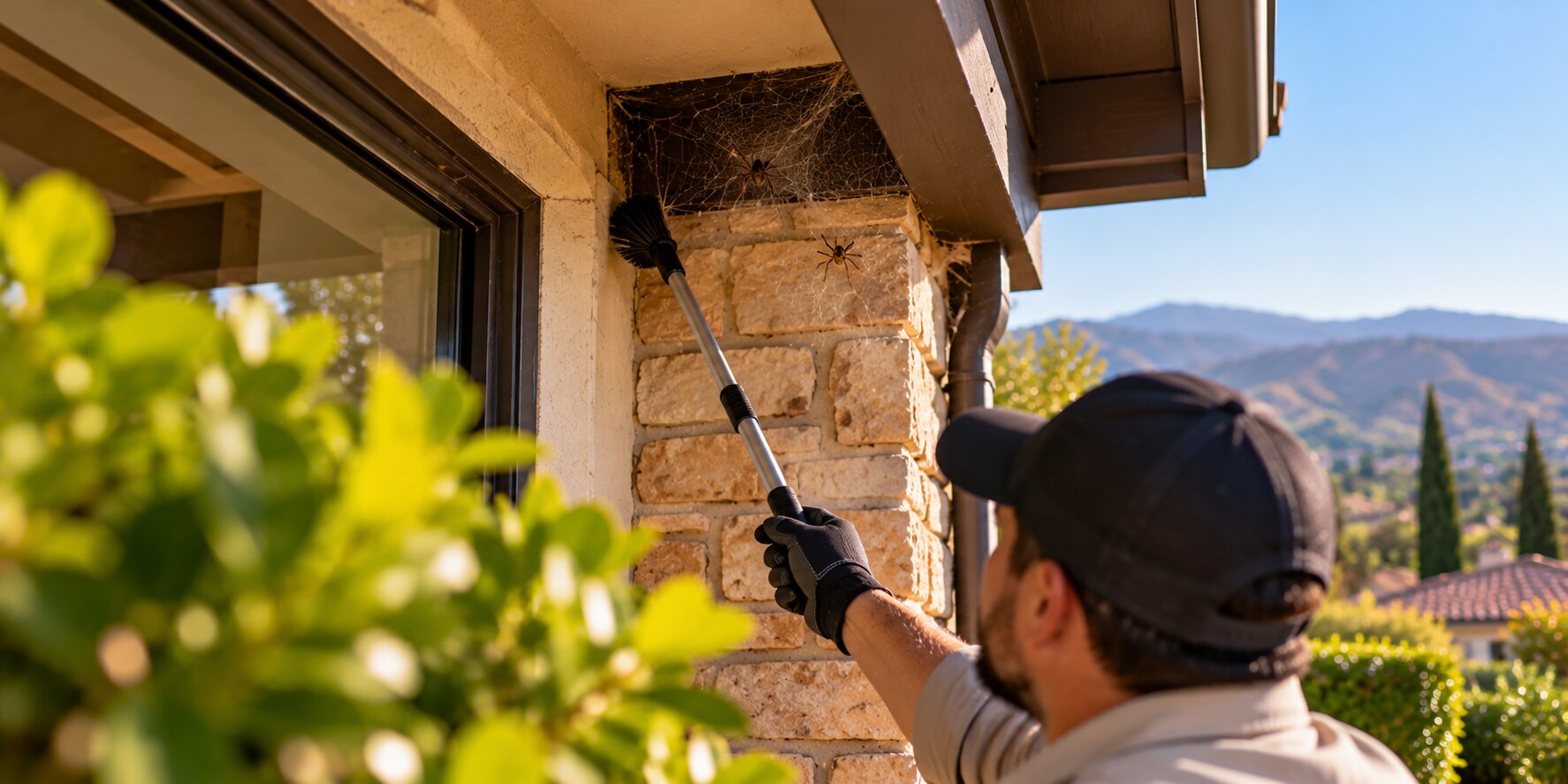
Picture a homeowner who clears webs from the garage eave every weekend. Within days, new ones appear around the porch light. An inspection might show that the light draws dozens of moths each night, and that a planter by the door supports a steady stream of small flies. Removing the webs helps for a moment, but reducing the prey is what changes the outcome.
That’s why Insight Pest Management treats spider control as a pest-pressure problem, not just a spraying job.
How Does Insight Inspect and Treat for Spiders?
Our process is built around finding what’s drawing spiders in and addressing it.
- Listen first. You tell us where you’ve seen spiders and webs and what you’ve tried so far.
- Inspect the property. We check garages, outbuildings, eaves, patios, lighting, landscaping, and storage areas for webs, egg sacs, and prey activity.
- Identify spiders when necessary. Different spiders behave differently, and identification matters most when a spider may be a safety concern.
- Remove webs and egg sacs. Where applicable, we clear webs and nesting spots to reduce immediate activity.
- Treat with precision. We apply appropriate, targeted treatments where spiders and their prey shelter, rather than treating everything.
- Reduce prey and exclude entry points. We address insect activity and recommend sealing gaps and openings to limit access.
- Follow up and prevent. We suggest ongoing steps so the problem stays solved.
Israel Alvarez has been an Associate Certified Entomologist since 2013 and holds a California Pest Control Operators License (2014). As Vice Chair of the Pest Control Operators of California, Ventura District, he keeps our team current on safe, effective practices.
Schedule your inspection with certified entomologist Israel Alvarez and the Insight team.
How Can You Reduce Spiders by Reducing Their Prey?
- Adjust exterior lighting: Warm-toned or yellow bulbs tend to attract fewer flying insects than bright white ones. Turn off lights you don’t need.
- Trim plants away from the house: Keep shrubs and branches off walls and rooflines.
- Manage moisture: Fix irrigation leaks and standing water that support gnats and other small insects.
- Clean up food sources: Cover trash, wipe outdoor dining areas, and pick up pet food.
- Reduce clutter: Swap cardboard boxes for sealed plastic bins, and keep items off the floor in garages and sheds.
- Seal gaps: Close openings around doors, windows, vents, and utility lines.
Frequently Asked Questions About Spider Control in Chatsworth
Usually it’s because there’s food. Insects drawn by lights, moisture, or plants attract spiders, and sheltered corners give them a place to stay.
It helps, but webs return if the spiders and their prey are still around. Web removal works best alongside treatment and prey reduction.
Most spiders are harmless, but a few, such as widow spiders, deserve caution. An inspection can identify what you have. If you’re bitten and feel unwell, seek medical care promptly.
It can. Lights attract flying insects, and spiders set up where the food is. Adjusting lighting, along with regular web removal, can reduce the issue.
They can. Insects moving through open areas may supply a steady food source, so seasonal inspections and exclusion work help catch problems early.
We use an eco-friendly, prevention-first approach and targeted methods wherever possible. We’ll explain what’s being applied and any precautions that apply.
Keep up with web removal, reduce clutter, trim vegetation, and keep lighting and moisture in check. Small habits make a noticeable difference.
Ready to Reduce Spiders at Your Chatsworth Home?
You don’t have to keep clearing the same webs every weekend. Founded and operated by Israel Alvarez, Insight Pest Management has become a trusted name in Southern California pest control, and we’re ready to tackle what’s drawing spiders to your property.
Call Insight Pest Management in Chatsworth today at (805) 628-2881 for expert spider control solutions.