

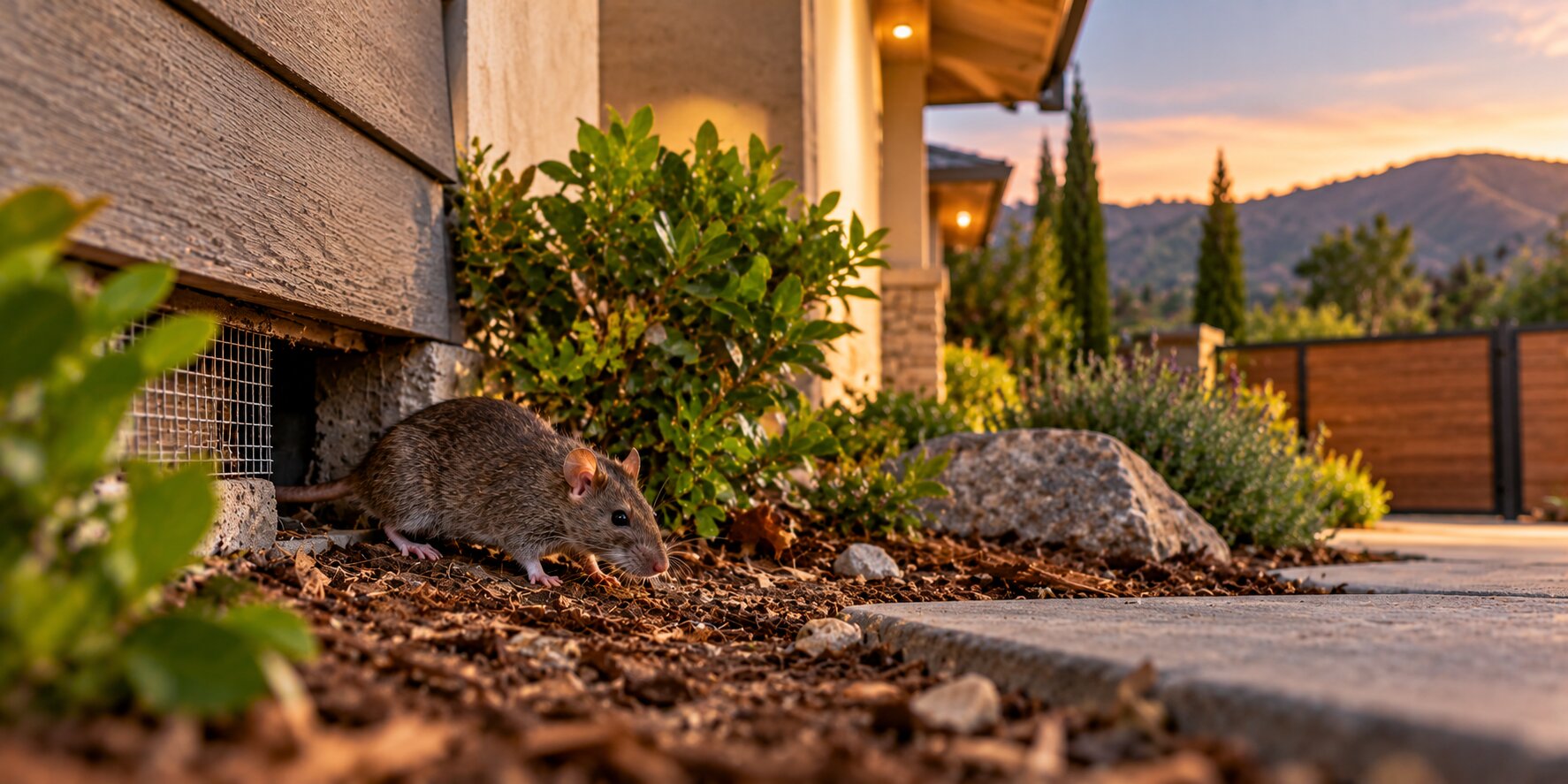

Insight Pest Management is proud to serve Chatsworth homeowners with science-based rodent control for rats and mice. If you’ve heard scratching overhead at night, found droppings in the garage, or spotted chewed wiring, you’re dealing with more than a nuisance. Rodents damage property, contaminate living spaces, and tend to multiply quickly. The sooner you find out how they’re getting in, the easier the fix.
Led by Associate Certified Entomologist Israel Alvarez, Insight brings nearly 20 years of hands-on experience to every rodent inspection. Rodents are the principal pest concern we see around Chatsworth, and this page is written for local homes. For an overview of everything we offer here, visit our Chatsworth pest control hub. For our broader service across the region, see our Ventura County rodent control service.
Why Are Rodents a Major Problem in Chatsworth?
Chatsworth’s warmer, drier climate gives rodents a strong reason to move toward homes. Water, food, and cool, protected shelter are easier to find around a house than out in the open. Properties that border hillsides, open areas, or undeveloped land are especially likely to see steady rodent traffic, because rodents already living nearby will explore the closest structure.
Roof rats are skilled climbers that prefer to nest high, which is why attics are such a common target. Norway rats tend to stay low, burrowing near foundations and settling into garages or outbuildings. House mice squeeze through remarkably small gaps and can nest almost anywhere indoors. Each behaves a little differently, which is why accurate identification guides the plan.
Where Do Rats and Mice Enter Chatsworth Properties?
Rodents rarely announce themselves. They use protected routes and openings that most homeowners never notice. These are the places we check first.
- Garages: Gaps beneath or around the door, utility penetrations, and clutter create easy access and hiding places.
- Attics: Openings near vents, rooflines, and eaves lead to warm insulation, which makes a comfortable nest.
- Wall voids: Gaps around pipes, wires, and framing let rodents travel inside walls where you can’t see them.
- Outbuildings: Sheds, workshops, and detached garages often have older doors, gaps, and stored materials that offer shelter and food.
- Protected structural areas: Crawl spaces, soffits, chimneys, and areas behind siding give rodents quiet places to nest.
- Property edges: Where yards meet open space, fences, trees, and dense plants can serve as highways straight to the structure.
A hole about the size of a quarter can be enough for a rat, and mice can use something even smaller. Rodents also chew through weak materials, so openings can grow over time.
What Are the Signs of Rodent Activity?
Because rodents are mostly active at night and prefer hidden spaces, the evidence often appears before the animals do. Watch for:
- Droppings: Small, dark pellets along walls, in cabinets, or in the garage. Size and shape help identify which rodent you have.
- Noises: Scratching, scurrying, or gnawing sounds in the attic, walls, or ceiling, usually at night.
- Gnawing: Chewed wood, wiring, plastic, or food packaging.
- Nesting materials: Shredded insulation, paper, fabric, or cardboard gathered in a hidden spot.
- Rub marks: Greasy smudges along baseboards, beams, or pipes where rodents travel.
- Pet behavior: Dogs or cats focusing intently on a wall, vent, or corner.
- Odors: A musty or ammonia-like smell in enclosed spaces.
Picture a homeowner who hears light thumping in the ceiling just after dusk and assumes it’s the roof cooling down. A closer look might reveal roof rats traveling along a tree limb, entering at an eave, and nesting in the attic insulation. Early action usually means a smaller repair.
How Does Insight Inspect for Rodents?
Insight Pest Management starts with a detailed inspection of the exterior and interior. The goal is to learn where rodents are coming from and how they’re moving.
- Listen first. You tell us what you’ve noticed, where, and when.
- Inspect the exterior. We check the roofline, eaves, vents, foundation, garage door, utility lines, outbuildings, and nearby vegetation for entry points and travel routes.
- Inspect the interior. We look in the attic, garage, wall access points, and storage areas for droppings, rub marks, nesting, and damage.
- Identify the species. Roof rats, Norway rats, and mice need different strategies.
- Map entry points and nesting areas. Rodents follow predictable paths. Knowing the route tells us where to place traps and what to seal.
- Explain your options. You get a clear plan with the reasoning behind each step.
How Do Trapping, Removal, and Exclusion Work?
Effective rodent control happens in layers, and each one matters.
Trapping and removal. We place traps along the routes rodents actually use, rather than scattering them at random. That removes the animals already on your property.
Exclusion. This is what makes results last. We seal gaps, vents, and openings using durable materials rodents can’t chew through, and we recommend repairs where needed.
Sanitation recommendations. Rodents stay where food and shelter are easy to find. We’ll suggest practical changes, such as storing pet food and bird seed in sealed containers, picking up fallen fruit, and replacing cardboard storage with plastic bins.
Monitoring. After the work is done, we check back to confirm activity has stopped and that the seals are holding.
Poison-Free Rodent Control for Chatsworth Homes
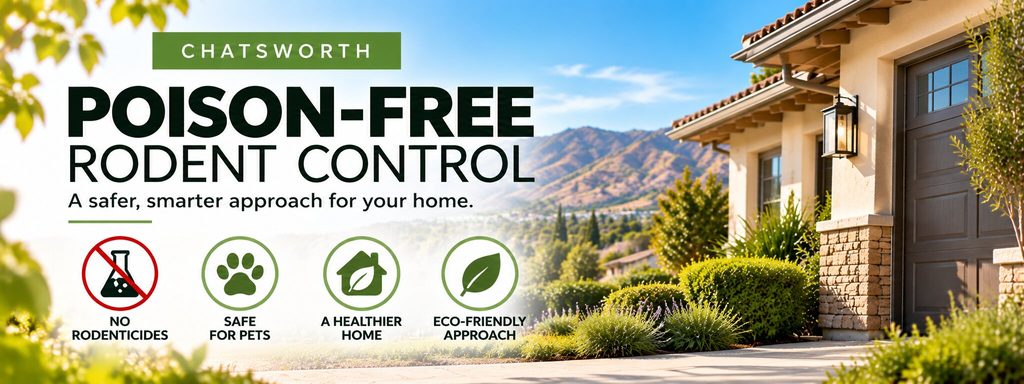
For Chatsworth homeowners looking to manage rats and mice without traditional poison bait, Insight Pest Management offers a dedicated poison-free rodent control program. Built around Integrated Pest Management (IPM), this service combines targeted trapping, property inspections, and exclusion strategies to control rodent activity without using rodenticides.
Homes near Chatsworth’s hillsides and natural open spaces may experience rodent activity as animals move between vegetation, outdoor shelters, and residential structures. A poison-free approach can be especially appealing in these areas because it reduces the risk of secondary poisoning to hawks, owls, and other wildlife.
Our poison-free rodent control program focuses on:
- Strategic trapping: Placing traps along identified rodent travel routes to capture active rats and mice.
- Structural exclusion: Identifying and addressing openings around rooflines, vents, garages, and utility penetrations.
- Habitat management: Reducing accessible food, water, and shelter around the property.
- Ongoing monitoring: Evaluating rodent activity and adjusting the control plan when necessary.
Avoiding rodenticides also helps reduce accidental poison exposure risks for children and pets. Unlike poison bait programs, professional trapping allows technicians to monitor captures and remove trapped rodents rather than relying on animals consuming bait and potentially dying in inaccessible spaces.
Through this prevention-focused approach, Insight Pest Management helps Chatsworth homeowners address current infestations while reducing the likelihood of recurring problems.
Contact Insight Pest Management to discuss poison-free rodent control options for your Chatsworth property.
Why Does Removing Rodents Alone Not Solve the Problem?
It’s tempting to catch a few rodents and call the job finished. Unfortunately, that usually doesn’t hold.
If entry points remain open, new rodents will find them. Existing scent trails and food sources keep drawing animals back to the same spot, and rodents reproduce quickly, so a small group can rebuild fast.
Removal handles the animals you have. Exclusion handles the animals you’ll have next month. Insight Pest Management treats the structure as seriously as the rodents because you need both.
Israel Alvarez has been an Associate Certified Entomologist since 2013 and holds a California Pest Control Operators License (2014). As Vice Chair of the Pest Control Operators of California, Ventura District, he keeps our team current on safe, effective practices.
Schedule your inspection with Associate Certified Entomologist Israel Alvarez and the Insight team.
Frequently Asked Questions About Rodent Control in Chatsworth
Droppings, noise, and damage all offer clues. Rat droppings are larger than mouse droppings, and rats are more often heard in attics while mice often show up in garages and kitchens. An inspection confirms what you have.
Rodents already live in nearby habitat, and homes at the edge of open space are the next logical place for them to explore. Tight exclusion work and regular inspections help keep them out.
Yes. Older doors, gaps, and stored materials make them attractive. From there, rodents may travel to the main house, so we include outbuildings in our inspection.
In many cases, yes. We use trapping and exclusion where appropriate and will explain what makes sense for your home and household.
It depends on the size of the problem and the number of entry points. Trapping typically takes some time, followed by sealing and a monitoring visit to confirm the issue is resolved.
They can. Chewed wiring, contaminated insulation, and droppings are common problems, and they tend to get worse the longer rodents stay.
Trim branches away from the roof, store food and pet supplies in sealed containers, clear clutter from garages and sheds, and fix any gaps you notice. We’ll point out specific fixes during your inspection.
Ready to Stop Rodents in Your Chatsworth Home?
Don’t wait for scratching in the attic to turn into chewed wiring and a larger repair. Founded and operated by Israel Alvarez, Insight Pest Management has become a trusted name in Southern California pest control, and we’re ready to find where rodents are getting in.
Call Insight Pest Management in Chatsworth today at (805) 628-2881 for expert rodent control solutions.