


Termite control in Calabasas, CA, is essential for protecting homes and businesses from wood-destroying insects that can cause expensive structural damage without obvious warning signs. Insight Pest Management provides professional termite inspections, treatment recommendations, and prevention solutions tailored to the needs of Southern California properties.
Calabasas is known for its beautiful homes, mature landscaping, and warm Mediterranean climate. While these features make the area desirable for homeowners, they also create conditions that can support termite activity. From older wooden structures to newer homes with concealed framing, termites can become a concern for nearly any property.
Led by Associate Certified Entomologist Israel Alvarez, Insight Pest Management combines nearly two decades of professional pest management experience with detailed inspections and science-based treatment strategies.
Whether you’ve discovered suspicious wood damage, noticed discarded termite wings, or simply want peace of mind, our team can help you understand what’s happening and what steps make sense for your property.
Schedule a termite inspection with Insight Pest Management today and protect your Calabasas property from hidden damage.
Why Are Termites a Problem for Calabasas Homeowners?
Southern California’s relatively mild temperatures allow termite activity to occur throughout much of the year. Calabasas properties may be particularly vulnerable when moisture, wood construction materials, and favorable nesting conditions come together.
Unlike many household pests, termites can remain hidden inside wooden structures for extended periods. Homeowners may not realize an infestation exists until visible damage or other warning signs appear.
Common conditions that contribute to termite problems include:
- Wood-to-soil contact: Wooden posts, siding, or structural components touching soil can provide access for subterranean termites.
- Moisture accumulation: Plumbing leaks, irrigation problems, and poor drainage can create favorable conditions for certain termite species.
- Wooden structural materials: Framing, trim, decks, fences, and other wood components may become infestation sites.
- Exterior cracks and openings: Gaps around foundations and building materials may provide access to vulnerable areas.
- Concealed spaces: Wall voids, crawl spaces, and enclosed framing can allow infestations to develop without immediate detection.
Properties near the Santa Monica Mountains, Mulholland Highway, and established Calabasas neighborhoods may experience different environmental conditions, but termite risk is not limited to hillside homes.
Professional inspections help identify both existing infestations and conditions that could increase future risk.
What Types of Termites Are Common in Calabasas?
Understanding which termite species is present is one of the most important steps in determining an effective treatment strategy.
Different termites have different nesting habits, moisture requirements, and methods of entering structures.
Subterranean Termites
Subterranean termites typically establish colonies in soil and travel to food sources through underground pathways or protective mud tubes.
They feed on cellulose-containing materials, including wood, and may enter structures through foundations, cracks, or other concealed openings.
Warning signs can include mud tubes, damaged wood, or swarming termites.
Moisture problems and wood-to-ground contact can increase the likelihood of subterranean termite activity around a property.
Drywood Termites
Drywood termites live within the wood they infest and don’t require direct contact with soil.
They may establish colonies inside structural framing, wooden furniture, trim, doors, and other accessible wood materials.
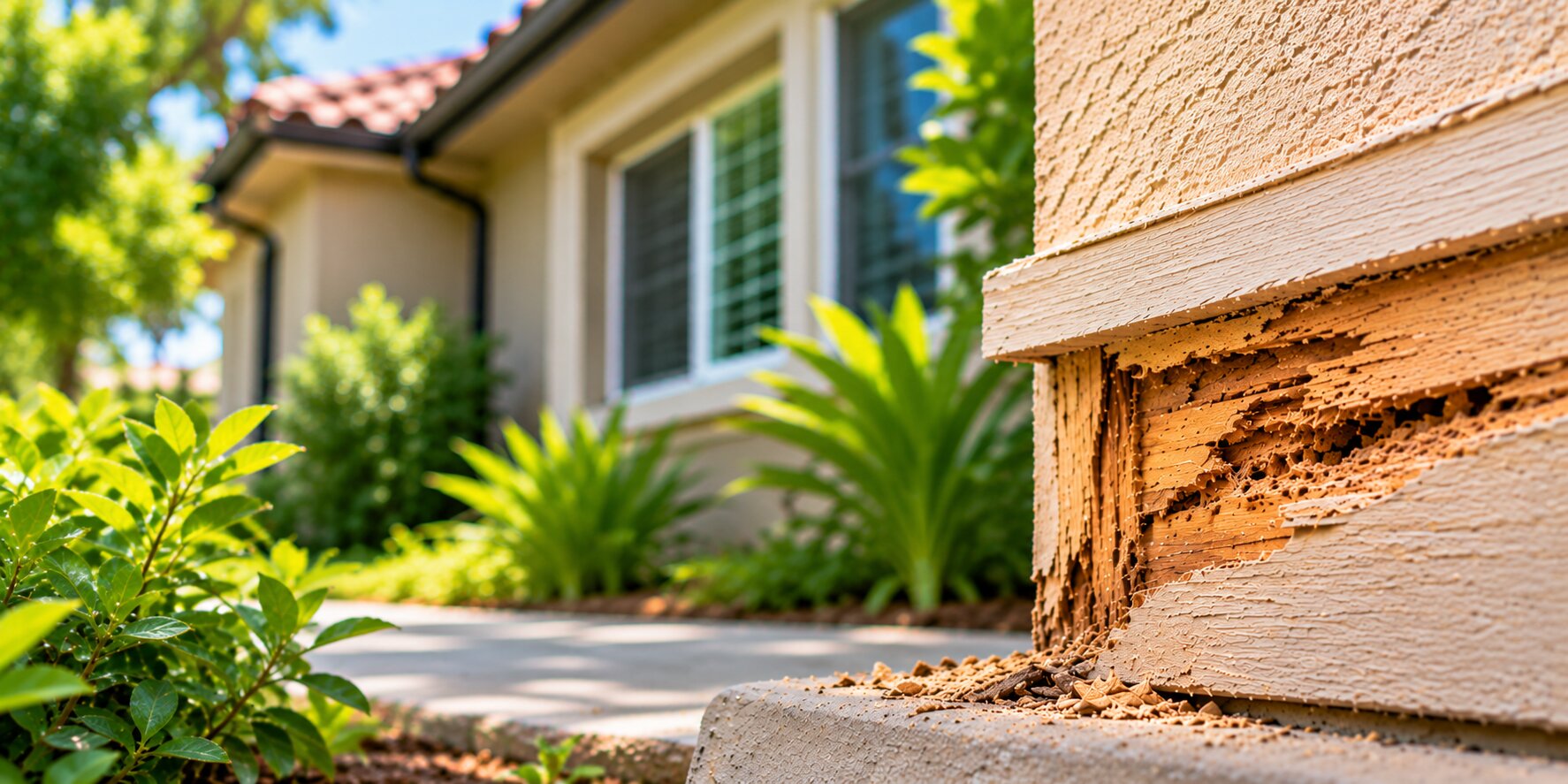
One recognizable sign is the accumulation of small, pellet-like droppings called frass.
Because drywood termites can remain concealed within wooden structures, infestations may go unnoticed until pellets, discarded wings, or damaged wood appear.
Why Identification Matters
Treatments that work for subterranean termites may not be appropriate for drywood termites.
For example, a treatment targeting termite activity in soil differs from a localized treatment designed for insects living within wooden framing.
The Insight team evaluates termite evidence and property conditions before recommending a course of action.
What Are the Warning Signs of a Termite Infestation?
Termites are often described as silent destroyers because they can damage wood without making their presence obvious.
Recognizing early warning signs can help homeowners arrange inspections before an infestation progresses.
Common Signs of Termite Activity
- Discarded wings: Small, similarly sized wings near windowsills, doors, or light fixtures may indicate termite swarmers.
- Mud tubes: Narrow, soil-like tunnels along foundations or other surfaces can indicate subterranean termite activity.
- Termite frass: Small, dry pellets near wooden trim or furniture may suggest drywood termites.
- Hollow-sounding wood: Damaged wood may sound hollow when tapped, although this alone doesn’t confirm termites.
- Blistered or damaged surfaces: Some infestations can cause visible changes in paint, wood, or wall coverings.
- Swarming insects: Groups of winged termites may appear during suitable weather conditions.
- Deteriorating wood: Weakened trim, beams, or other structural components may indicate advanced damage.
Imagine cleaning your living room in Calabasas and noticing a small pile of sand-like pellets beneath a wooden window frame. You wipe them away, but a few days later, another pile appears.
What initially seems like ordinary household debris could be evidence of drywood termites living inside the wood.
Rather than guessing at the cause, a professional termite inspection can help determine whether the material indicates an infestation and whether other areas of the home are affected.
How Does Insight Pest Management Inspect and Treat Termites?
Effective termite control begins with understanding the species, location, and extent of the infestation.
Insight Pest Management takes an inspection-focused approach that emphasizes accurate identification and treatment recommendations based on actual property conditions.
Step 1: Thorough Termite Inspection
The process begins with an evaluation of accessible areas where termites may be active or where conditions could support an infestation.
Depending on the property, these areas may include:
- Exterior foundations and walls
- Crawl spaces and accessible framing
- Garages and storage areas
- Wooden fences, decks, and attached structures
- Windows, doors, and baseboards
- Areas with visible wood damage
- Locations showing moisture accumulation
Insight Pest Management uses professional inspection methods and may use equipment such as moisture meters or specialized cameras to investigate suspicious areas.
The goal is to understand the infestation rather than simply treat the first visible symptom.
Step 2: Termite Species Identification
After evaluating the available evidence, our team works to determine which termite species is responsible.
This distinction helps guide decisions about treatment methods, application locations, and necessary follow-up.
Accurate identification is especially important because different infestations may require dramatically different approaches.
Step 3: Customized Treatment Recommendations
Once the inspection findings are understood, the Insight team recommends treatment options appropriate for the property.
Depending on termite species, infestation location, and severity, professional termite management may involve:
- Localized treatments for accessible drywood termite activity
- Appropriate soil or structural treatments for subterranean termites
- Broader structural treatment recommendations when infestations are extensive
- Corrections to conditions supporting termite activity
- Follow-up inspections or monitoring when appropriate
Not every infestation requires the same treatment.
A small, accessible drywood termite infestation may be suitable for localized treatment, while widespread or concealed activity may require a more comprehensive approach.
Step 4: Homeowner Education and Prevention
Our team believes homeowners should understand why a particular treatment is recommended.
We’ll explain the inspection findings, discuss relevant treatment considerations, and identify property maintenance practices that may help reduce termite risks.
Contact Insight Pest Management to schedule a professional termite evaluation for your Calabasas property.
What Is the Difference Between Spot Treatment and Fumigation?
One of the most common questions homeowners ask is whether an infestation requires a localized treatment or whole-structure fumigation.
The answer depends on the termite species and the extent and accessibility of the infestation.
Localized Termite Treatment
Localized treatment focuses on identified areas of termite activity.
It may be appropriate when an infestation is limited, accessible, and reasonably well understood.
Potential benefits include:
- Targeting specific infestation locations
- Avoiding whole-structure treatment when unnecessary
- Addressing accessible termite galleries
- Limiting disruption when the selected method allows it
However, localized treatment may not eliminate undetected colonies elsewhere in the building.
Whole-Structure Fumigation
Fumigation may be recommended for certain drywood termite infestations when activity is widespread, inaccessible, or difficult to fully identify.
This method involves treating the enclosed structure with a registered fumigant under controlled professional conditions.
Residents and pets must vacate the property during fumigation and cannot return until the structure has been officially cleared for reentry.
Fumigation can address drywood termites throughout a treated structure, but it does not provide a lasting chemical barrier against future infestations.
Which Treatment Is Right for Your Home?
The appropriate method depends on several factors:
- Termite species
- Number and location of infestation sites
- Accessibility of damaged wood
- Size and construction of the property
- Evidence of additional hidden activity
- Homeowner preferences and treatment requirements
An inspection provides the information needed to compare options responsibly.
Why Choose Insight Pest Management for Termite Control in Calabasas?
Termite treatment requires an understanding of insect biology, building construction, and local environmental conditions.
Insight Pest Management brings these elements together through science-based pest management and a strong commitment to customer education.
Owner and operator Israel Alvarez has nearly 20 years of professional pest management experience.
His professional credentials include:
- Associate Certified Entomologist since 2013
- California Pest Control Operators License obtained in 2014
- Vice Chair of the Pest Control Operators of California, Ventura District
- Participant in the National Pest Management Association’s Executive Leadership Program in 2019
As a family-owned and locally operated Southern California company, Insight Pest Management understands the pest pressures associated with the region’s climate and residential construction.
We emphasize careful inspections, clear communication, and practical recommendations instead of treating every termite problem identically.
Our approach follows Integrated Pest Management principles, combining accurate identification, targeted treatment, monitoring, and prevention whenever appropriate.
How Can Calabasas Homeowners Reduce Termite Risks?
While termites cannot always be prevented, homeowners can address conditions that make their properties more vulnerable.
Practical Termite Prevention Tips
- Repair plumbing leaks promptly. Excess moisture can create favorable conditions for subterranean termites.
- Maintain proper drainage. Direct water away from foundations where practical.
- Reduce wood-to-soil contact. Avoid leaving vulnerable wood materials directly against the ground.
- Store firewood away from the home. Keep wood piles separated from exterior walls.
- Maintain exterior wooden structures. Inspect decks, fences, and trim for deterioration.
- Monitor suspicious wood debris. Investigate recurring piles of pellets or discarded wings.
- Maintain landscaping. Prevent vegetation from concealing areas that need inspection.
- Schedule periodic professional inspections. Early detection can help identify termite activity before additional damage occurs.
For homeowners in communities such as Calabasas Park, The Oaks, and neighborhoods near Old Topanga Canyon Road, regular inspections can be especially useful for properties featuring substantial wooden construction or extensive landscaping.
Simple maintenance improvements can help reduce risk, but they don’t replace professional treatment when termites are already present.
Frequently Asked Questions About Termite Control in Calabasas
Termite infestations can cause significant property damage, often before homeowners notice visible warning signs. Below, Insight Pest Management answers common questions from Calabasas homeowners about termite identification, treatment options, prevention, and the importance of professional inspections.
How do I know if my Calabasas home has termites?
Common signs include discarded wings, mud tubes, drywood termite pellets, damaged wood, and swarming insects. Some infestations produce few visible symptoms, so professional inspections are the most reliable way to investigate suspected activity.
Are termites active year-round in Southern California?
Termites can remain active throughout the year in Southern California. Swarming activity may be more noticeable during certain seasons, depending on the species and weather conditions.
Can termites damage a newer home?
Yes. Termites can infest newer homes when suitable wood materials and access conditions are present. Building age alone does not eliminate termite risk.
Will termite treatment eliminate all termites permanently?
An effective treatment can eliminate the infestation it targets, but future infestations remain possible. Continued monitoring, structural maintenance, and preventive measures can help reduce recurring problems.
How long does professional termite treatment take?
Treatment timelines vary depending on the termite species, infestation severity, and selected method. Some localized treatments can be completed in a single visit, while other approaches require additional preparation, treatment time, or follow-up.
Should I schedule an inspection before buying a home?
Yes. A termite inspection can provide important information about visible infestation evidence, wood damage, and conditions that may require further investigation before purchasing a property.
Schedule Professional Termite Control in Calabasas With Insight Pest Management
Termite damage can develop quietly, but protecting your property doesn’t have to be complicated.
Insight Pest Management helps Calabasas homeowners and businesses understand termite activity through detailed inspections, science-based treatment recommendations, and practical prevention guidance.
Led by Associate Certified Entomologist Israel Alvarez, our team combines extensive pest management experience with friendly, knowledgeable service.
Whether you’re dealing with an active infestation or want to inspect your property before a problem develops, we’re ready to help you make an informed decision.
Call Insight Pest Management at (805) 628-2881 to schedule your termite inspection in Calabasas today.
Visit insight-pest.com to learn more about our professional termite and pest management services.