

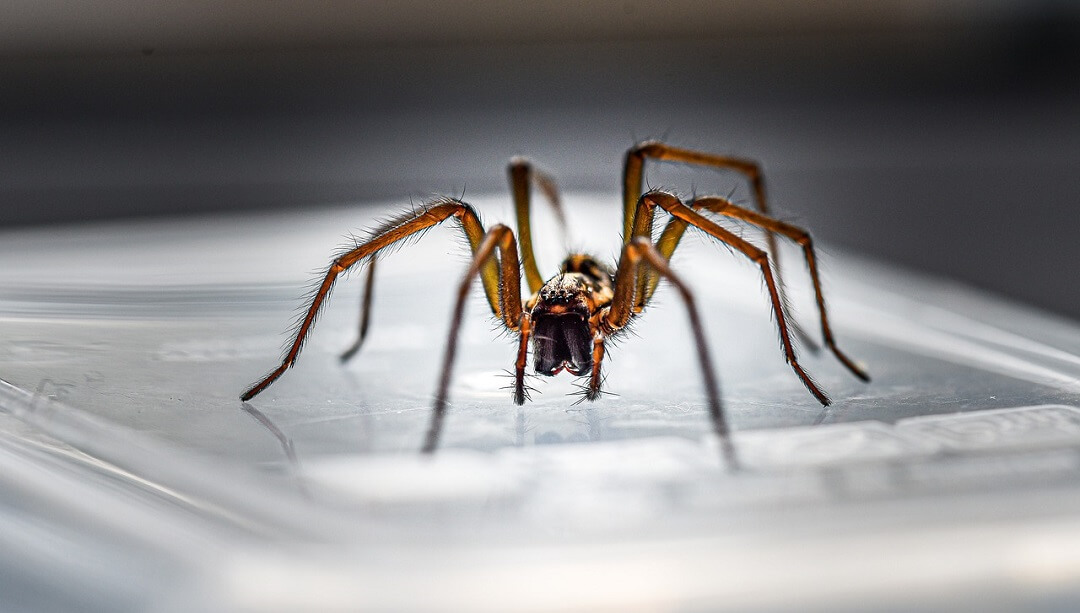

Spiders are primarily attracted to homes that provide prey, shelter, and easy access. If flies, moths, ants, cockroaches, or other insects are active inside, spiders may find a steady food supply. Quiet storage areas, open door gaps, damaged screens, exterior lighting, and clutter can make the property even more inviting.
Spiders aren’t attracted to crumbs or garbage in the same way ants and rodents are. Those materials attract insects—and insects attract spiders. That’s why lasting spider prevention usually requires reducing the underlying pest activity rather than treating spiders alone.
1. Other Insects
A reliable source of prey is the most important condition attracting spiders. Most spiders feed on insects and other small arthropods.
Common household prey includes:
- Flies
- Moths
- Mosquitoes
- Ants
- Cockroaches
- Crickets
- Silverfish
- Beetles
- Earwigs
- Other spiders
Web-building spiders select locations where insects regularly travel, such as corners near windows, outdoor lights, garage doors, and eaves. Hunting spiders may wander through the home looking for prey rather than waiting in a web.
If spiders keep returning to the same room, look for the insects supporting them.
2. Exterior Lighting
A porch light doesn’t necessarily attract spiders directly. It attracts flying insects, which create a convenient feeding area.
Moths, gnats, mosquitoes, and other insects gather around exterior lighting after dark. Spiders may build webs near the fixture, beneath the eaves, or around nearby doors and windows.
Open the door beside that light, and both prey insects and spiders have an opportunity to enter.
To reduce this activity:
- Turn off unnecessary exterior lights.
- Use motion-activated fixtures when practical.
- Position lighting away from frequently used doors.
- Keep windows closed or properly screened near lights.
- Clean webs and dead insects from fixtures.
- Consider less insect-attractive bulb colors where appropriate.
Lighting changes won’t eliminate every spider, but they can reduce a concentrated nighttime food source.
3. Gaps Around Doors and Windows
Spiders don’t need a large opening to enter. They may crawl beneath worn door sweeps, around utility lines, through damaged screens, or between poorly sealed building materials.
Common entry points include:
- Gaps beneath exterior doors
- Garage-door edges
- Torn window screens
- Open windows
- Utility penetrations
- Foundation cracks
- Roof and eave gaps
- Spaces around vents
- Loose siding
- Openings around pipes
A spider may also be carried inside with firewood, potted plants, storage boxes, outdoor furniture, or equipment.
Inspect the entire exterior rather than focusing only on ground-level cracks. Spiders and the insects they hunt can enter around roofs, attics, and upper windows as well.
4. Clutter and Undisturbed Storage
Spiders benefit from protected areas where they can hide, construct webs, lay egg sacs, or wait for prey.
Common hiding places include:
- Cardboard boxes
- Stored clothing
- Garages
- Attics
- Closets
- Crawl spaces
- Cabinets
- Spaces behind furniture
- Holiday decorations
- Firewood
- Yard equipment
- Shelving
Clutter doesn’t create spiders, but it provides more undisturbed shelter and makes webs or egg sacs harder to notice.
Store belongings in durable, closed containers when possible. Leave enough space around walls and shelves to inspect and clean.
5. Moisture and Water Leaks
Some spiders are found near sinks, showers, drains, and plumbing because those areas provide moisture or attract prey insects.
A leak may support:
- Cockroaches
- Flies
- Silverfish
- Springtails
- Ants
- Other moisture-associated arthropods
Those pests become food for spiders.
Spiders found in a bathtub often didn’t crawl up through the drain. They may have wandered into the smooth fixture and become unable to climb back out.
Repair plumbing and irrigation leaks, improve ventilation, and address persistent dampness. Reducing moisture removes one of the conditions supporting the broader indoor food web.
6. Warm or Protected Conditions
Weather changes can affect spider activity, but it’s too simple to say that all spiders enter homes because they’re cold. Many spiders living indoors are adapted to sheltered building environments, while outdoor species may enter accidentally.
Heavy rain, high heat, drought, landscaping work, or habitat disturbance can change where spiders and their prey are active. Seasonal mating behavior can also make wandering males more visible.
A spider seen crossing the floor may not be establishing a nest. It may be searching for a mate, pursuing prey, or trying to find an exit.
7. Vegetation Touching the House
Shrubs, vines, tree branches, and dense ground cover can provide habitat for insects and pathways to the building.
Vegetation touching windows, siding, eaves, or the roof gives spiders and other pests a direct bridge to potential entry points.
Trim plants to create separation from the structure. Remove dense vines from walls and keep the foundation visible enough to inspect.
You don’t need a bare landscape. Thoughtful spacing and regular maintenance reduce hidden pest routes without eliminating beneficial outdoor habitat.
8. Firewood and Outdoor Materials
Firewood piles, lumber, planters, rocks, landscape timbers, and unused equipment create protected outdoor spaces. Spiders can hide between pieces and may be carried indoors when the material is moved.
Store firewood off the ground and away from exterior walls when practical. Bring in only what you intend to use and inspect each piece before carrying it inside.
Wear gloves when handling outdoor materials, particularly items that haven’t been moved recently.
9. Open Food and Trash—Indirectly
Spiders don’t come into the kitchen to eat your cereal or leftovers. However, exposed food, dirty dishes, pet bowls, and open trash can attract flies, ants, cockroaches, and other potential prey.
Good sanitation reduces spider food indirectly:
- Wipe counters and floors.
- Store pantry goods in closed containers.
- Take out garbage regularly.
- Clean recycling residue.
- Remove pet food after feeding.
- Address fruit flies and drain flies.
- Clean beneath appliances.
If an active cockroach population exists behind the refrigerator, removing a few visible spiders won’t correct the condition drawing them there.
10. Existing Web Sites
A sheltered corner that catches insects is valuable habitat. Some spiders may rebuild in the same location after a web is removed, while another spider may occupy the area later.
Regularly remove webs from:
- Eaves
- Porch ceilings
- Window frames
- Garage corners
- Exterior light fixtures
- Doorways
- Patio furniture
- Storage areas
Web removal is most effective when paired with prey control and exclusion. Otherwise, the favorable conditions remain.
Does a Clean House Still Get Spiders?
Yes. Spiders can enter any building, including a clean and well-maintained home.
Sanitation reduces insects associated with food and organic residue, but it doesn’t control every source of prey. Flying insects may enter through open doors, landscape pests may move inside, and spiders can accidentally hitchhike on objects.
A clean house is easier to inspect and less likely to offer extensive hiding places. It isn’t an impenetrable barrier.
Are Spiders Attracted to People or Beds?
Spiders aren’t looking for people to bite. A bed doesn’t provide food unless prey insects are present, nor are spiders generally drawn to sleeping humans.
Occasional encounters may occur when:
- Bedding touches the floor.
- A bed is beside a wall or window.
- Clothing is stored on the floor.
- Insects are active in the room.
- A wandering spider crosses the area accidentally.
Keep bedding off the floor, reduce clutter, and avoid storing clothing or boxes beneath the bed if spider activity is a concern.
Do Houseplants Attract Spiders?
Houseplants can provide shelter, moisture, and insects. A spider may live on a plant because small flies, aphids, or other arthropods are present.
Inspect plants before bringing them indoors. Check beneath leaves, around pot rims, and near drainage trays.
Avoid overwatering, which may contribute to fungus gnat activity. The gnat population—not the plant itself—may be what supports indoor spiders.
Do Essential Oils Repel Spiders?
Peppermint and other strongly scented oils are commonly promoted as natural spider repellents. Results can be inconsistent, and any effect is generally temporary.
A scent treatment doesn’t remove egg sacs, seal entry points, or eliminate prey insects. Essential oils can also irritate people or create risks for pets when used improperly.
Prevention should focus on conditions that can be corrected and verified:
- Reduce insect activity.
- Seal gaps.
- repair screens.
- Remove webs.
- Reduce clutter.
- Correct moisture.
- Adjust lighting.
Why Do I Suddenly Have Many Spiders?
A noticeable increase may have several causes.
A Prey Population Has Increased
Flies, ants, cockroaches, moths, or another pest may be providing abundant food.
Egg Sacs Have Hatched
Many tiny spiderlings in one area may have emerged from a nearby egg sac. Not all will survive or remain together, but the sight can be startling.
Males Are Wandering
Mature males of some species travel while searching for females, making them more visible during certain periods.
Weather or Habitat Changed
Rain, heat, drought, landscaping, or construction may alter pest movement.
Entry Points Opened
A damaged screen, worn door sweep, or frequently open garage can create a new route.
The pattern matters. Spiders concentrated around one window suggest different conditions from spiders repeatedly appearing in a bathroom or garage.
How to Make Your Home Less Attractive to Spiders
A prevention-first approach targets food, shelter, and access.
Reduce Their Food Supply
Address flies, ants, cockroaches, crickets, and other insects. Keep food and waste secured, correct moisture, and inspect areas where prey insects gather.
Seal Entry Points
Replace damaged screens and weatherstripping. Close gaps around utility lines, doors, windows, vents, and siding.
Remove Webs and Egg Sacs
Vacuum or sweep accessible webs. Empty the vacuum afterward and avoid handling unidentified spiders or egg sacs directly.
Declutter Storage Areas
Use closed containers and create space for cleaning. Shake out stored shoes, gloves, and clothing before use.
Maintain the Exterior
Trim vegetation, move wood away from walls, reduce leaf litter near the foundation, and clean exterior fixtures.
Change Lighting Practices
Turn off lights when they aren’t needed and keep bright fixtures away from doors when possible.
Are House Spiders Dangerous?
Most spiders encountered in and around California homes aren’t considered dangerous to people. They generally avoid contact and bite only when trapped or handled.
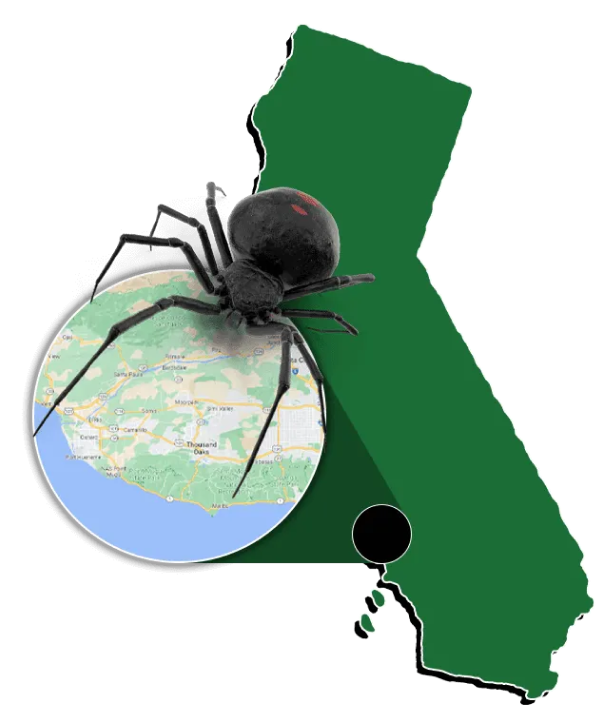
Black widows deserve additional caution. They favor protected, undisturbed locations and often build irregular webs close to the ground. Wear gloves when moving stored materials, firewood, planters, or equipment.
Don’t identify a spider solely by color. Many harmless species are brown or black, and accurate identification may require more than a quick glance.
If you find an unfamiliar spider, photograph it from a safe distance. Don’t pick it up with bare hands.
When to Call for Professional Spider Control
A single spider doesn’t always require treatment. Professional help may be appropriate when:
- Spiders repeatedly appear indoors.
- Webs quickly return after removal.
- A potentially concerning species is present.
- Egg sacs are found around living areas.
- Heavy insect activity is attracting spiders.
- The source of the activity is unclear.
- Spiders are concentrated near children, pets, or frequently used spaces.
An effective inspection evaluates both the spiders and the conditions sustaining them.
Led by Associate Certified Entomologist Israel Alvarez, Insight Pest Management provides science-based spider control throughout Ventura County. Israel brings nearly 20 years of pest management experience to identifying local spiders, prey insects, entry points, and conducive conditions.
Frequently Asked Questions About Spiders
Food, shelter, or entry points may still be present, allowing spiders to return or new spiders to move in.
Sometimes. Frequent spider activity can indicate that insects such as flies, ants, moths, or cockroaches are providing a food source.
Common areas include garages, closets, attics, storage spaces, behind furniture, and other quiet locations.
Yes. Repairing screens and closing gaps around doors, windows, vents, and utility lines can reduce entry points.
A professional inspection can identify prey insects and other conditions contributing to recurring spider activity.
Get Spider Control in Ventura County
Insight Pest Management serves Newbury Park, Thousand Oaks, Camarillo, Simi Valley, Moorpark, Oxnard, Westlake Village, Chatsworth, Winnetka, Calabasas, Sherman Oaks, Wood Ranch, Malibu, Porter Ranch, Simi Valley, Ventura and nearby communities.
The Insight team takes a prevention-first approach that may include web removal, exterior treatment, insect control, entry-point recommendations, and ongoing monitoring.
If spiders keep returning, schedule an inspection with Insight Pest Management. We’ll look beyond the visible webs to identify what’s attracting spiders and create a practical plan for your property.