
'/%3E%3Cpath%20fill='%23b2b2b2'%20d='M241%20382q0%2016%2017%2026%2017%2011%2042%2011t42-11q16-11%2017-26V269H241'/%3E%3Cpath%20fill='%239f7e00'%20d='M241%20379q0%2014%208%2023%209%209%2021%209%2014%200%2021-9%209-9%209-23V269h-59'/%3E%3Cpath%20d='M241%20339v-70h59v110q0%2014-9%2023l-6%205v-68h-15v72q-8%200-14-4v-68zm59%2040c0%2022%2015%2032%2029%2032%2021%200%2030-18%2030-32v-40h-59'/%3E%3Cpath%20fill='%239f7e00'%20d='M266%20277v5h2v12h-3v-5h2v-5h-9v5h2v5h-4v9h3v18h-5v10h34v-10h-5v-18h3v-9h-4v-5h2v-5h-9v5h2v5h-3v-12h2v-5zm42%20101q0%2010%206%2017%206%206%2015%207%2010-1%2016-7%206-7%206-17v-29h-43'/%3E%3Ccircle%20fill='%230044ad'%20cx='329.5'%20cy='372'%20r='6'/%3E%3Cellipse%20fill='%230044ad'%20cx='300'%20cy='340'%20rx='16'%20ry='21'/%3E%3C/svg%3E)

Most homeowners don’t discover a termite problem by catching termites in the act. They find the evidence, a strange pile of grit near a window sill, a door that suddenly doesn’t close right, a patch of paint that bubbles for no obvious reason. By the time these clues appear, termites have often been working quietly inside the wood for months, sometimes years.
Southern California’s warm, dry climate makes Ventura County an ideal environment for drywood termites in particular. They don’t need soil contact or a moisture source to survive, just wood and time. That combination makes early detection essential.
Led by Associate Certified Entomologist Israel Alvarez, Insight Pest Management has helped homeowners across Thousand Oaks, Camarillo, Newbury Park, and the surrounding region identify and address termite activity before it becomes a structural problem. Here are the five signs Israel and his team look for first.
Sign 1: Termite Frass (Drywood Termite Droppings)
Frass is the most reliable early indicator of a drywood termite infestation, and it’s something most homeowners mistake for sawdust, dirt, or debris. Termite frass consists of tiny, hard pellets, roughly the size of a grain of sand, that drywood termites push out of small kick-out holes as they tunnel through wood.
You’ll typically find frass accumulating in small piles or streaks on windowsills, along baseboards, on floors beneath wooden furniture, or near door frames. The color can vary from light tan to dark brown depending on what type of wood the colony is consuming. If you’re sweeping up what looks like a fine, gritty powder in the same spot more than once, that’s a significant red flag.
Unlike subterranean termites, which use their droppings to build mud tubes, drywood termites keep their galleries clean — and that means the frass has to go somewhere. Finding it is often the first concrete sign that something is living inside your walls or woodwork.
Spotted something that looks like termite frass? Call Insight Pest Management today to schedule a professional inspection with certified entomologist Israel Alvarez.
Sign 2: Discarded Wings Near Windows and Doors
Once a drywood termite colony matures, it produces winged reproductives called alates — or swarmers. These swarmers fly out in search of new locations to establish colonies, typically triggered by warm temperatures and low wind. In Southern California, termite swarms most commonly occur in late summer and early fall, though they can happen year-round in warmer microclimates.
After swarmers land and find a suitable spot, they shed their wings immediately. What homeowners find are small, translucent or pale wings, often in pairs, scattered near windowsills, sliding glass doors, light fixtures, or on spider webs. Finding a handful of shed wings inside your home is a strong signal that a swarming event occurred nearby, and it means you need an inspection right away.
It’s worth knowing that termite wings look different from ant wings. Termite swarmers have two pairs of equal-length wings; ant swarmers have a larger front pair and a smaller rear pair. If you’re not sure what you’re looking at, save a sample and call Insight Pest Management, Israel Alvarez can identify the species and determine the appropriate next step.
Sign 3: Hollow-Sounding or Damaged Wood
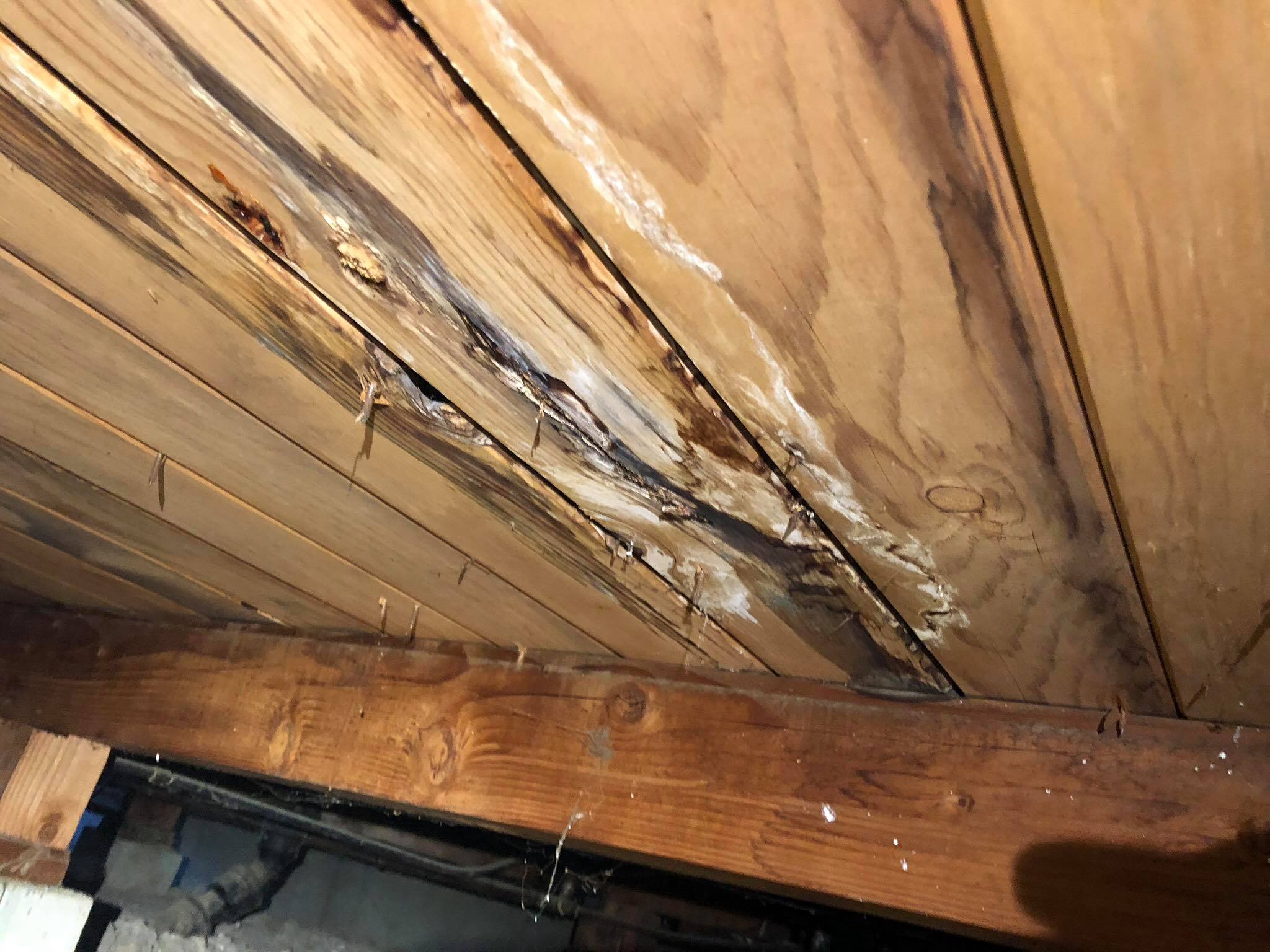
Termites feed from the inside out. They consume the interior of wood members while leaving a thin outer shell intact, which means a piece of trim or a structural beam can look completely normal on the surface while being heavily damaged inside. Tapping on wood is a simple way to check, healthy wood produces a solid thud, while termite-damaged wood sounds hollow or papery.
Look for these additional signs of wood damage:
- Blistering or bubbling on painted wood surfaces — a sign termites are feeding just beneath the finish.
- Wood that crumbles or breaks apart more easily than it should when pressure is applied.
- Visible tunnels or galleries when damaged wood is broken open — termite galleries run with the grain of the wood and have a smooth, excavated appearance.
- Floors that feel spongy or soft underfoot, particularly near walls or in corners.
Structural damage of this kind tends to develop slowly and silently. By the time a homeowner notices it, the colony has often been active for a year or more. Owner and entomologist Israel Alvarez emphasizes that even subtle changes in how doors or floors feel deserve a closer look — they’re worth investigating before writing off as normal settling.
Sign 4: Mud Tubes Along Foundation Walls
Mud tubes are the calling card of subterranean termites, a different species from drywood termites, but one that’s also active in Southern California, particularly in areas with older construction or soil-to-wood contact. Subterranean termites can’t survive exposure to open air, so they build pencil-width mud tubes from the soil up to their food source, maintaining the humidity and protection they need to travel.
Check for mud tubes along:
- Foundation walls, both exterior and interior.
- Crawl space beams and floor joists.
- Gaps where plumbing or utility lines enter the structure.
- The exterior base of stucco walls, fence posts, or wooden deck supports.
Active mud tubes will contain live termites if you break one open. Inactive tubes will be dry and crumbling, though inactive doesn’t necessarily mean the colony is gone, it may have simply moved to a different access point. Either way, the presence of mud tubes means a licensed inspection is overdue.
Sign 5: Sticking Doors or Windows
This one surprises a lot of homeowners. A door that suddenly requires more force to open, or a window that no longer slides smoothly in its frame, can be an early symptom of termite activity — not just seasonal wood expansion from heat or moisture.
As termites consume wood and their colonies grow, they alter the structural integrity of the wood around frames and jambs. The wood shifts slightly, gaps close, and what was once a perfectly hung door starts to bind. Homeowners in Ventura County frequently attribute this to summer heat or simple aging of the home. Sometimes that’s accurate. But when the sticking is new, localized, or accompanied by any of the other signs on this list, it’s worth having a professional check it out.
Termite activity near door and window frames is especially common in Southern California because these areas often have exposed end grain, the most vulnerable part of any piece of wood, and because they’re frequently near the exterior of the home where swarmers first land.
Schedule your inspection with certified entomologist Israel Alvarez and the Insight team — don’t wait for the damage to become obvious.
What to Do If You Notice Any of These Signs
The most important thing is not to wait. Termite colonies grow steadily, and the damage compounds over time. A small, localized infestation caught early can often be addressed with targeted spot treatment. A colony that’s been active for two or three years may require a much more involved approach.
At Insight Pest Management, every inspection is thorough and systematic. Israel Alvarez, who brings nearly 20 years of professional pest management experience to every evaluation, examines accessible and inaccessible wood members, looks for all five of the signs above, and gives homeowners an honest, evidence-based assessment of what they’re dealing with. No guesswork. No unnecessary upsells.
Insight Pest Management serves Newbury Park, Thousand Oaks, Camarillo, Simi Valley, Moorpark, Oxnard, and surrounding Ventura County communities. If you’ve noticed anything unusual in your home, a strange pile of grit, wings near a window, a door that’s suddenly fighting you, the right move is a professional set of eyes.
Frequently Asked Questions About Termite Infestations
How do I tell termite frass from sawdust? Termite frass is made up of uniform, hard pellets with a slightly rounded shape, often resembling coarse sand or coffee grounds. Sawdust is irregular and fibrous. If it’s perfectly granular and consistently sized, it’s almost certainly frass.
Can I treat termites myself? Over-the-counter termite products exist, but they rarely reach the source of a drywood termite colony. Without knowing the full extent of the infestation, DIY treatments often address surface symptoms while the colony continues to grow. A professional inspection identifies the scope of the problem and the appropriate response.
How often should I have my home inspected for termites? For most Southern California homes, an annual inspection is a smart baseline, especially for homes with wood siding, older construction, or a history of termite activity. Homes in high-risk areas or with prior infestations may benefit from twice-yearly checks.
Protect your home with Insight’s proven, science-backed pest control plans. Call Insight Pest Management in Ventura County today for expert termite detection and treatment.