


Termite control in Sherman Oaks, CA, is an important part of protecting your home or commercial property from hidden structural damage. Termites can quietly feed on wood and other cellulose materials for extended periods before homeowners notice anything unusual. By the time visible damage appears, an infestation may already be well established.
Insight Pest Management provides professional termite inspections and treatment services for Southern California properties, helping property owners identify termite activity, understand potential risks, and develop effective solutions for protecting their investments.
Led by owner and Associate Certified Entomologist Israel Alvarez, our team brings nearly 20 years of professional pest management experience to every service recommendation. We combine science-based expertise with a practical, prevention-first approach that prioritizes accurate identification and appropriate treatment.
Whether you’ve noticed discarded wings near a window, suspicious wood damage, or unexplained mud tubes around your foundation, it’s important to investigate potential termite activity before the problem becomes more extensive.
Contact Insight Pest Management to discuss termite inspection and treatment options for your Sherman Oaks property.
Why Are Termites a Concern for Sherman Oaks Homeowners?
Sherman Oaks features a wide variety of residential and commercial properties, from established homes with mature landscaping to remodeled buildings and newer developments.
While these properties may differ in age and construction, many contain wood or other cellulose-based materials that termites can use as food.
Southern California’s relatively mild climate supports termite activity throughout the year. Seasonal changes in temperature, rainfall, and moisture can also influence termite behavior, including when reproductive termites emerge to establish new colonies.
Several conditions can make properties more vulnerable to termite infestations:
- Wood-to-soil contact: Wooden structural elements or landscaping materials touching soil may provide access for subterranean termites.
- Moisture problems: Leaking pipes, poor drainage, and damp crawl spaces can create favorable conditions for certain termite species.
- Aging wood components: Older structures may contain damaged or deteriorating materials that deserve closer inspection.
- Cracks and structural openings: Small foundation gaps and construction joints can provide access to concealed areas.
- Outdoor wood materials: Tree stumps, buried wood, and other cellulose sources may support termite activity around a property.
Imagine a homeowner in Sherman Oaks preparing to renovate a room. While removing a section of baseboard, the contractor discovers hollowed wood and what appears to be termite damage.
The problem wasn’t obvious from the outside, but termites had been feeding inside concealed wooden areas.
Situations like this illustrate why early detection matters. Professional termite inspections can help identify activity and damage that might otherwise go unnoticed.
What Are the Signs of a Termite Infestation?
Termites are often called silent destroyers because they can remain hidden while feeding on wood.
However, infestations frequently leave behind clues.
Common Warning Signs of Termite Activity
- Discarded wings: Small piles of wings near windows, doors, or light fixtures may indicate that termites have swarmed.
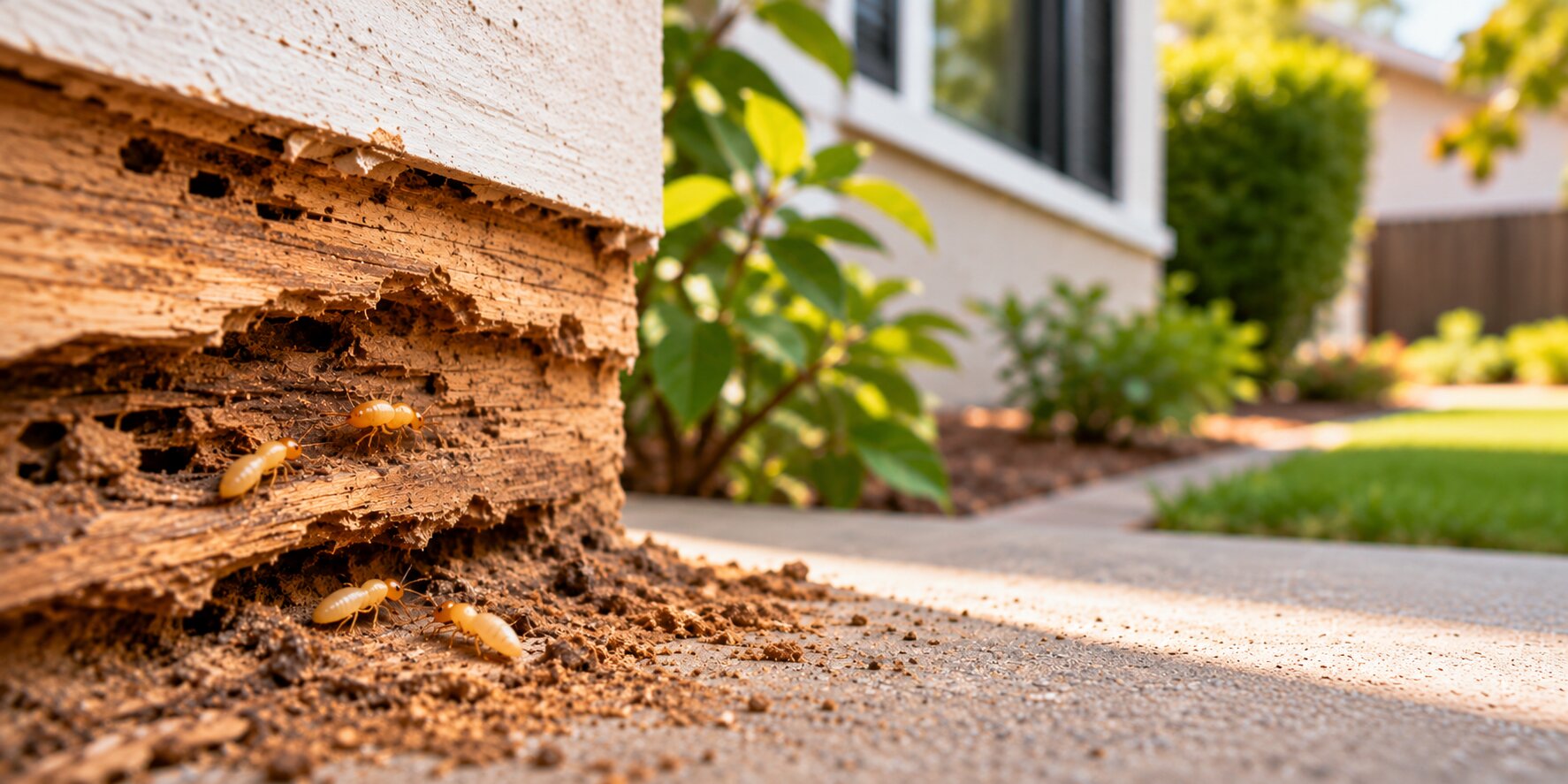
- Mud tubes: Subterranean termites construct narrow, soil-like tunnels that protect them while traveling between nesting areas and food sources.
- Hollow-sounding wood: Wood damaged by termites may sound hollow when tapped.
- Termite droppings: Drywood termites produce small, pellet-like droppings known as frass.
- Damaged paint or surfaces: Bubbling paint and unusual surface changes may sometimes accompany hidden termite damage.
- Wood deterioration: Blistering, weakened, or visibly damaged wood may indicate an underlying issue.
- Live termites: Discovering pale worker termites or winged reproductive termites can indicate nearby activity.
Not every damaged piece of wood means termites are responsible. Moisture, wood-decaying fungi, and other pests can produce symptoms that resemble termite damage.
An inspection by a knowledgeable Sherman Oaks pest management professional helps distinguish between these conditions and determine whether treatment is necessary.
What Types of Termites Are Found in Sherman Oaks?
Southern California properties may encounter multiple termite species, each with different nesting habits and treatment considerations.
Correct identification is essential because a treatment designed for one type of termite may not be suitable for another.
Subterranean Termites
Subterranean termites generally maintain a connection to soil or another reliable moisture source.
They often travel through concealed passages or protective mud tubes to reach wood within a building.
These termites can enter through foundation openings, structural joints, or areas where wood contacts the ground.
Because their colonies may extend beyond the visible area of damage, effective control requires understanding how the termites are accessing the structure.
Drywood Termites
Drywood termites live and establish colonies directly inside suitable wood without requiring continuous contact with soil.
They may infest framing, trim, furniture, and other wooden materials.
One of their most recognizable signs is the accumulation of small, hard fecal pellets beneath infested wood.
Drywood termite activity can remain hidden for significant periods, making detailed inspections particularly important.
Dampwood Termites
Dampwood termites generally prefer wood with elevated moisture content.
They are more likely to become a concern where persistent moisture or wood deterioration creates suitable conditions.
Correcting leaks and moisture problems is often an important part of addressing environments favorable to these termites.
Insight Pest Management emphasizes accurate pest identification before recommending treatment. Understanding the type of termite present helps determine which control methods are appropriate for the property.
How Does Professional Termite Control Work?
Effective termite management begins with a detailed understanding of the infestation.
Rather than assuming every property requires the same treatment, a professional approach considers the termite species, affected areas, building construction, and extent of activity.
1. Comprehensive Termite Inspection
The first step is evaluating accessible areas of the property for evidence of termites and conditions that may support an infestation.
Depending on the property’s construction and accessibility, inspection areas may include:
- Foundations and exterior walls
- Crawl spaces and accessible subareas
- Attics and exposed framing
- Windowsills and doorframes
- Baseboards and wooden trim
- Garages and storage areas
- Decks, fences, and exterior wood structures
- Areas with excessive moisture or water damage
During the inspection, our team looks for evidence such as mud tubes, frass, swarm activity, damaged wood, and other indicators.
The findings help determine whether additional investigation or treatment is recommended.
2. Termite Species Identification
Different termite species require different management strategies.
For example, subterranean termites commonly access structures from the soil, while drywood termites may establish colonies entirely within wooden components.
Identifying the species helps determine where treatment should be directed and which approaches may offer effective control.
Accurate identification also reduces the likelihood of recommending unnecessary or inappropriate procedures.
3. Customized Termite Treatment Recommendations
Once termite activity has been evaluated, we can discuss treatment options suited to the infestation and building conditions.
Depending on the situation, professional termite management may involve:
- Targeted treatment of accessible infested wood
- Appropriate soil treatments for subterranean termites
- Termite baiting systems when suitable
- Localized applications for qualifying infestations
- Recommendations for more extensive treatment when warranted
No single method is appropriate for every termite problem.
A localized drywood termite infestation, for example, may have different treatment requirements than widespread activity throughout a building.
Our approach focuses on explaining the available options, their intended purpose, and any limitations.
4. Prevention and Property Protection
Controlling an existing infestation is important, but reducing conditions that encourage future activity also matters.
Prevention recommendations may include improving drainage, repairing plumbing leaks, removing unnecessary wood-to-soil contact, and monitoring vulnerable building areas.
We help property owners understand which maintenance issues deserve attention and why they may influence termite activity.
What Happens if Termites Are Left Untreated?
Termites can gradually damage wooden components and create increasingly expensive repair concerns.
Although the rate of damage depends on the termite species, colony size, building conditions, and duration of infestation, delaying treatment can allow activity to continue.
Structural Wood Damage
Termites consume cellulose, an organic material found in wood and other plant-based products.
Over time, their feeding may weaken framing, floor supports, and other wooden components.
Severe damage can compromise structural integrity and may require repairs by qualified construction professionals.
Hidden Damage Behind Walls
Termite infestations frequently develop in areas that aren’t visible during everyday household activities.
Wall cavities, concealed framing, and structural connections may contain damaged wood even when exterior surfaces appear relatively normal.
Increased Repair Expenses
Treating termites and repairing termite damage are separate concerns.
A pest management treatment addresses the infestation, while damaged structural components may need professional repair or replacement.
Identifying an infestation before extensive deterioration occurs can help limit additional damage and future expenses.
Continued Infestation Activity
Termite colonies may remain active when no effective intervention occurs.
Ignoring suspicious evidence can allow termites to continue feeding and potentially affect additional areas of the property.
For these reasons, suspected termite activity should be evaluated promptly.
Why Choose Insight Pest Management for Termite Control in Sherman Oaks?
A termite inspection requires more than recognizing damaged wood.
It involves understanding insect biology, identifying subtle evidence, and determining how property conditions influence an infestation.
Leadership From an Associate Certified Entomologist
Insight Pest Management is led by owner and Associate Certified Entomologist Israel Alvarez.
Israel has held his Associate Certified Entomologist credential since 2013 and earned his California Pest Control Operators License in 2014.
With nearly 20 years of hands-on pest management experience, he brings a strong understanding of pest identification, behavior, and treatment principles.
He has also served as Vice Chair of the Pest Control Operators of California’s Ventura District and participated in the National Pest Management Association’s Executive Leadership Program in 2019.
This professional background reinforces our commitment to knowledgeable, science-based pest management.
Experience With Southern California Properties
Termite behavior is influenced by regional climate, construction practices, and environmental conditions.
Our experience in Southern California helps us recognize common risk factors associated with local properties.
We consider issues such as moisture, landscaping, wood exposure, and building accessibility when evaluating potential infestations.
A Thoughtful, Prevention-First Approach
We believe property owners deserve treatment recommendations based on their actual circumstances.
Our goal is to explain the problem clearly and identify reasonable options rather than assume every infestation requires the same response.
Customer Education and Clear Communication
Termite concerns can be stressful, especially when potential structural damage is involved.
We take an educational approach, helping customers understand inspection findings, treatment considerations, and prevention strategies.
Schedule a termite inspection with Insight Pest Management and get professional guidance informed by years of pest management expertise.
How Can Sherman Oaks Homeowners Reduce the Risk of Termites?
While termite prevention cannot guarantee that an infestation will never occur, several property maintenance practices can reduce favorable conditions.
Manage Moisture Around the Property
Repair leaking plumbing, address drainage issues, and prevent unnecessary water accumulation around foundations.
Moisture can encourage certain termite species and contribute to wood deterioration.
Reduce Wood-to-Soil Contact
Avoid direct contact between soil and wooden building components wherever practical.
Keep firewood and other stored wood away from foundation walls and raised off the ground.
Inspect Exterior Wood
Periodically examine fences, decks, wooden trim, and other exposed wood components for deterioration or suspicious damage.
Early observations can help identify concerns before they become more extensive.
Maintain Landscaping
Keep landscaping materials from accumulating against vulnerable structural areas.
Avoid storing unnecessary wood debris, tree stumps, or other cellulose materials near buildings.
Address Structural Gaps
Repair accessible cracks and openings as appropriate.
Although sealing openings alone won’t prevent every termite infestation, structural maintenance can help reduce certain access opportunities.
Arrange Professional Inspections
Professional inspections can identify visible evidence of termites and conditions that may increase infestation risk.
Inspection frequency should reflect property conditions, infestation history, and applicable real estate or maintenance requirements.
Residential and Commercial Termite Control in Sherman Oaks
Termites can affect both residential and commercial properties.
For homeowners, an infestation can raise concerns about structural damage, repair costs, and protecting the property’s long-term value.
Commercial property owners and managers may face additional challenges involving building maintenance, tenant concerns, and operational disruptions.
Wood-framed offices, retail spaces, multifamily buildings, and other structures may all require termite evaluation when suspicious activity appears.
Insight Pest Management offers residential and commercial pest management services with recommendations tailored to individual building conditions.
Our goal is to help property owners make informed decisions about pest control and prevention.
Frequently Asked Questions About Termite Control in Sherman Oaks
Termite infestations can go unnoticed for years, potentially causing significant damage to Sherman Oaks homes before visible signs appear. Below, Insight Pest Management answers common questions about termite identification, professional treatment methods, safety precautions, and preventing future infestations.
How do I know if my home has termites?
Common warning signs include discarded wings, mud tubes, drywood termite pellets, and unusual wood damage. Because termites can remain concealed, a professional inspection is the most reliable way to evaluate suspected activity.
Are termites common in Southern California?
Yes. Southern California provides suitable conditions for several termite species, including subterranean and drywood termites. Activity varies according to the species, weather, moisture, and property conditions.
Can termites damage a newer home?
Yes. Termites can infest newer buildings when suitable entry points or wooden materials are available. New construction is not automatically immune to termite activity.
How long does termite treatment take?
Treatment duration depends on the termite species, infestation severity, building accessibility, and selected method. Some treatments can be completed in a single visit, while other approaches require additional time or monitoring.
Can termites return after treatment?
Yes. Future termite infestations are possible, particularly when environmental conditions remain favorable. Ongoing maintenance and appropriate inspections help identify potential new activity.
Does termite treatment repair damaged wood?
No. Termite treatment and structural repair are separate services. Treatment addresses termite activity, while damaged wood may require evaluation and repair by a qualified contractor.
Is termite treatment safe for families and pets?
Professional termite treatments should be performed according to product labels and applicable requirements. Specific precautions vary by treatment method, and your provider should explain preparation and reentry instructions before service.
Schedule Professional Termite Control in Sherman Oaks Today
Termites can cause serious property damage while remaining hidden behind walls, beneath floors, and inside wooden structural components.
Recognizing warning signs and arranging a professional inspection can make an important difference in protecting your property.
Insight Pest Management combines science-based pest expertise, detailed inspections, and practical treatment recommendations to help Southern California homeowners and businesses address termite concerns.
Founded and operated by Associate Certified Entomologist Israel Alvarez, our company believes in professional service, clear explanations, and prevention-focused pest management.
Whether you’re concerned about an active infestation or want a better understanding of your property’s termite risks, professional guidance can help you determine the appropriate next steps.
Call Insight Pest Management today to discuss termite control in Sherman Oaks, CA, and take a proactive step toward protecting your home or business.