


Ant control in Winnetka, CA, requires more than wiping away the insects crawling across your kitchen counter. Ant colonies can contain thousands of workers, establish nests in difficult-to-reach areas, and return repeatedly when the underlying problem isn’t addressed.
Insight Pest Management provides science-based ant control solutions designed to identify the species, locate sources of activity, and reduce the conditions attracting ants to your property. Our approach combines professional inspections, targeted treatments, and practical prevention recommendations for Southern California homes and businesses.
Led by Associate Certified Entomologist Israel Alvarez, Insight Pest Management brings nearly two decades of professional pest management experience to the process of understanding and controlling pest activity.
Whether you’re finding a few ants around the sink or watching a steady trail move across your patio, professional ant management begins with understanding where they’re coming from and why they’ve chosen your property.
Contact Insight Pest Management to confirm Winnetka service availability and schedule a professional ant inspection.
Why Are Ants Such a Common Problem in Winnetka?
Ants are among the most frequently encountered household pests in Southern California. Winnetka’s warm summers, relatively mild winters, landscaped properties, and residential neighborhoods provide opportunities for different ant species to thrive.
Ants are social insects that live in organized colonies. Worker ants search for food and water, then establish chemical trails that guide other members of their colony toward available resources.
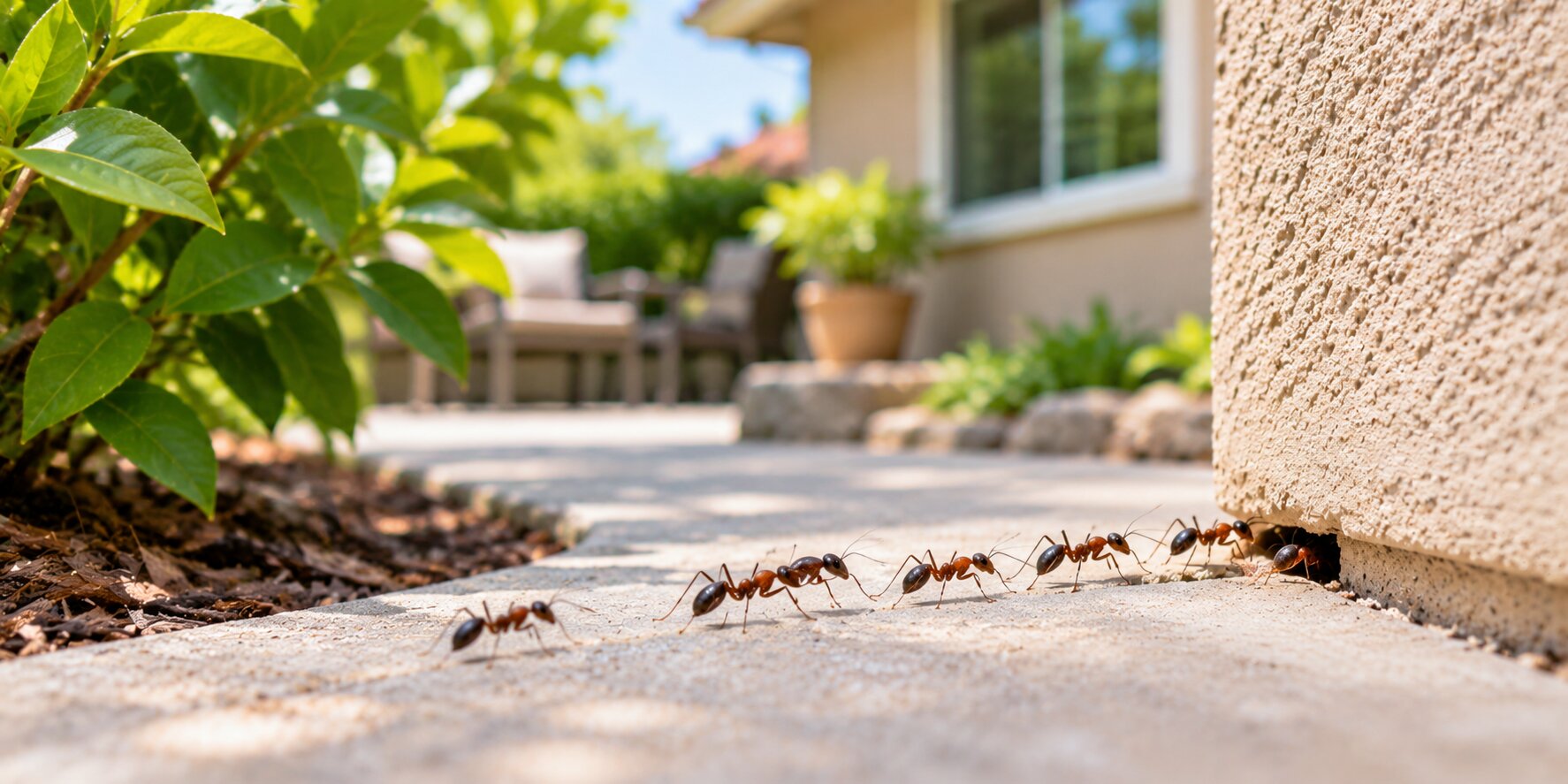
This explains why a few ants near your kitchen sink can quickly become a long line of insects moving between a cabinet and a small opening in the wall.
Common conditions that attract ants include:
- Accessible food: Crumbs, sugary spills, pet food, and improperly sealed pantry items can attract foraging ants.
- Moisture: Leaking pipes, damp cabinets, irrigation systems, and condensation provide valuable water sources.
- Structural openings: Small gaps around windows, doors, plumbing lines, and foundations allow ants to enter.
- Outdoor shelter: Mulch, landscaping, rocks, and accumulated debris can provide nesting opportunities.
- Seasonal changes: Heat, dry weather, and changes in moisture availability can influence ant foraging patterns.
Ant activity doesn’t necessarily indicate poor housekeeping. Even clean, carefully maintained homes can experience persistent ant problems when nearby colonies discover dependable resources indoors.
Understanding these conditions helps explain why successful control often requires more than treating the ants you can see.
What Types of Ants Are Common in Winnetka?
Identifying the ant species is an important step in developing an effective treatment strategy. Different ants have different nesting preferences, feeding behaviors, and responses to control products.
Argentine Ants
Argentine ants are especially common in many Southern California communities.
These small, brown ants often form long trails between outdoor nesting areas and indoor food or water sources. Their colonies can contain multiple queens and cooperate across extensive interconnected nesting networks.
Because of this behavior, Argentine ant problems can be particularly persistent.
A homeowner may eliminate a visible trail only to discover ants entering through another opening a few days later.
Odorous House Ants
Odorous house ants are small, dark ants that may produce an unpleasant odor when crushed.
They are attracted to sweet foods and can establish nests in soil, landscaping, wall voids, and other sheltered areas.
Their ability to move nesting locations can complicate control when treatments don’t address the broader colony.
Pavement Ants
Pavement ants frequently nest in soil beneath sidewalks, driveways, patios, and other paved surfaces.
Homeowners may notice them emerging through cracks in concrete or gathering near outdoor food sources.
Although their nests are generally outdoors, they can enter buildings while searching for food.
Carpenter Ants
Carpenter ants are typically larger than common household ants.
Unlike termites, they don’t eat wood. Instead, they excavate galleries within wood to create nesting spaces.
Some species prefer damp or deteriorating wood, making moisture-related structural conditions especially important during an inspection.
Identifying carpenter ant activity early can help prevent further damage to affected materials.
How Do You Know If You Have an Ant Infestation?
Finding a few ants occasionally doesn’t always indicate a serious infestation. However, repeated activity can suggest an established colony nearby or an ongoing source of food and water.
Imagine waking up in your Winnetka home and discovering a trail of ants stretching from the patio door to your kitchen pantry. You clean the counter, remove the food, and assume the problem is solved.
Two days later, the ants return through a different opening.
This pattern can occur because cleaning removes the visible insects and some of their chemical trail without necessarily affecting the colony producing them.
Warning signs of an ant problem include:
- Repeated trails across countertops, walls, or floors
- Large numbers of ants near food or water
- Ants emerging from electrical outlets, baseboards, or wall openings
- Small soil piles around pavement cracks or foundations
- Winged reproductive ants appearing indoors
- Recurring activity despite cleaning and household treatments
Winged ants may indicate reproductive activity, although their presence alone doesn’t establish whether a colony is nesting inside the structure.
A professional inspection can help determine the species, nesting locations, and conditions contributing to recurring activity.
How Does Professional Ant Control Work?
Professional ant management focuses on identifying and addressing the colony rather than simply removing individual workers.
Insight Pest Management emphasizes an inspection-driven approach that considers ant biology, nesting behavior, and property conditions.
Step 1: Inspect the Property
An effective ant control program begins with identifying where ants are active and how they’re entering the building.
Depending on the property, inspection areas may include:
- Kitchens and bathrooms
- Door and window frames
- Foundation openings
- Plumbing penetrations
- Patios and walkways
- Irrigated landscaping
- Outdoor storage areas
- Trees, shrubs, and vegetation near the structure
Technicians look for trails, potential nesting areas, moisture sources, and structural conditions that may support ant activity.
Step 2: Identify the Ant Species
Different species require different management strategies.
Argentine ants, for example, may be better addressed through carefully selected colony-focused methods rather than indiscriminate applications that disturb their activity.
Carpenter ant management may require investigating moisture problems and potential nesting areas within wood.
Correct identification helps determine which methods are appropriate and where they should be applied.
Step 3: Develop a Targeted Treatment Plan
Following the inspection, the team can recommend a strategy tailored to the infestation.
Depending on the species and property conditions, treatment options may include:
- Ant bait placements
- Targeted applications in appropriate locations
- Exterior perimeter treatments when warranted
- Nest-focused control measures
- Monitoring of recurring activity
- Recommendations for exclusion and moisture reduction
Baits can be particularly useful for certain species because foraging workers may carry the active ingredient back to other colony members.
However, bait effectiveness depends on the species, available food sources, product selection, and placement.
The goal is to use appropriate treatment methods that address the infestation while minimizing unnecessary pesticide applications.
Step 4: Address Contributing Conditions
Even successful ant treatments may offer limited long-term protection if the conditions attracting ants remain unchanged.
Recommendations may include repairing leaks, trimming vegetation, sealing entry points, and improving food storage practices.
These practical improvements complement professional treatment and make the property less attractive to future colonies.
Step 5: Monitor Results and Adjust as Needed
Some ant problems respond quickly, while others require additional monitoring or treatment.
Large colonies, multiple nesting locations, or persistent outdoor populations may require continued attention.
Professional follow-up helps evaluate whether activity is decreasing and whether additional adjustments are necessary.
Schedule an ant inspection with Insight Pest Management to learn which treatment options are appropriate for your home or business.
Why Choose Insight Pest Management for Ant Control?
When ants keep returning despite repeated cleaning and store-bought treatments, it’s easy to become frustrated.
Insight Pest Management brings scientific expertise and a customer-focused approach to pest control in Winnetka. Rather than assuming every infestation is the same, the company emphasizes identifying the pest and understanding the conditions that support its activity.
Led by an Experienced Entomology Professional
Owner and operator Israel Alvarez is an Associate Certified Entomologist with extensive experience in residential and commercial pest management.
His professional qualifications include:
- Associate Certified Entomologist certification
- California Pest Control Operators License
- Vice Chair of the Pest Control Operators of California, Ventura District
- National Pest Management Association Executive Leadership Program, 2019
Israel’s experience reflects Insight Pest Management’s emphasis on understanding pest behavior and educating customers about their treatment options.
Insight Pest Management™
Science-Based Pest Management
Effective ant control requires understanding how ants communicate, establish colonies, and locate resources.
Knowing the difference between individual foraging ants and the larger colony allows technicians to recommend treatment methods that address the source of the problem.
Personalized Recommendations
A home experiencing recurring Argentine ant trails may need a different treatment approach from a commercial building with ants nesting around outdoor pavement.
Insight Pest Management focuses on solutions suited to the property, infestation, and surrounding environment.
Prevention and Customer Education
Professional treatments are more effective when homeowners understand the conditions contributing to pest activity.
Insight’s educational approach helps customers recognize warning signs, reduce attractive conditions, and maintain a less pest-friendly environment.
How Does Winnetka’s Climate Affect Ant Activity?
Winnetka’s location in the San Fernando Valley creates environmental conditions that influence ant behavior throughout the year.
Hot, dry summer weather can encourage certain ant species to search for accessible moisture. Irrigated lawns, gardens, leaking faucets, and indoor plumbing areas may become important resources.
During cooler or wetter periods, some ants may change their nesting locations or foraging patterns.
Argentine ants, in particular, can relocate within interconnected colony networks as environmental conditions change.
The University of California’s Integrated Pest Management Program explains that ant invasions can occur when insects seek food, water, shelter, or protection from challenging outdoor conditions.
UC IPM+1
For Winnetka property owners, this means ant activity isn’t necessarily limited to a single season.
Year-round awareness and maintenance can help reduce recurring infestations.
How Can You Prevent Ants From Entering Your Home?
Although professional treatments address existing ant activity, preventive maintenance helps make your property less attractive to new colonies.
Here are several practical steps homeowners can take.
1. Store food properly. Keep sugar, cereal, pet food, and other pantry products in sealed containers. Clean crumbs and spills promptly.
2. Eliminate unnecessary moisture. Repair dripping faucets, leaking pipes, and irrigation problems. Check beneath kitchen sinks and around bathroom fixtures.
3. Seal structural openings. Use appropriate sealing materials around plumbing penetrations, window frames, doors, and foundation gaps.
4. Maintain landscaping. Trim vegetation that touches exterior walls and remove unnecessary debris near the foundation.
5. Manage outdoor food sources. Keep garbage containers closed, clean outdoor eating areas, and remove fallen fruit from around trees.
6. Monitor recurring activity. Watch for ant trails near entrances, patios, and plumbing areas. Repeated activity may indicate a colony nearby.
These measures can reduce the likelihood of future problems, although prevention alone may not eliminate an established infestation.
Frequently Asked Questions About Ant Control in Winnetka
Ant infestations can be frustrating, especially when ants keep returning despite repeated cleaning or household treatments. Below, Insight Pest Management answers common questions from Winnetka homeowners about ant control methods, treatment timelines, recurring infestations, and when professional pest management may be necessary.
Why do ants keep coming back after I spray them?
Household sprays may kill visible worker ants without affecting the larger colony. If queens, nesting locations, and food sources remain, new workers can continue entering your property.
How long does professional ant treatment take to work?
Results depend on the species, colony size, treatment approach, and surrounding conditions. Some treatments reduce visible activity within days, while colony-focused strategies can require additional time and monitoring.
Are ant baits better than sprays?
Baits are often useful because worker ants can carry active ingredients back to the colony. However, their effectiveness depends on selecting an attractive bait and placing it correctly. The University of California generally recommends bait-focused approaches over routine spraying for many household ant problems.
UC IPM
Can ants damage my home?
Some species, particularly carpenter ants, can excavate nesting galleries in wood. Most common household ants are primarily nuisance pests, but identifying the species helps determine whether structural concerns require attention.
Why are ants appearing in my bathroom?
Bathrooms often provide accessible moisture through plumbing fixtures, condensation, or small leaks. Ants may enter through gaps around pipes, baseboards, or other structural openings.
Is professional ant control necessary for a small infestation?
Not every ant sighting requires professional treatment. However, recurring trails, suspected indoor nesting, or unsuccessful household control efforts are good reasons to schedule an inspection.
Get Professional Ant Control in Winnetka, CA
Recurring ant problems can make even the cleanest home feel uncomfortable. Whether ants are gathering around your kitchen sink, moving through exterior walls, or appearing throughout your property, understanding the source is essential for effective management.
Insight Pest Management combines entomological knowledge, detailed inspections, and prevention-focused solutions to help Southern California homeowners and businesses address persistent pest problems.
Founded and operated by Israel Alvarez, Insight Pest Management emphasizes knowledgeable service, practical education, and treatment recommendations built around each property’s needs.
Call Insight Pest Management at (805) 628-2881 to confirm service availability in Winnetka, CA, and request a professional ant control inspection.