


Finding one spider in a corner may not seem like a major problem, but repeated webs around windows, garages, patios, eaves, and entryways can quickly become frustrating. For many Southern California homeowners, spider control becomes especially important when activity keeps returning despite regular cleaning or DIY sprays.
Insight Pest Management helps homeowners throughout Ventura County reduce spider activity with detailed inspections, targeted treatments, and prevention-focused recommendations. Led by Associate Certified Entomologist Israel Alvarez, Insight Pest Management takes a science-based approach that looks beyond the spider itself and considers the insects, shelter, and structural conditions that may be attracting spiders to the property.
Professional spider control is not simply about spraying every visible web. Effective treatment often combines web removal, targeted applications, exterior inspection, pest reduction, exclusion recommendations, and ongoing prevention.
Here is how professional exterminators typically approach spiders around a home.
Why Do Spiders Keep Appearing Around Homes?
Spiders usually remain where they can find two things:
- Shelter
- A steady source of insect prey
That means a home with frequent spider activity may also have conditions that attract other insects.
Spiders may build webs around:
- Exterior lights
- Windows
- Doors
- Eaves
- Garages
- Patios
- Sheds
- Fences
- Shrubs
- Wall corners
Warm, protected areas where insects frequently pass can provide ideal hunting locations.
This is why professional spider control often focuses on the broader environment instead of only killing individual spiders.
What Does a Professional Spider Inspection Look For?
The first step is usually an inspection of the property.
A pest professional may look for:
- Active spider webs
- Egg sacs
- Live spiders
- Insect activity
- Exterior lighting
- Clutter
- Dense vegetation
- Gaps around doors and windows
- Webbing around eaves
- Garage activity
- Storage areas
The technician also considers where spiders are concentrated.
If most webs are around outdoor lights, that may indicate that flying insects attracted to those lights are providing a dependable food source.
If spiders are repeatedly appearing indoors, the technician may investigate how they are entering.
Why Is Spider Identification Important?
Different spiders behave differently.
Some build visible webs and remain in predictable locations, while others actively hunt and may not build noticeable webs.
Correct identification can help determine:
- Where the spider is likely to hide
- Whether web removal is important
- Where treatment should focus
- What environmental conditions may be contributing
Professional pest control should be based on the specific pest rather than assuming all spiders behave the same way.
Insight Pest Management is led by Israel Alvarez, an Associate Certified Entomologist with nearly 20 years of professional pest management experience. His background helps the team approach spider control through pest behavior and biology rather than relying only on surface-level treatment.
Do Exterminators Remove Spider Webs?
Web removal is often an important part of professional spider control.
Removing existing webs can provide several benefits.
It may:
- Improve the appearance of the property
- Remove active web sites
- Eliminate some egg sacs
- Make new activity easier to detect
- Discourage spiders from immediately reusing the same locations
Common web-removal areas include:
- Eaves
- Doorways
- Windows
- Porch ceilings
- Exterior corners
- Garage entrances
- Patio structures
Simply knocking down webs without addressing the spiders or their food sources may not provide lasting results, which is why web removal is generally paired with other control methods.
Where Do Professionals Apply Spider Treatments?
Treatment may focus on areas where spiders hide, travel, or build webs.
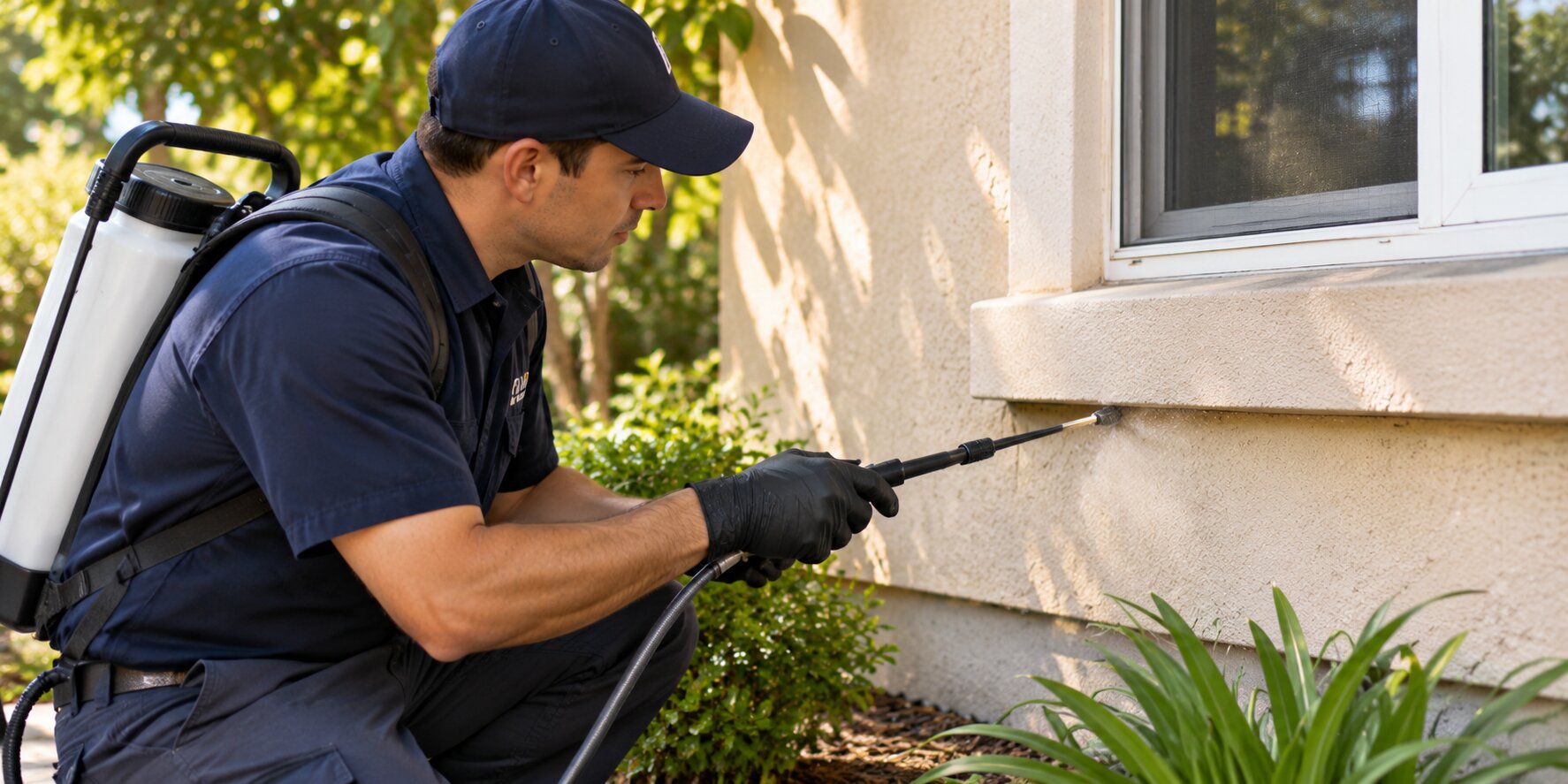
Depending on the property and product being used, a technician may target areas such as:
- Exterior cracks
- Entry points
- Eaves
- Window frames
- Door frames
- Garage areas
- Foundation edges
- Patio structures
- Protected exterior corners
The goal is not necessarily to spray every open surface.
Targeted treatment can be more useful when it focuses on areas associated with actual spider activity.
The exact application method should depend on the inspection findings and the label directions for the products used.
Why Is Exterior Spider Control So Important?
For many homes, spider prevention begins outside.
Spiders frequently establish themselves around exterior areas before wandering indoors.
Exterior treatment may focus on reducing activity around:
- Doors
- Windows
- Garages
- Rooflines
- Eaves
- Patios
- Landscaping
- Utility penetrations
Reducing spider activity outside can help lower the number that eventually enter the living space.
This is especially useful for homeowners who repeatedly find spiders indoors even after removing them.
Does Killing Other Insects Help Control Spiders?
Yes.
Spiders are predators.
If your home provides a steady supply of insects, spiders have a reason to remain nearby.
Common prey may include:
- Flies
- Moths
- Mosquitoes
- Small beetles
- Ants
- Other crawling insects
A professional spider treatment may therefore include efforts to reduce general insect activity around the property.
This is an important difference between simply removing spiders and managing the conditions that support them.
If the food source remains abundant, spiders may continue returning.
Why Do Exterior Lights Attract Spider Activity?
Outdoor lighting can attract flying insects at night.
Those insects, in turn, attract spiders.
Homeowners may notice webs repeatedly forming near:
- Porch lights
- Garage lights
- Patio fixtures
- Entryway lighting
- Windows near lights
A professional may point out this relationship during an inspection.
Adjusting lighting practices or reducing insect activity around fixtures may help make these locations less attractive to spiders.
The exact recommendations depend on the property and how the lights are being used.
Do Spiders Enter Through Windows and Doors?
They can.
Small gaps around doors, windows, screens, or exterior penetrations may provide access.
Possible entry areas include:
- Worn door sweeps
- Damaged window screens
- Gaps around frames
- Garage door edges
- Utility penetrations
- Cracks in exterior materials
Exclusion work can help reduce these pathways.
A professional may recommend repairing damaged screens, improving door seals, or addressing obvious gaps.
While exclusion cannot prevent every spider from ever entering, it can reduce opportunities.
Why Are Garages Common Spider Areas?
Garages often provide spiders with several advantages.
They may contain:
- Clutter
- Boxes
- Insects
- Dark corners
- Limited disturbance
- Door gaps
- Easy exterior access
Spiders can build webs behind storage, near ceilings, around garage doors, and in other protected areas.
Professional treatment may include inspecting garage corners, storage areas, door seals, and nearby exterior conditions.
Reducing clutter can also make these spaces less attractive and easier to inspect.
How Does Landscaping Affect Spider Activity?
Landscaping can influence how many insects and spiders stay close to the house.
Dense shrubs, vines, groundcover, and other vegetation near exterior walls may provide protected areas for pests.
A professional may recommend:
- Trimming shrubs away from the structure
- Reducing dense vegetation near doors and windows
- Removing unnecessary debris
- Managing clutter around the foundation
The goal is not to eliminate landscaping.
It is to reduce areas where spiders and their prey can remain immediately next to the structure.
Do Exterminators Treat Inside the Home?
Interior treatment may be appropriate when spiders are repeatedly appearing indoors.
The technician may first inspect areas such as:
- Baseboards
- Closets
- Garages
- Utility rooms
- Storage areas
- Windows
- Doorways
- Ceiling corners
Treatment should be based on where activity is occurring rather than applying pesticide throughout every room automatically.
In many situations, improving exterior control and entry-point management can play a major role in reducing indoor sightings.
What About Spider Egg Sacs?
Spider egg sacs can contain developing young, which makes them important during control efforts.
They may be found:
- Within webs
- Beneath furniture
- Around exterior corners
- In storage areas
- Behind objects
- Inside garages
Professional web removal may also remove accessible egg sacs.
This can help reduce the number of young spiders emerging in an area later.
Homeowners who repeatedly see webs should avoid ignoring egg sacs when cleaning accessible areas.
Why Do Spiders Return After You Knock Down Their Webs?
Removing a web addresses the structure the spider built, but it may not change the environment.
If an area still offers:
- Insect prey
- Shelter
- Protected corners
- Easy access
another spider may build a new web in the same location.
That is why repeated web removal by itself often feels endless.
Professional pest management looks at why that particular area continues to attract spiders.
Do Store-Bought Spider Sprays Work?
DIY products may kill spiders that are directly contacted.
However, spraying an individual spider does not necessarily reduce the conditions bringing new spiders to the property.
Homeowners may continue seeing activity because:
- Insects remain abundant
- Web sites remain attractive
- Entry points remain open
- Egg sacs are present
- Landscaping provides shelter
Professional treatment takes a broader approach.
The goal is to reduce recurring pressure rather than only respond to each spider as it appears.
How Long Does Professional Spider Control Take to Work?
The results depend on how much activity is present and the conditions around the property.
Homeowners may notice an initial reduction after treatment and web removal, but ongoing prevention may require time.
Factors include:
- Amount of exterior insect activity
- Landscaping
- Property size
- Structural openings
- Number of existing webs
- Weather
- Surrounding pest pressure
Spider control is often more effective when it is part of a broader pest management plan rather than a one-time response to a single spider.
Why Is Follow-Up Important?
Follow-up can help determine whether spider activity is actually decreasing.
A technician may check:
- Areas where webs were removed
- Entry points
- Exterior treatment zones
- Garages
- Eaves
- Insect activity
If spiders continue concentrating in one location, the professional can investigate why.
The treatment strategy can then be adjusted based on what is actually happening around the home.
Can Spiders Come Back After Treatment?
Yes.
No pest control service can make a property permanently inaccessible to every spider.
Spiders may move onto the property from surrounding landscaping or outdoor environments.
The goal of professional control is to reduce conditions that support frequent activity.
Ongoing prevention may include:
- Removing webs
- Reducing insect populations
- Maintaining door and window seals
- Trimming vegetation
- Managing clutter
- Monitoring problem areas
Regular pest management can help keep populations more manageable over time.
What Can Homeowners Do Between Professional Treatments?
A few simple habits can support spider prevention.
Consider:
- Remove accessible webs
- Keep garages organized
- Reduce cardboard clutter
- Repair damaged screens
- Maintain door sweeps
- Trim vegetation near the home
- Clean exterior corners
- Report recurring pest activity
- Reduce insect-attracting conditions when practical
If one area repeatedly develops heavy webbing, mention it to your pest professional.
Persistent activity may reveal a nearby insect source or structural condition that deserves attention.
Why Does Professional Spider Control Focus on Prevention?
Spiders are different from pests that infest stored food or reproduce heavily inside kitchens.
Many spiders are responding to the environment around the home.
That means long-term reduction often depends on changing that environment.
A prevention-focused program may address:
- Insect prey
- Web sites
- Exterior harborage
- Entry points
- Landscaping
- Lighting
- Clutter
By reducing the factors that make the property attractive, homeowners may experience fewer recurring spider problems.
Why Does Professional Expertise Matter?
Effective spider control requires understanding the relationship between predators and their environment.
Insight Pest Management is founded and operated by Israel Alvarez, an Associate Certified Entomologist with nearly 20 years of professional pest management experience.
Israel has held his Associate Certified Entomologist credential since 2013 and a California Pest Control Operators License since 2014. He also serves as Vice Chair of the Pest Control Operators of California–Ventura District.
That background supports a science-based approach to spider control.
Rather than simply removing visible webs, the Insight team evaluates where spiders are active, what insects may be supporting them, and what property conditions could be contributing.
Why Are Spiders Common Around Ventura County Homes?
Southern California’s climate supports insect activity through much of the year.
Where insects are active, spiders often follow.
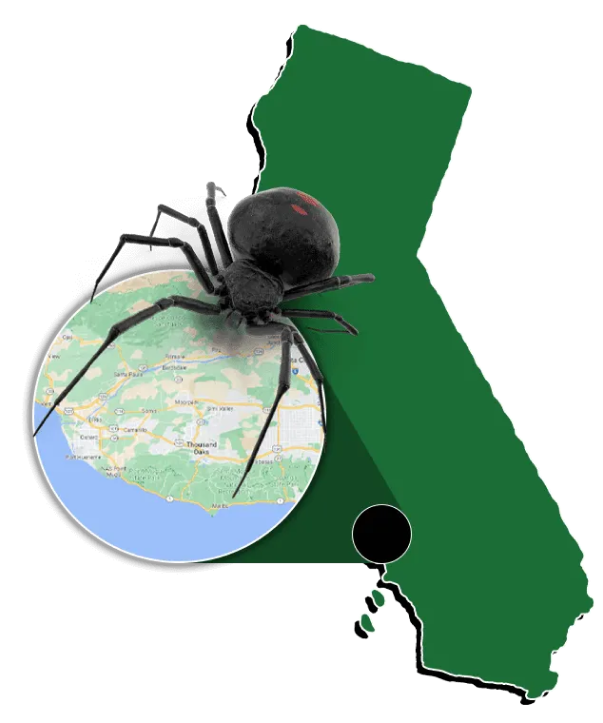
Homes throughout Newbury Park, Thousand Oaks, Camarillo, Simi Valley, Moorpark, Oxnard, and surrounding Ventura County communities may experience spider activity around:
- Patios
- Landscaping
- Garages
- Eaves
- Windows
- Doors
- Outdoor lighting
Local climate, vegetation, and home design can all affect pest activity.
That is why professional spider control should be adapted to the property rather than treated as a generic spray service.
What Should Professional Spider Control Include?
A complete spider control service may include:
- Spider identification
- Property inspection
- Web removal
- Egg sac removal where accessible
- Targeted exterior treatment
- Interior treatment where needed
- Insect control
- Entry-point evaluation
- Landscaping recommendations
- Clutter reduction guidance
- Follow-up monitoring
The exact combination depends on the level and location of activity.
Effective control should address both visible spiders and the conditions encouraging them to stay.
Schedule Professional Spider Control With Insight Pest Management
Repeated spider webs around your eaves, windows, garage, or patio may be a sign that your property offers abundant insects and protected places for spiders to live.
Professional spider control looks beyond the visible web.
Insight Pest Management provides science-based residential and commercial pest control throughout Ventura County and nearby Southern California communities.
Led by Associate Certified Entomologist Israel Alvarez, the Insight team combines detailed inspections, targeted treatment, web removal, pest reduction, and prevention guidance to help reduce recurring spider activity.
If spiders keep returning around your home, schedule an inspection with Insight Pest Management today. The team can identify where activity is concentrated, what may be attracting spiders, and what treatment and prevention steps make sense for your property.