


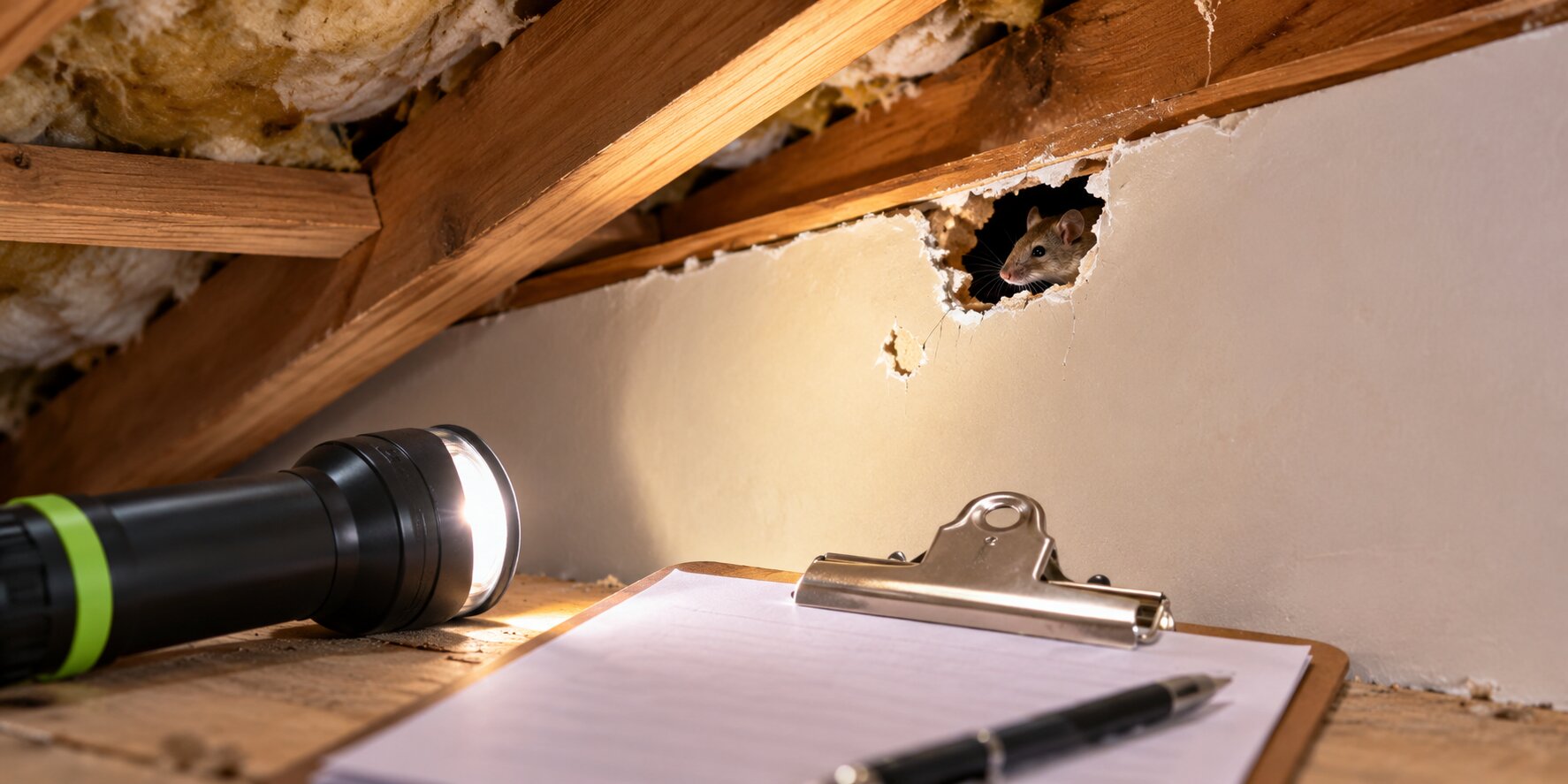

Hearing scratching, scurrying, or gnawing inside your walls or ceiling can be unsettling. Mice often stay hidden in wall voids, attic spaces, insulation, and other concealed areas, which can make it difficult for homeowners to know how serious the problem is or where the rodents are coming from.
Insight Pest Management helps homeowners throughout Ventura County address hidden mouse infestations with detailed inspections, targeted removal strategies, and prevention-focused recommendations. Led by Associate Certified Entomologist Israel Alvarez, Insight Pest Management uses a science-based approach that considers mouse behavior, entry points, food sources, nesting areas, and the structure of the home.
Professional mouse control is not simply about placing traps in the middle of a room. When mice are living inside walls or ceilings, exterminators work to identify where they are traveling, how they are entering, and what areas need to be monitored or sealed.
Here is how professionals approach mice living in hidden parts of a home.
Why Do Mice Get Into Walls and Ceilings?
Walls and ceiling spaces can provide mice with nearly everything they need.
These areas are often:
- Dark
- Warm
- Protected from people
- Close to food
- Close to water
- Filled with insulation or other nesting materials
Once mice find a way into the structure, wall voids and attics can become convenient travel routes.
They may move between:
- Kitchens
- Garages
- Attics
- Utility rooms
- Crawl spaces
- Storage areas
A homeowner may hear activity in one wall even though the actual entry point is on a completely different side of the house.
That is why inspection is so important.
How Do Professionals Know Mice Are Inside the Walls?
The first clue is often sound.
Homeowners may report:
- Scratching
- Light scurrying
- Gnawing
- Movement inside ceilings
- Activity at night
- Noises around cabinets or appliances
A professional will combine these observations with physical evidence.
Signs of mice can include:
- Small droppings
- Gnaw marks
- Nesting material
- Tracks
- Food damage
- Grease marks
- Small openings
- Disturbed insulation
The goal is to confirm that mice are present and determine how they are using the structure.
Why Are Mice So Good at Getting Into Homes?
Mice can take advantage of very small structural openings.
They are also skilled climbers and explorers.
Possible entry points may include:
- Gaps around pipes
- Utility penetrations
- Garage door openings
- Damaged vents
- Roofline gaps
- Openings around siding
- Door gaps
- Crawl space access points
- Small construction gaps
A hole that looks insignificant to a homeowner may be large enough for a mouse to use.
Professionals inspect both the interior and exterior of the property to identify these vulnerable areas.
Where Do Exterminators Look for Mouse Activity?
When mice are believed to be inside walls or ceilings, a technician may inspect areas such as:
- Attics
- Garages
- Kitchens
- Pantries
- Under sinks
- Utility rooms
- Crawl spaces
- Baseboards
- Closets
- Behind appliances
- Around plumbing
- Rooflines
- Exterior walls
The inspection is focused on connecting interior activity with likely exterior access.
For example, droppings in the attic combined with a damaged exterior vent may indicate a probable route into the structure.
How Are Mice Removed From Wall and Ceiling Areas?
Professionals typically do not tear open every wall to remove mice.
Instead, they identify the travel routes mice are using and place control devices in accessible areas where rodents are likely to encounter them.
Depending on the infestation, this may involve:
- Traps
- Monitoring devices
- Targeted placement near travel routes
- Exclusion work
- Follow-up inspections
The exact method depends on where the mice are active and how accessible those areas are.
How Do Professionals Decide Where to Place Traps?
Trap placement is based on mouse behavior.
Mice often travel close to walls, beams, edges, or other structural features rather than crossing large open spaces.
A technician may look for:
- Droppings
- Gnawing
- Grease marks
- Tracks
- Nesting material
- Disturbed insulation
- Repeated food damage
These clues help identify routes between shelter and food.
Traps can then be placed where mice are most likely to encounter them.
Random placement is usually less effective than targeted placement.
Are Traps Put Inside the Walls?
Sometimes treatment may occur near wall voids or access points, but professionals generally use accessible locations whenever practical.
Opening walls unnecessarily can create more disruption than needed.
If activity can be intercepted near:
- Attic access
- Cabinets
- Plumbing openings
- Garage areas
- Utility spaces
the infestation may be addressed without major structural work.
The technician determines where treatment can be placed safely and effectively.
Do Professionals Use Bait for Mice?
Treatment methods can vary.
Rodent bait may be used in some pest management programs, depending on the property, infestation, and professional judgment.
However, bait is not the only tool available.
When mice are living inside inaccessible walls, professionals may carefully consider the possibility of rodents dying in hidden spaces.
That is one reason trapping is often useful for indoor rodent control.
The best method depends on:
- Location
- Property layout
- Number of mice
- Accessibility
- Risks to children or pets
- Presence of other wildlife
- Entry-point conditions
A professional should explain the strategy being used and why.
How Do Exterminators Find Mouse Entry Points?
Entry-point inspection is one of the most important parts of professional mouse control.
A technician may carefully examine:
- Foundation areas
- Exterior walls
- Doors
- Garage doors
- Vents
- Pipes
- Cable penetrations
- Rooflines
- Eaves
- Utility openings
They may also look for physical evidence around suspected openings.
This can include:
- Gnaw marks
- Droppings
- Grease marks
- Disturbed materials
- Nesting debris
Finding and correcting entry points helps prevent new mice from replacing the ones that are removed.
What Is Mouse Exclusion?
Mouse exclusion means closing or correcting structural openings that rodents can use.
Depending on the home, this may involve gaps around:
- Pipes
- Vents
- Doors
- Utility lines
- Roof edges
- Exterior wall penetrations
Exclusion is an important part of long-term control.
Removing mice without sealing entry points can create a repeating cycle.
New rodents may simply enter through the same openings.
Should You Seal Mouse Holes Immediately?
Not always.
Timing matters.
If mice are still inside the walls, sealing every suspected opening before removal may trap rodents in the structure.
A professional treatment plan should coordinate trapping, monitoring, and exclusion.
Technicians may first determine:
- Whether mice remain inside
- Which openings are active
- Where rodents are traveling
- When exclusion should be completed
The correct sequence helps reduce the chance of creating additional problems.
Why Do Mice Scratch Inside Walls at Night?
Mice are generally more active when homes are quiet.
That is why many homeowners first hear them at night.
The sounds may come from:
- Running through wall voids
- Moving through insulation
- Gnawing materials
- Building nests
- Traveling between floors
- Exploring ceiling spaces
The location of the sound can provide useful information, but it does not always reveal the exact location of the nest.
Sound can travel through framing and wall cavities.
A professional inspection helps identify the broader activity pattern.
What Happens If Mice Are in the Attic?
Attics are common mouse habitats.
They offer shelter, nesting material, and access to wall cavities.
A technician may look for:
- Droppings
- Nesting materials
- Gnawed insulation
- Tracks
- Chewed wiring
- Travel routes
- Entry points near eaves or vents
The attic inspection can help determine whether mice are moving down into walls from above.
It can also reveal how they reached the attic in the first place.
Why Do Mice Chew on Things Inside Walls?
Rodents naturally gnaw.
Their teeth continue growing, so chewing is a regular part of their behavior.
Inside a structure, mice may gnaw on:
- Wood
- Plastic
- Insulation
- Packaging
- Building materials
- Other accessible materials
Gnawing can damage property and may help mice enlarge existing openings.
Fresh chew marks can also help exterminators identify active areas.
Can Mice Damage Electrical Wiring?
Rodents may chew on wiring when it is accessible.
That is one reason persistent mouse activity should not be ignored.
A pest professional can address the infestation, while a qualified electrician may be needed if there is concern about damaged electrical components.
Rodent control does not replace necessary structural or electrical repairs.
The goal is to stop the activity so additional damage is less likely to occur.
How Long Does It Take to Get Mice Out of Walls?
There is no single timeline for every infestation.
Treatment length depends on factors such as:
- Number of mice
- Size of the property
- Number of entry points
- Accessibility
- Food availability
- Nesting areas
- Effectiveness of exclusion
- Exterior rodent pressure
A small infestation may respond quickly.
A larger population established throughout walls, ceilings, and attic spaces may require more time and several follow-up visits.
Why Are Follow-Up Visits Important?
Follow-up helps confirm whether activity is actually decreasing.
During later visits, a technician may:
- Check traps
- Remove captured rodents
- Reset devices
- Inspect for fresh droppings
- Recheck entry points
- Look for new gnaw marks
- Evaluate exclusion work
If activity continues in a specific location, the strategy can be adjusted.
Professional mouse control is often a process of inspection, treatment, observation, and refinement.
How Can You Tell If the Mice Are Gone?
Silence is encouraging, but it should not be the only indicator.
Signs that activity is decreasing may include:
- No new droppings
- No new gnawing
- No sounds
- No trap activity
- No food damage
- No new nesting evidence
Monitoring over time helps confirm that the infestation has been addressed.
Professionals may also inspect previously active areas to look for fresh signs.
Does Mouse Control Include Cleanup?
The extent of cleanup included depends on the pest control service.
Mice may leave behind:
- Droppings
- Urine
- Nesting material
- Contaminated insulation
A pest professional may identify affected areas and explain whether additional cleanup or restoration is appropriate.
Homeowners should use caution when dealing with significant rodent contamination and follow appropriate cleanup guidance.
The removal of mice and the cleanup of contaminated materials may be separate services.
What Attracts Mice to a Home?
Mice usually remain where they can find food, water, and shelter.
Potential attractants include:
- Open food
- Crumbs
- Pet food
- Bird seed
- Garbage
- Stored pantry goods
- Clutter
- Nesting materials
Garages and storage rooms can be particularly attractive because they often contain both food and hiding places.
Removing these resources can support professional treatment.
How Can Homeowners Help During Mouse Treatment?
Homeowner cooperation can make rodent control more effective.
Helpful steps may include:
- Storing food in sealed containers
- Cleaning food debris
- Keeping pet food secured
- Reducing clutter
- Securing garbage
- Reporting new sounds
- Avoiding disturbance of traps
- Keeping treatment areas accessible
If you hear activity after treatment, note where and when it occurs.
That information can help the technician identify remaining travel routes.
Can Mice Come Back After Treatment?
Yes.
Even after the current infestation is removed, new mice can enter if they find a new opening.
That is why exclusion and property maintenance are important.
Homeowners should periodically check:
- Garage door seals
- Vents
- Utility penetrations
- Exterior gaps
- Rooflines
- Door sweeps
- Damaged building materials
Early detection can prevent a few mice from developing into a larger infestation.
Why Does Mouse Control Require More Than DIY Traps?
DIY traps can sometimes catch individual mice.
The larger challenge is understanding why the mice are inside and how they are moving through the structure.
A professional approach considers:
- Entry points
- Nesting areas
- Travel routes
- Food sources
- Water
- Structural conditions
- Follow-up monitoring
Without addressing these factors, trapping alone may provide only temporary relief.
Why Does Professional Expertise Matter?
Mice are adaptable and excellent at staying out of sight.
Effective control depends on understanding how they behave inside structures.
Insight Pest Management is owned and operated by Israel Alvarez, an Associate Certified Entomologist with nearly 20 years of professional pest management experience.
Israel has held his Associate Certified Entomologist credential since 2013 and a California Pest Control Operators License since 2014. He also serves as Vice Chair of the Pest Control Operators of California – Ventura District.
His background helps the Insight team approach mouse problems with an understanding of pest biology as well as the structural conditions that support infestations.
The goal is not simply to catch one mouse.
It is to determine how the infestation developed and how future access can be reduced.
Why Are Hidden Mice a Concern in Ventura County Homes?
Homes throughout Newbury Park, Thousand Oaks, Camarillo, Simi Valley, Moorpark, Oxnard, and surrounding Ventura County communities can provide rodents with numerous potential entry points.
Garages, attics, rooflines, utility penetrations, landscaping, and storage areas can all contribute to rodent access.
Southern California’s mild climate also means rodent activity can remain a concern throughout much of the year.
A local pest professional can evaluate both the building and surrounding property conditions when developing a treatment plan.
What Should You Do If You Hear Mice in the Walls?
If you hear scratching or movement inside your walls or ceiling, pay attention to the pattern.
Write down:
- Where the noise occurs
- What time it happens
- How often you hear it
- Whether you have found droppings
- Whether food has been disturbed
- Whether you see exterior openings
Avoid randomly cutting into walls or sealing every visible gap.
A professional inspection can help determine what is happening and where treatment should focus.
Schedule Professional Mouse Control With Insight Pest Management
Mice living inside walls and ceilings can be difficult to address because most of the infestation remains hidden.
Professional exterminators use inspection, targeted trapping, entry-point identification, exclusion, and follow-up monitoring to address both the active rodents and the conditions that allowed them inside.
Insight Pest Management provides science-based rodent control throughout Ventura County and nearby Southern California communities.
Led by Associate Certified Entomologist Israel Alvarez, the Insight team combines detailed inspections with prevention-focused strategies designed around the specific conditions of each property.
If you are hearing scratching in your walls, ceiling, or attic, schedule an inspection with Insight Pest Management today. The team can help identify where mice are traveling, how they are getting inside, and what steps can be taken to remove them and reduce future activity.