


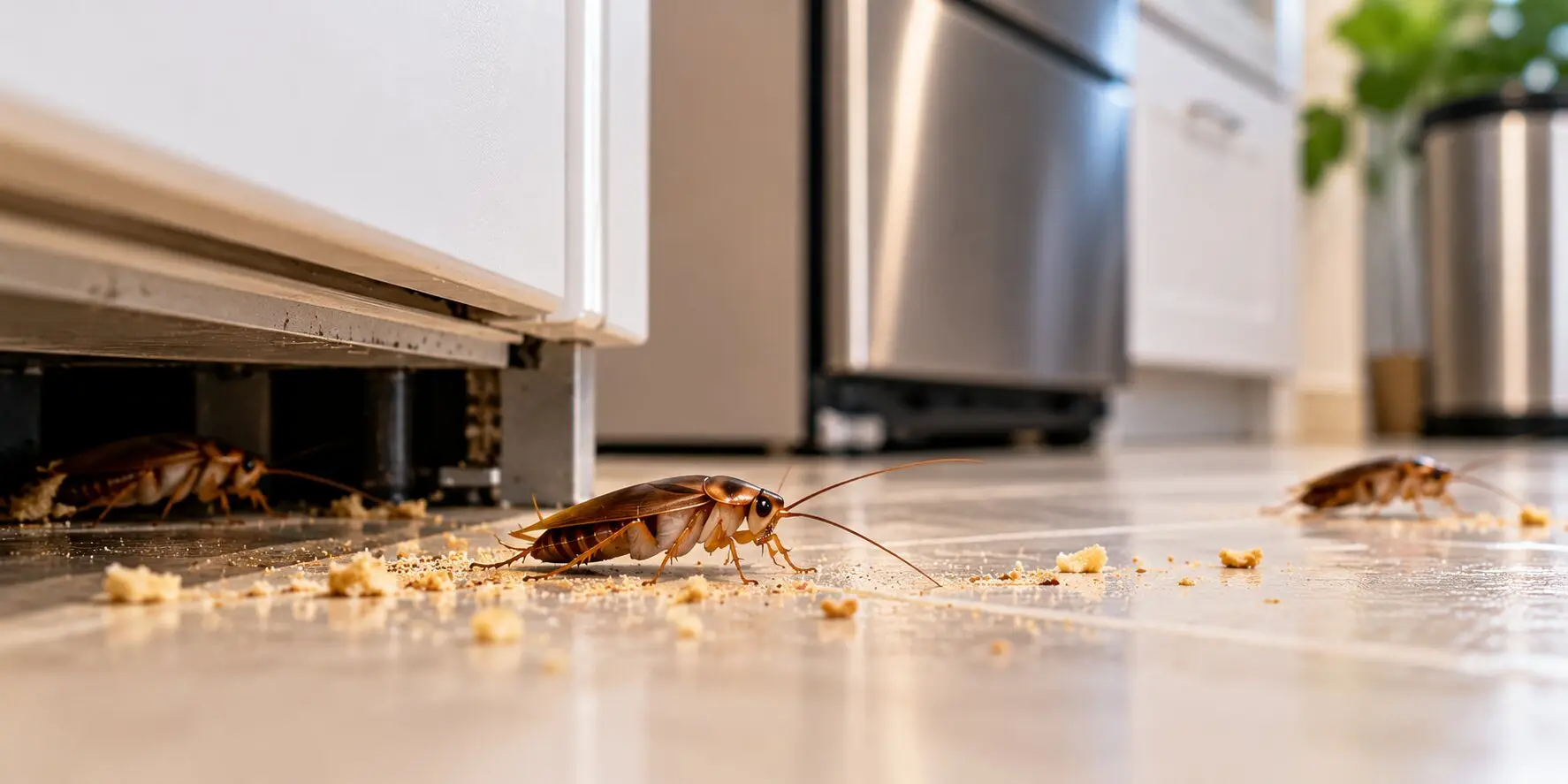

Seeing cockroaches after a professional pest control treatment can be frustrating. Many homeowners expect the problem to disappear immediately, so spotting another roach a day or two later can make it feel like the treatment did not work.
In many cases, however, some post-treatment activity is normal.
Insight Pest Management helps homeowners throughout Ventura County understand what to expect before and after cockroach treatment. Led by Associate Certified Entomologist Israel Alvarez, Insight Pest Management uses science-based pest control strategies that focus on the full infestation rather than only the insects you can see.
Cockroach treatments often work over time. Depending on the severity of the infestation, the products used, the number of hidden harborages, and the availability of food and moisture, you may continue seeing cockroaches for a period after service.
The important question is whether activity is gradually decreasing.
Is It Normal to See Cockroaches After Pest Control?
Yes, it can be normal to see cockroaches after professional treatment.
A pest control application may disturb roaches that were hiding deep inside cabinets, wall gaps, appliance areas, plumbing voids, or other protected spaces.
As the treatment begins affecting the infestation, some insects may become more visible.
You might notice cockroaches:
- Moving during the daytime
- Appearing in unfamiliar areas
- Acting slower than usual
- Dying in open spaces
- Emerging from cracks or appliances
This does not automatically mean the treatment has failed.
In some cases, increased visibility immediately after treatment can actually be a result of the pest population being disturbed.
Why Doesn’t Cockroach Treatment Kill Every Roach Instantly?
Professional cockroach control does not always rely on products designed to kill everything immediately.
Some strategies intentionally work more gradually.
For example, cockroach baits are designed to be eaten by the insects. Roaches may feed on the bait and return to hidden harborages before being affected.
Insect growth regulators may also be used to disrupt development and reproduction rather than providing an immediate knockdown.
A comprehensive treatment plan may involve several tools working together over time.
The goal is not just to kill a few visible cockroaches.
It is to reduce and eliminate the hidden population.
Could Cockroach Eggs Survive the Initial Treatment?
Cockroach reproduction is one reason infestations can take time to control.
German cockroaches, in particular, reproduce quickly and carry egg cases containing multiple developing young.
Depending on the treatment method and where egg cases are located, some young roaches may emerge after the initial service.
This can make homeowners think the infestation is suddenly getting worse.
In reality, these newly emerged cockroaches may be encountering bait, growth regulators, or other treatment materials already in place.
Follow-up treatment helps address activity that develops after the first service.
Why Are Cockroaches Coming Out During the Day?
Cockroaches are generally more active at night.
If you begin seeing them during daylight hours, there can be several explanations.
One possibility is that treatment has disturbed their normal hiding areas.
Another is that the infestation is large enough that some individuals are being pushed into open spaces.
German cockroaches often gather in tight harborages. When these locations are disrupted, they may temporarily move into areas where homeowners can see them.
Daytime sightings should be monitored carefully, especially if they continue long after treatment.
Where Are the Remaining Cockroaches Hiding?
One of the biggest challenges with cockroach control is that most of the infestation may be hidden.
German cockroaches can squeeze into extremely small spaces.
Common hiding places include:
- Behind refrigerators
- Around refrigerator motors
- Under stoves
- Behind dishwashers
- Inside cabinet cracks
- Around hinges
- Beneath sinks
- Around plumbing penetrations
- Behind baseboards
- Inside wall gaps
- Near warm electronic equipment
A homeowner may only see a handful of roaches while many more remain protected in these areas.
Professional pest control focuses heavily on finding and treating these harborages.
Could Food Be Interfering With Cockroach Treatment?
Yes.
Even very small amounts of food can support cockroach activity.
If professional bait has been placed around the property but roaches have easy access to crumbs, grease, pet food, or other food sources, they may have less reason to feed on the bait.
That is why sanitation is often an important part of professional cockroach control.
Helpful steps include:
- Wiping down countertops
- Cleaning grease around cooking areas
- Vacuuming crumbs
- Cleaning beneath appliances
- Washing dishes promptly
- Storing food in sealed containers
- Emptying trash regularly
- Avoiding food left out overnight
- Properly storing pet food
Cockroach infestations are not always caused by poor housekeeping, but reducing competing food sources can improve the effectiveness of treatment.
Could Water Be Keeping the Infestation Alive?
Cockroaches also need moisture.
Even when food sources have been reduced, leaking plumbing or standing water may continue supporting the population.
Professionals may check for moisture around:
- Kitchen sinks
- Bathroom plumbing
- Dishwashers
- Refrigerators
- Laundry areas
- Utility spaces
- Leaking pipes
- Condensation
Fixing leaks and eliminating unnecessary moisture can make the environment less favorable for cockroaches.
A complete treatment plan should consider both the insects and the conditions helping them survive.
Can Cleaning Remove Professional Cockroach Treatment?
Sometimes.
Homeowners understandably want to clean after pest control service, but aggressive cleaning in treated areas can interfere with certain products.
For example, wiping away bait placements immediately after service can reduce their effectiveness.
Applying household cleaners directly over professionally treated cracks and crevices may also affect residual products.
Your pest control professional should explain which areas you can clean normally and which areas should be left alone temporarily.
When in doubt, ask before scrubbing or spraying a treated area.
Can DIY Sprays Interfere With Professional Treatment?
Yes, they can.
It can be tempting to reach for an aerosol spray when you see a cockroach after professional service.
However, using additional products without discussing them with your pest professional may interfere with the treatment strategy.
Some sprays can repel cockroaches from areas where bait has been placed.
Instead of feeding on the bait, the insects may move elsewhere.
If you continue seeing roaches after service, document the activity and contact the company performing the treatment before adding another pesticide.
Why Might Cockroaches Move to Another Room?
Treatment can sometimes change where cockroaches are seen.
If their usual harborage is disturbed, they may move into nearby areas.
German cockroaches often concentrate near kitchens because of the combination of food, warmth, water, and hiding spaces.
But during treatment, you may occasionally notice activity in:
- Bathrooms
- Laundry rooms
- Closets
- Hallways
- Bedrooms near kitchens
- Utility areas
Movement does not necessarily indicate that treatment is spreading the infestation.
It may simply reveal roaches that were already present but hidden.
How Long Should It Take for Cockroach Activity to Decrease?
There is no universal timeline.
The amount of time required depends on several factors, including:
- Size of the infestation
- Cockroach species
- Number of harborages
- Amount of available food
- Moisture conditions
- Treatment methods
- Access to affected areas
- Whether neighboring units are involved
- Homeowner preparation and sanitation
A small infestation may respond more quickly than a heavy one.
Severe German cockroach infestations may require multiple services and continued monitoring.
Your pest professional should explain what level of activity is expected after treatment and when follow-up may be necessary.
What Should Improvement Look Like?
The goal is a downward trend in activity.
You may begin noticing:
- Fewer live cockroaches
- Fewer daytime sightings
- Reduced activity on monitoring traps
- Fewer roaches around appliances
- Fewer droppings
- More dead or slow-moving cockroaches initially
- Eventually, little or no activity
One sighting does not tell you the entire story.
Monitoring the pattern over several days or weeks provides more useful information.
Why Are Follow-Up Treatments Sometimes Necessary?
Cockroach infestations can be complex.
Follow-up visits allow technicians to see how the population has responded and adjust the treatment strategy.
During a follow-up service, a technician may:
- Inspect previous harborages
- Check monitoring traps
- Reapply bait where needed
- Treat newly identified hiding areas
- Evaluate sanitation conditions
- Look for moisture sources
- Adjust product placement
Treatment becomes more precise as the technician learns more about where the remaining activity is concentrated.
What Are Cockroach Monitoring Traps Used For?
Sticky monitoring traps are a valuable tool in professional cockroach management.
They help provide objective information about activity.
A technician may place traps:
- Behind appliances
- Beneath sinks
- Inside cabinets
- Along walls
- Near suspected harborages
If one trap catches many roaches while another remains empty, that information can help identify where the population is concentrated.
Monitoring is especially useful after treatment because visible sightings alone may not show the full picture.
Could Cockroaches Be Coming From Another Apartment?
Yes.
This can be a major challenge in apartments, condominiums, duplexes, and other connected properties.
German cockroaches may travel between units through:
- Wall voids
- Plumbing penetrations
- Utility lines
- Shared kitchens
- Shared bathrooms
- Gaps around pipes
A single-unit treatment may be less effective if cockroaches continue moving in from a neighboring infestation.
In multi-unit properties, broader inspection and coordination may sometimes be necessary.
Could You Be Bringing New Cockroaches Into the Home?
Cockroaches can also be accidentally introduced.
They may hitchhike inside:
- Cardboard boxes
- Grocery bags
- Deliveries
- Used appliances
- Furniture
- Electronics
- Stored belongings
This is especially important after an infestation has been brought under control.
Reducing clutter and inspecting secondhand items before bringing them indoors can help lower the chance of reintroduction.
When Should You Contact Your Pest Control Company?
You should contact your pest professional if:
- Cockroach activity is not decreasing
- You continue seeing many roaches after the expected treatment period
- Activity begins increasing again
- You discover new areas of infestation
- You are unsure whether you should clean or treat an area
- You think another unit or section of the building may be involved
Providing specific information can help.
Instead of simply saying, “I’m still seeing roaches,” tell the technician where, when, and how often you are seeing them.
Photos can also be useful.
What Should You Avoid Doing After Treatment?
Following professional instructions can help treatment work as intended.
Depending on the treatment plan, homeowners may be advised to avoid:
- Spraying store-bought pesticides over bait
- Removing bait placements
- Deep-cleaning treated cracks immediately
- Leaving food out overnight
- Ignoring plumbing leaks
- Moving monitoring traps unnecessarily
- Disrupting treated areas
Always follow the instructions provided for your specific service.
Why Does Professional Cockroach Control Require More Than Spraying?
Cockroaches survive because their environment provides three basic resources:
- Food
- Water
- Shelter
Effective pest management addresses all three.
Simply spraying visible insects may produce temporary results without changing the conditions supporting the infestation.
A professional treatment program may combine:
- Detailed inspection
- Bait placement
- Targeted applications
- Growth regulators
- Monitoring
- Sanitation guidance
- Moisture correction
- Follow-up inspections
This integrated approach is designed to address both the cockroach population and the environment sustaining it.
How Does Insight Pest Management Approach Cockroach Infestations?
Insight Pest Management focuses on identifying where cockroaches are living and why they are thriving.
Owner Israel Alvarez brings nearly 20 years of professional pest management experience to every treatment strategy. As an Associate Certified Entomologist, he understands how cockroach biology, reproduction, feeding behavior, and harborage preferences affect control.
Israel has held his Associate Certified Entomologist credential since 2013 and a California Pest Control Operators License since 2014. He also serves as Vice Chair of the Pest Control Operators of California–Ventura District.
This science-based approach allows the Insight team to look beyond the insects homeowners see on the surface.
The goal is long-term reduction of the infestation through targeted treatment and prevention.
How Can Ventura County Homeowners Help Prevent Future Cockroach Problems?
Homeowners throughout Newbury Park, Thousand Oaks, Camarillo, Simi Valley, Moorpark, Oxnard, and surrounding Ventura County communities can reduce cockroach-friendly conditions by following a few practical habits.
Consider:
- Cleaning food spills quickly
- Storing food properly
- Fixing plumbing leaks
- Reducing cardboard clutter
- Cleaning beneath appliances
- Keeping trash containers closed
- Inspecting used furniture and appliances
- Sealing obvious gaps around plumbing
- Reporting new cockroach activity early
Prevention is often easier when problems are addressed before the population becomes large.
Schedule Cockroach Control With Insight Pest Management
Seeing cockroaches after treatment can be discouraging, but it does not automatically mean the service failed.
Professional cockroach control often works progressively. Treatment may cause hidden insects to emerge, while baits, growth regulators, sanitation improvements, and follow-up services gradually reduce the population.
What matters most is whether activity is declining over time.
If cockroaches continue appearing in your kitchen, bathroom, cabinets, appliances, or other areas, Insight Pest Management can help determine why.
Led by Associate Certified Entomologist Israel Alvarez, Insight Pest Management provides science-based cockroach control throughout Ventura County and surrounding Southern California communities.
Schedule an inspection with Insight Pest Management today to identify the source of ongoing cockroach activity and develop a treatment plan focused on lasting control.
