



Finding signs of a serious pest problem in your Southern California home can be unsettling, especially when the pests are hidden inside walls, wood framing, or other areas you can’t easily reach. In some situations, a standard pest control treatment may be enough. In others, fumigation may provide the most thorough way to address an infestation throughout the structure.
Insight Pest Management helps homeowners throughout Ventura County understand their treatment options before deciding what makes sense for their property. Led by Associate Certified Entomologist Israel Alvarez, Insight Pest Management uses detailed inspections and science-based recommendations to identify the pest, determine how widespread the problem is, and choose an appropriate treatment strategy.
Fumigation is most commonly associated with severe drywood termite infestations, but homeowners often have questions about what fumigation actually involves, when it’s necessary, and whether other treatment options may be available.
Here’s what you should know.
What Is Pest Fumigation?
Pest fumigation is a treatment method that uses a gaseous fumigant to eliminate targeted pests throughout an enclosed structure.
Unlike liquid treatments or localized applications that are applied directly to specific areas, fumigation allows treatment material to move throughout spaces that may otherwise be difficult to access. This can include wall cavities, attic framing, wooden structural components, furniture, and other areas where pests may be hiding.
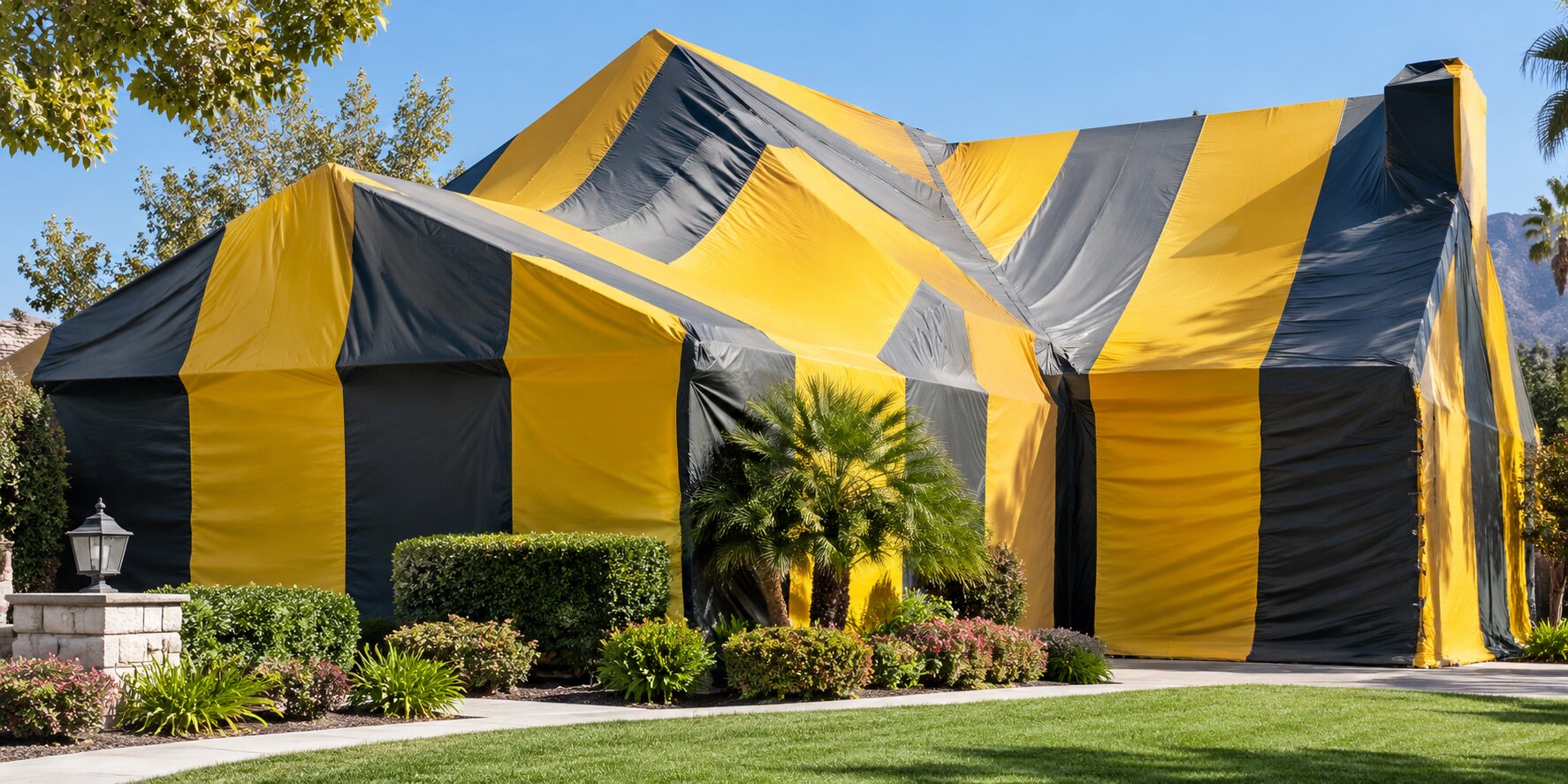
For whole-structure fumigation, the building is typically enclosed beneath specialized tarps before the fumigant is introduced. The home remains sealed for a carefully controlled period so the fumigant can circulate throughout the structure.
Once the required exposure period is complete, the fumigant is removed and the structure is aerated. Pest control professionals test the property before residents are permitted to re-enter.
Fumigation is not automatically the right solution for every infestation. A professional inspection should always come first.
What Pests Are Commonly Treated With Fumigation?
In Southern California homes, fumigation is particularly associated with drywood termite infestations.
Drywood termites live differently from subterranean termites. Rather than building colonies primarily in soil, drywood termites can establish colonies directly inside wooden components of a home.
That may include:
- Roof framing
- Attic beams
- Fascia boards
- Window and door frames
- Wall framing
- Wooden furniture
- Structural lumber
- Other cellulose-based materials
Because these termites live inside wood, they can sometimes remain hidden for long periods.
A homeowner may see only a few small warning signs while colonies are developing in areas that are difficult or impossible to inspect visually.
Why Can Drywood Termites Be Difficult to Eliminate?
One of the biggest challenges with drywood termites is accessibility.
Imagine discovering a small pile of termite droppings near a windowsill in your Thousand Oaks home. You clean it up, only for another pile to appear a few days later.
The visible evidence may be coming from one piece of trim. However, the termite colony could extend into framing behind the wall, another window, attic lumber, or other wooden portions of the house.
That’s why simply treating the visible location may not always address the entire infestation.
Drywood termites can live completely inside wood without maintaining contact with soil. This allows colonies to become established in different parts of a structure.
When multiple areas are affected, whole-structure fumigation may be considered because the treatment can reach termites inside wood throughout the home.
When Is Fumigation Necessary?
Fumigation may be recommended when an inspection indicates that a pest infestation is widespread, difficult to access, or located in multiple areas of a structure.
Some situations that may lead a pest control professional to discuss fumigation include:
- Drywood termite activity in several areas of the home
- Evidence suggesting multiple termite colonies
- Infestations inside inaccessible structural lumber
- Significant termite activity throughout an attic or roof system
- Repeated termite activity following localized treatments
- Infestations where spot treatment cannot confidently reach all affected areas
The decision should be based on inspection findings rather than simply the presence of termites.
A small, isolated infestation may sometimes be addressed with a localized treatment. A widespread infestation may require a more comprehensive approach.
Owner and operator Israel Alvarez brings nearly 20 years of professional pest management experience to inspections performed by Insight Pest Management. His background as an Associate Certified Entomologist helps the team evaluate pest biology and behavior instead of relying on a one-size-fits-all treatment recommendation.
How Does a Pest Professional Determine Whether Fumigation Is Needed?
A thorough termite inspection usually begins with identifying signs of current or previous activity.
The inspector may examine areas such as:
- Attics
- Eaves and fascia
- Window frames
- Door frames
- Exterior wooden components
- Garages
- Crawl spaces when applicable
- Interior trim
- Accessible structural lumber
Drywood termite evidence can include discarded wings, swarmers, damaged wood, or small fecal pellets known as frass.
The inspector is also trying to answer an important question: Is the infestation localized, or is it spread throughout multiple areas of the structure?
That distinction can significantly affect the treatment recommendation.
A detailed inspection helps homeowners avoid both undertreating a serious infestation and performing an unnecessarily extensive treatment for a limited problem.
What Is the Difference Between Fumigation and Spot Treatment?
Homeowners often hear both terms when discussing termite control.
Spot Treatment
Spot treatment targets specific areas where termite activity has been identified.
Depending on the situation, a professional may treat the affected wood directly or introduce a treatment product into termite galleries.
Localized treatment may be appropriate when the infestation is limited to a clearly identified and accessible area.
Whole-Structure Fumigation
Fumigation treats the entire enclosed structure.
Instead of targeting only visible termite locations, fumigation allows the treatment to move throughout the structure and penetrate areas where hidden colonies may be present.
This can make fumigation particularly useful when termite activity appears widespread.
Neither approach is automatically “better.” The right treatment depends on the location and extent of the infestation.
What Happens During Whole-Home Fumigation?
Although exact procedures can vary, structural fumigation generally follows several major steps.
1. Inspection and Treatment Recommendation
A pest professional first evaluates the property and confirms the type and extent of the infestation.
2. Homeowner Preparation
Residents receive detailed preparation instructions.
Depending on the fumigation plan, preparation may involve removing or properly securing certain foods, medications, plants, pets, and other items.
3. Tenting the Structure
Specialized tarps are placed around the building to create a sealed environment.
4. Introducing the Fumigant
The fumigant is released into the enclosed structure according to carefully controlled procedures.
5. Treatment Period
The structure remains sealed for the required amount of time so the fumigant can reach pest activity throughout the home.
6. Aeration
After treatment, the structure is opened and ventilated so the fumigant can dissipate.
7. Clearance for Re-Entry
The home must be professionally tested and cleared before people or pets return.
Homeowners should always follow the instructions provided by the licensed professionals performing the fumigation.
Is Fumigation Safe?
Structural fumigation involves regulated products and procedures that require professional handling.
The home cannot be occupied during treatment, and residents should not return until the structure has completed the aeration and clearance process.
This is one reason fumigation should never be viewed as a DIY pest control project.
Professional oversight, correct preparation, accurate treatment calculations, and proper testing are essential parts of the process.
Insight Pest Management emphasizes an educational, prevention-first approach so homeowners understand not only what treatment is being recommended, but why.
Do You Need to Fumigate Every Time You Find Termites?
No.
Finding termites does not automatically mean your entire house needs to be fumigated.
A small colony located in one accessible area may have different treatment options than termite activity found across several portions of a property.
This is why an inspection is so important.
If a homeowner sees a few termite pellets near one window, there’s no reliable way to determine the true extent of the infestation simply by looking at that one location.
A pest professional can inspect the surrounding structure, identify additional evidence, and determine whether the problem appears localized or widespread.
What Are the Warning Signs of Drywood Termites?
Drywood termites are often difficult to detect because most of the colony remains inside wood.
Homeowners should pay attention to signs such as:
- Small piles of pellet-like termite droppings
- Discarded wings near doors or windows
- Winged termites appearing indoors
- Hollow-sounding wood
- Visible damage to wooden trim
- Small openings in wood where termites push out waste
- Repeated termite activity in different areas of the property
Seeing these signs does not necessarily mean fumigation will be required, but they are a good reason to schedule a professional inspection.
Why Are Termites a Concern for Ventura County Homeowners?
Southern California’s climate allows many pests to remain active for long periods throughout the year.
Homes throughout Newbury Park, Thousand Oaks, Camarillo, Simi Valley, Moorpark, Oxnard, and surrounding Ventura County communities contain plenty of wooden structural components that can provide termites with suitable habitat.
Termite problems can also be easy to overlook because much of the activity happens inside wood rather than in visible living spaces.
A homeowner might notice only a small amount of frass before discovering that termites have been active in multiple structural areas.
Regular inspections can help identify activity earlier and give homeowners more treatment options.
Can Fumigation Prevent Future Termite Infestations?
Fumigation is intended to eliminate the termites present in the treated structure at the time of treatment. It should not be viewed as permanent protection against every future infestation.
Termites can potentially return if new colonies reach the property later.
Prevention may include ongoing inspections and correcting conditions that make the property more vulnerable to pest activity.
Homeowners may benefit from:
- Scheduling periodic termite inspections
- Repairing damaged or exposed wood
- Addressing moisture problems
- Keeping landscaping properly maintained around the structure
- Monitoring windows, eaves, attics, and other vulnerable areas
- Responding quickly when termite swarmers or frass appear
A prevention-focused pest management plan can make it easier to identify future activity before it becomes extensive.
Why Professional Inspection Matters Before Fumigation
Fumigation is a significant treatment decision.
Before moving forward, homeowners should understand what pest has been identified, where activity has been found, how extensive the infestation appears to be, and why a particular treatment is being recommended.
Insight Pest Management takes an inspection-first approach.
Led by Associate Certified Entomologist Israel Alvarez, who has worked in professional pest management for nearly two decades, the Insight team focuses on identifying the biology behind an infestation and selecting treatment strategies based on actual property conditions.
Israel has held his Associate Certified Entomologist credential since 2013 and a California Pest Control Operators License since 2014. His professional involvement with the Pest Control Operators of California also helps Insight Pest Management stay informed about industry practices and pest management developments.
For homeowners, that expertise means treatment recommendations are based on careful evaluation rather than guesswork.
What Should You Do If You Think Your Home Needs Fumigation?
Start with an inspection.
You don’t need to decide whether your property should be fumigated before contacting a pest professional. Determining the appropriate treatment is part of the inspection process.
If you’ve noticed termite droppings, swarmers, damaged wood, or repeated termite activity around your home, document where you’re seeing the signs and avoid disturbing the area more than necessary.
Then schedule a professional evaluation.
The inspector can determine:
- What type of termite or pest is present
- Where activity has been detected
- How widespread the infestation appears to be
- Whether localized treatment is realistic
- Whether whole-structure fumigation should be considered
- What prevention steps may reduce future pest pressure
Schedule a Termite Inspection With Insight Pest Management
Pest fumigation can be an effective option when termites are spread throughout areas of a home that are difficult to reach with localized treatments. But fumigation isn’t necessary for every termite problem.
The best treatment starts with understanding exactly what’s happening inside your home.
Founded and operated by Israel Alvarez, Insight Pest Management provides science-based termite inspections and pest control solutions for homeowners throughout Ventura County and surrounding Southern California communities.
If you’ve noticed signs of termites or aren’t sure whether your home needs spot treatment or fumigation, schedule an inspection with Insight Pest Management today. The Insight team can evaluate the infestation, explain your options clearly, and help you choose a treatment plan based on your home’s actual needs.