

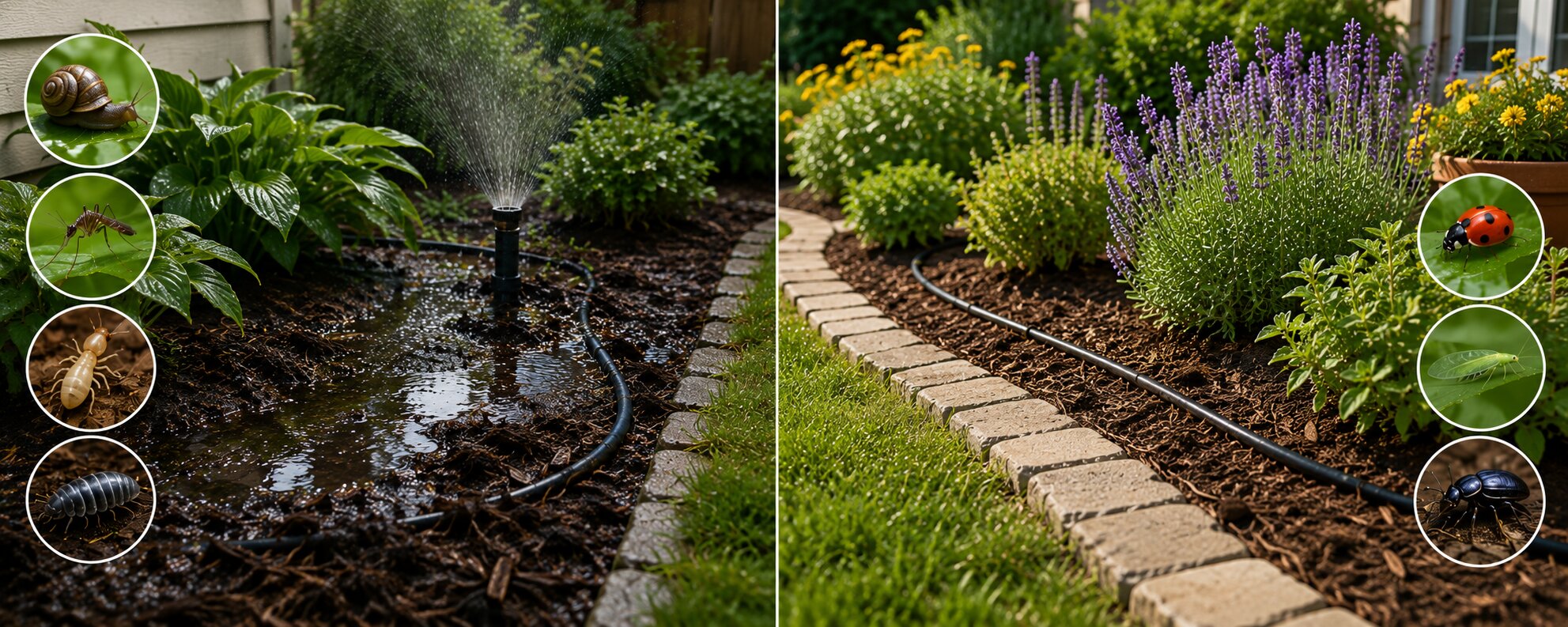

A healthy garden can add color, shade, and beauty to a Ventura County property, but the same landscaping choices that help plants thrive can sometimes create ideal conditions for pests. Thick mulch, frequent watering, poor drainage, and dense vegetation may provide insects and rodents with moisture, shelter, and easy access to a home.
Insight Pest Management helps Southern California homeowners understand how outdoor conditions contribute to indoor pest activity. Led by Associate Certified Entomologist Israel Alvarez, the Insight team uses a science-based, prevention-first approach to identify pest-friendly conditions and recommend practical changes.
For homeowners in Newbury Park, Thousand Oaks, Camarillo, Simi Valley, Moorpark, Oxnard, and surrounding communities, a few adjustments to mulch and watering habits can make a garden less inviting to ants, cockroaches, mosquitoes, termites, rodents, and other unwanted visitors.
Why Do Garden Conditions Affect Pest Activity?
Pests need the same basic resources as other living things: food, water, shelter, and a suitable place to reproduce. Gardens can provide all four.
Moist soil gives insects a reliable water source. Mulch offers protection from heat and predators. Flowers, fruit trees, vegetable beds, and compost piles provide food. Thick ground cover and overgrown shrubs create hidden travel routes.
Once pests become established near a home, it may not take long for them to move indoors. Ants may follow plumbing lines or enter through foundation gaps. Cockroaches may travel beneath doors. Rodents can climb shrubs or branches to reach roofs, attics, and vents.
The goal is not to eliminate landscaping. It is to manage gardens in a way that supports plant health without creating unnecessary pest pressure.
How Can Mulch Attract Pests?
Mulch helps soil retain moisture, regulates temperature, reduces weeds, and improves the appearance of planting beds. However, mulch can also create a cool, damp layer where pests can hide.
When mulch is piled too deeply or placed directly against a foundation, it may support:
- Ants
- Cockroaches
- Earwigs
- Spiders
- Millipedes
- Centipedes
- Termites
- Beetles
- Rodents
Organic mulch, including wood chips and bark, gradually breaks down. That decomposition is natural, but it can provide food and shelter for insects. Thick layers may also hold moisture long after the soil beneath them has received enough water.
A homeowner may notice that the garden looks dry on the surface and add more water, even though the lower layers remain damp. That hidden moisture can create favorable conditions for pests.
How Much Mulch Should You Use?
More mulch is not always better.
For many landscaped areas, a moderate layer is enough to support plant health without creating excessive moisture or shelter. The exact depth may depend on the plants, soil, mulch material, and exposure to sunlight.
Homeowners should avoid creating large mulch mounds around tree trunks or foundations. These piles can trap moisture against wood, bark, siding, and structural materials.
Good mulch practices include:
- Applying only the amount needed for the planting area
- Keeping mulch several inches away from the foundation
- Avoiding direct contact with siding
- Leaving space around tree trunks
- Fluffing compacted mulch
- Removing decomposed material when buildup becomes excessive
- Checking beneath mulch for persistent moisture
- Avoiding piles that conceal cracks or entry points
The area immediately surrounding a home should remain visible enough for inspection. When mulch covers the foundation, termite tubes, ant trails, rodent openings, and moisture damage may be harder to detect.
Can Mulch Increase Termite Risk?
Mulch does not automatically cause a termite infestation, but it can contribute to conditions termites prefer.
Subterranean termites live in soil and need moisture to survive. Thick, damp mulch placed against a structure can help retain moisture near the foundation. It may also hide signs of termite movement.
Termite risk may increase when:
- Wood mulch touches structural wood
- Soil or mulch covers part of the foundation
- Irrigation repeatedly wets exterior walls
- Drainage directs water toward the home
- Firewood or lumber is stored nearby
- Tree stumps or buried roots remain in the soil
Homeowners should maintain a visible inspection gap between landscaping and structural materials whenever possible.
Owner Israel Alvarez has nearly 20 years of professional pest management experience and has been an Associate Certified Entomologist since 2013. His understanding of termite biology helps the Insight team distinguish between normal insect activity in mulch and conditions that may require a professional termite inspection.
Are Some Mulch Materials Less Attractive to Pests?
No mulch is completely pest-proof, but some materials may be less supportive of pests than others.
Inorganic materials such as gravel or decorative stone do not decompose like wood mulch. They may reduce shelter and food sources for some insects. However, they can still trap moisture beneath the surface if irrigation is excessive or drainage is poor.
Organic mulch can still be used successfully when it is managed properly. The most important factors are depth, moisture, placement, and maintenance.
Property owners should choose mulch based on the needs of the garden while avoiding thick, constantly wet layers near the home.
How Does Overwatering Attract Pests?
Overwatering is one of the most common landscaping habits that contributes to pest activity.
Southern California gardens often rely on irrigation, especially during dry months. When irrigation runs too frequently or for too long, water can collect in soil, plant saucers, drains, gutters, and low areas of the yard.
Excess moisture may attract:
- Mosquitoes
- Ants
- Cockroaches
- Termites
- Earwigs
- Springtails
- Flies
- Rodents
Some pests are drawn directly to water. Others are attracted to the insects and plant growth supported by wet conditions.
Moisture can also encourage plants to grow densely against exterior walls, creating additional shelter and access points.
What Are the Signs of Overwatering?
A garden may be receiving too much water even if standing puddles are not visible.
Signs of overwatering can include:
- Soil that remains damp for long periods
- Moss or algae growth
- Mushrooms in planting beds
- Yellowing leaves
- Root rot
- Water running onto sidewalks
- Soft or muddy areas
- Fungus gnat activity
- Mosquitoes near containers
- Drainage channels that stay wet
- Increased insect activity beneath pots
Homeowners should inspect irrigation zones at different times of day. Broken sprinkler heads, leaking hoses, and misdirected spray may create moisture in places that are easy to overlook.
How Can You Water Without Encouraging Pests?
Efficient watering helps plants while reducing pest-friendly moisture.
Helpful habits include:
- Watering early in the morning
- Allowing soil to dry appropriately between watering cycles
- Adjusting irrigation based on the season
- Repairing leaking sprinkler heads
- Directing water away from foundations
- Using drip irrigation where appropriate
- Avoiding constant misting
- Emptying plant saucers
- Checking drainage near patios and walls
- Reducing irrigation after rainfall
Morning watering gives foliage and surface soil time to dry during the day. Evening watering may leave gardens damp overnight, when many pests are most active.
Drip irrigation can deliver water directly to plant roots instead of wetting broad areas. However, leaks and clogged emitters should still be checked regularly.
Why Is Standing Water a Mosquito Problem?
Mosquitoes can reproduce in surprisingly small amounts of standing water.
A bucket, clogged drain, birdbath, plant saucer, toy, or folded tarp may hold enough water for mosquitoes to lay eggs. In warm weather, populations can develop quickly.
Common sources of standing water include:
- Decorative fountains
- Pet bowls
- Birdbaths
- Rain barrels
- Clogged gutters
- Wheelbarrows
- Buckets
- Pool covers
- Toys
- Plant containers
- Drainage trays
- Low spots in lawns
Water should be emptied, refreshed, or properly managed on a regular basis. Containers that are not being used should be stored upside down or under cover.
Mosquito activity around a home is not always coming from a large pond or pool. The source may be a small container hidden behind a shed or beneath dense vegetation.
How Can Landscaping Give Rodents Access to a Home?
Rodents often use landscaping as shelter and as a pathway to structures.
Thick ivy, shrubs, palm debris, stacked materials, and overgrown ground cover can conceal nesting areas. Tree branches touching the roof may allow roof rats to reach attic vents, rooflines, and eaves without traveling across open ground.
Rodent-friendly conditions may include:
- Dense shrubs against exterior walls
- Fallen fruit
- Birdseed on the ground
- Pet food left outside
- Compost containing food scraps
- Firewood stacks
- Overgrown vines
- Debris beneath decks
- Open trash containers
- Leaking irrigation
Trimming plants away from the structure creates an inspection zone and makes it harder for rodents to move unnoticed.
Fruit should be picked promptly, and fallen produce should be removed from the ground. Bird feeders should be positioned carefully and cleaned beneath regularly.
Can Plants Attract Ants and Other Insects?
Plants may attract insects directly through flowers, fruit, sap, or moisture. They may also support aphids, scale insects, and other plant-feeding pests that produce a sugary substance called honeydew.
Ants are often drawn to honeydew and may protect sap-feeding insects from predators. A homeowner may notice ants traveling up a tree or shrub and assume the plant itself is the only attraction. In reality, the ants may be feeding on honeydew produced by another insect.
Garden inspection should include checking:
- The undersides of leaves
- New plant growth
- Tree trunks
- Branch joints
- Flower clusters
- Irrigation lines
- Mulch beneath affected plants
Treating ants without addressing the underlying plant pest may lead to recurring activity.
Should Plants Touch the House?
Plants should generally be trimmed so they do not press against siding, windows, roofs, or vents.
Vegetation touching a structure can:
- Create bridges for ants and rodents
- Hide foundation cracks
- Hold moisture against walls
- Block airflow
- Conceal webs and nests
- Make inspections more difficult
- Damage screens or exterior materials
A small gap between plants and the home improves visibility and air circulation. It also gives pest management professionals access to inspect and treat the exterior when needed.
What Garden Maintenance Helps Repel Pests?
A pest-resistant garden does not need to look empty or overly controlled. Regular maintenance can preserve its appearance while reducing shelter, moisture, and food sources.
A practical garden checklist includes:
- Remove fallen fruit and vegetables
- Pick up leaf litter
- Thin dense ground cover
- Trim branches away from the roof
- Keep shrubs away from walls
- Eliminate standing water
- Repair leaking irrigation
- Avoid excessive mulch
- Clean beneath pots and planters
- Store firewood away from the home
- Secure compost containers
- Keep trash lids closed
- Inspect outdoor furniture and storage areas
- Remove unnecessary cardboard and debris
These steps should be repeated throughout the year because pest conditions change with weather, plant growth, and irrigation schedules.
When Should You Request a Professional Pest Inspection?
Not every insect found in a garden is harmful. Many outdoor insects play important roles in pollination, decomposition, and natural pest control.
Professional help may be appropriate when:
- Pests repeatedly enter the home
- Ant trails remain active after cleaning
- Rodent droppings appear outdoors or indoors
- Mosquitoes remain heavy despite removing water
- Cockroaches are found near doors or drains
- Termite activity is suspected
- Wasps or bees nest near walkways
- Plant pests create ongoing ant activity
- Mulch contains unusually high insect activity
- Landscaping prevents access to the foundation
A professional inspection can help determine which conditions are contributing to the problem and whether treatment is necessary.
Create a Healthier Garden Without Inviting Pests
Mulch and irrigation are valuable parts of Southern California landscaping, but they need to be managed carefully. Mulch that is too deep, water that collects near the foundation, and vegetation that touches the home can create the moisture and shelter pests need.
Insight Pest Management takes an educational approach to pest prevention. Founded and operated by Israel Alvarez, the company combines detailed inspections with local knowledge of Ventura County’s climate and pest patterns. Israel’s credentials include an Associate Certified Entomologist designation, a California Pest Control Operators License, and leadership involvement with the Pest Control Operators of California–Ventura District.
A few garden changes can make a meaningful difference, but recurring pest activity may require a closer look. Protect your home with Insight Pest Management’s proven, science-backed pest control plans. Schedule an inspection with Israel Alvarez and the Insight team to identify outdoor conditions that may be attracting pests to your property.