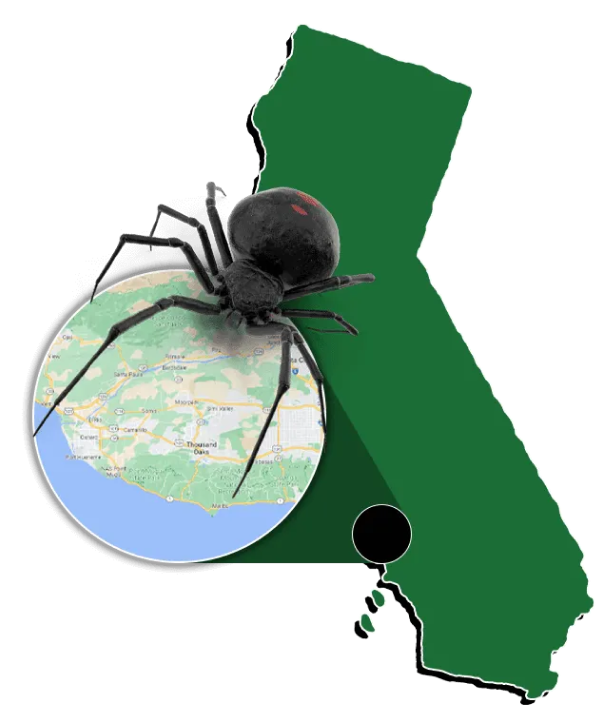


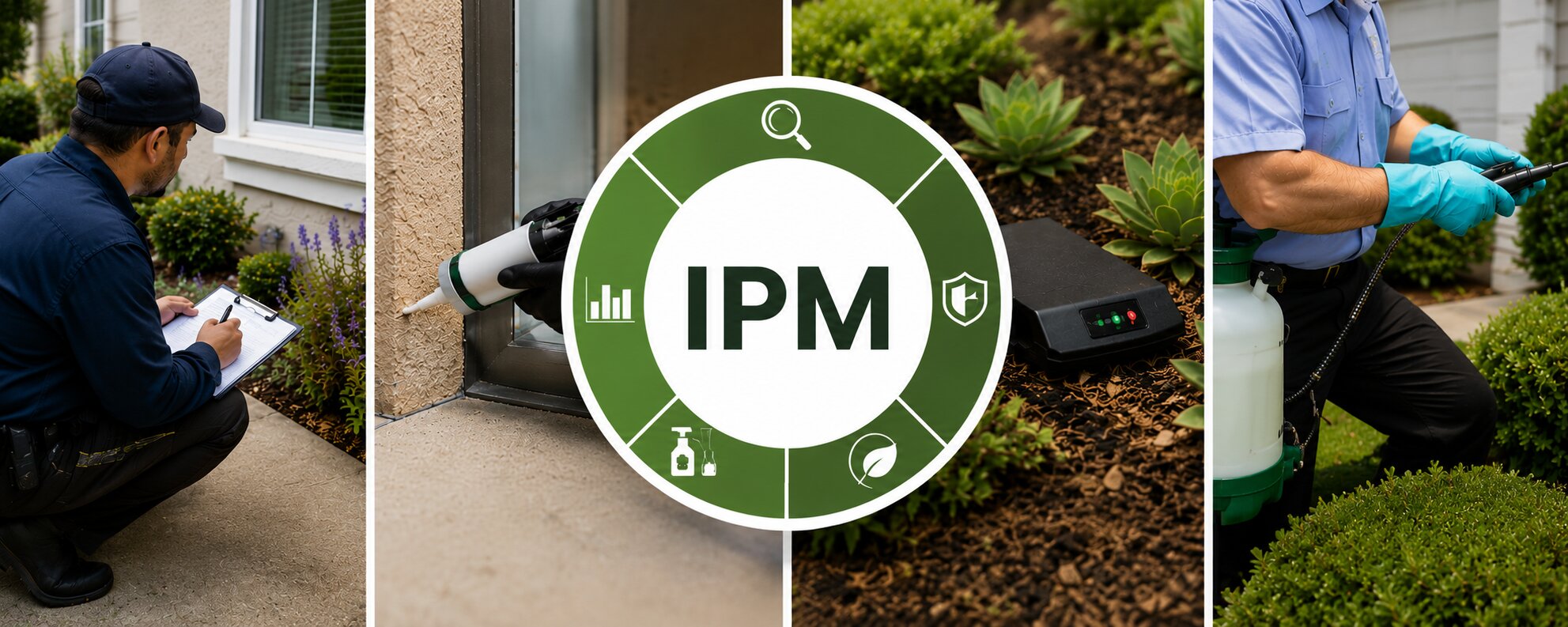

Pest control in Ventura County shouldn’t be limited to spraying a product whenever ants, rodents, spiders, or cockroaches appear. While a quick treatment may reduce visible activity, it doesn’t always address the conditions that allowed the pests to enter and thrive in the first place.
Integrated Pest Management, commonly called IPM, takes a more complete approach.
Insight Pest Management provides science-based pest control solutions for homes and businesses throughout Ventura County. Led by Associate Certified Entomologist Israel Alvarez, the company uses detailed inspections, targeted treatments, exclusion work, sanitation recommendations, and ongoing monitoring to create pest management plans that address both current problems and future risks.
For property owners in Newbury Park, Thousand Oaks, Camarillo, Simi Valley, Moorpark, Oxnard, and nearby communities, IPM offers a smarter way to control pests while reducing unnecessary pesticide applications.
What Is Integrated Pest Management?
Integrated Pest Management is a prevention-focused pest control strategy that combines several methods instead of relying on one treatment alone. The goal is to understand why pests are present, correct the conditions attracting them, and use carefully selected control methods when necessary.
An IPM program may include:
- Inspecting the property for pest activity
- Identifying the exact pest species
- Locating entry points, nesting areas, and food sources
- Improving sanitation and storage practices
- Sealing cracks, gaps, and structural openings
- Reducing moisture around the property
- Removing clutter or outdoor harborage
- Installing traps or monitoring devices
- Applying targeted pest control products
- Scheduling follow-up inspections
The process is based on observation and evidence. Instead of treating every property the same way, a pest management professional develops a plan around the building, surrounding landscape, pest pressure, and the needs of the people who use the property.
That customized approach is especially important in Southern California, where mild winters and long warm seasons allow many pests to remain active throughout much of the year.
Why Does IPM Work Well in Ventura County?
Ventura County’s climate is one of the reasons so many people enjoy living here. Unfortunately, the same comfortable temperatures that support outdoor living can also support ants, spiders, cockroaches, rodents, fleas, mosquitoes, termites, and other pests.
Periods of warm, dry weather may push insects and rodents toward homes in search of water. Rain can flood underground nests and drive pests indoors. Irrigated lawns, gardens, mulch beds, fruit trees, dense landscaping, and outdoor pet areas can also create food, moisture, and shelter close to a building.
Consider a Thousand Oaks homeowner who notices a few ants near the kitchen sink. Treating the visible ants may provide temporary relief, but the colony could be outside beneath a walkway, inside a wall void, or near an irrigation line. A dripping faucet, an unsealed utility opening, or vegetation touching the house may be helping the ants enter.
An IPM inspection looks beyond the ants on the counter. It examines the entire environment contributing to the problem.
That broader perspective helps create longer-lasting results.
How Does the Integrated Pest Management Process Begin?
Effective IPM starts with a thorough inspection.
Owner and operator Israel Alvarez brings nearly 20 years of professional pest management experience to inspections and treatment planning. As an Associate Certified Entomologist, he understands pest biology, behavior, breeding patterns, and environmental conditions. This knowledge helps the Insight team identify the source of a problem rather than relying only on what is visible during the appointment.
During an inspection, a pest control professional may examine:
- Foundations and exterior walls
- Doors, windows, vents, and utility openings
- Attics, crawl spaces, garages, and storage areas
- Kitchens, bathrooms, laundry rooms, and plumbing areas
- Rooflines and eaves
- Landscaping and irrigation systems
- Trash and recycling areas
- Food storage spaces
- Signs of droppings, nesting, gnawing, or insect damage
- Conditions that provide moisture or shelter
Accurate identification is also essential. Different ant, cockroach, termite, spider, and rodent species may require different control methods. Applying the wrong treatment or placing it in the wrong location can waste time and allow the infestation to continue.
How Does Pest Identification Improve Treatment?
Pest identification is one of the most important parts of Integrated Pest Management.
A homeowner may describe every small ant as a “sugar ant,” but several species can enter Ventura County homes. Some nest outdoors and travel inside for food. Others may establish colonies within walls, insulation, or other protected spaces. The treatment that works for one species may not be the best choice for another.
The same principle applies to rodents. Roof rats and house mice can both enter buildings, but their nesting habits, travel patterns, and preferred food sources differ. Knowing which rodent is present helps determine where traps should be placed and which openings should be sealed.
Correct identification allows the Insight team to answer several key questions:
- Where is the pest likely nesting?
- What is attracting it to the property?
- How is it entering the building?
- How quickly can the population grow?
- Which treatment will be most effective?
- What changes will help prevent another infestation?
This evidence-based process reduces guesswork and supports more precise pest control.
What Prevention Steps Are Included in IPM?
Prevention is the foundation of a strong IPM plan.
Many pest problems begin with small maintenance issues that are easy to overlook. A gap beneath a garage door may be large enough for a mouse to squeeze through. A damaged vent screen can give roof rats access to an attic. Tree branches touching the roof may function like bridges. Standing water beneath a planter can support mosquitoes, while crumbs beneath kitchen equipment can sustain cockroaches.
Depending on the property, prevention recommendations may include:
- Sealing cracks around doors and windows
- Installing or replacing door sweeps
- Repairing damaged screens
- Sealing openings around pipes and utility lines
- Trimming shrubs and tree branches away from the building
- Moving firewood away from exterior walls
- Correcting plumbing leaks
- Improving drainage
- Cleaning gutters
- Reducing excessive mulch
- Storing food in sealed containers
- Cleaning beneath appliances
- Emptying indoor and outdoor trash regularly
- Removing cardboard, debris, and unnecessary clutter
These steps may seem simple, but they can make a property much less inviting to pests.
Does IPM Eliminate the Need for Pest Control Products?
Integrated Pest Management does not necessarily eliminate pesticide use. Instead, it emphasizes using pest control products carefully, strategically, and only when they are appropriate for the situation.
A targeted treatment may be necessary when pests are actively nesting inside a structure or when an infestation poses a risk to health, safety, property, or business operations. However, the application should be based on inspection findings rather than routine guesswork.
For example, placing an ant bait along an active trail may be more useful than broadly spraying every baseboard. Installing tamper-resistant rodent stations in carefully selected exterior locations may be more effective than scattering products around a property. Treating cracks, crevices, nesting sites, and known travel routes can focus control where it is needed most.
Insight Pest Management combines professional treatment with education and prevention. Property owners learn what caused the problem, what the treatment is designed to accomplish, and what they can do to support lasting control.
How Does Monitoring Support Long-Term Pest Prevention?
Pest activity can change with the season, weather, landscaping, neighboring properties, and building conditions. Monitoring helps identify those changes before they develop into larger infestations.
Monitoring may involve:
- Checking traps and bait stations
- Inspecting for new droppings or damage
- Recording pest activity
- Evaluating seasonal trends
- Examining previously sealed entry points
- Adjusting treatment locations
- Reviewing sanitation and storage conditions
- Watching for new moisture problems
For commercial properties, documentation can be especially valuable. Restaurants, offices, warehouses, apartment communities, and other businesses may need consistent service records and clear corrective recommendations.
Rather than treating pest control as a single event, IPM turns it into an ongoing management process.
Why Is IPM Valuable for Commercial Properties?
Pest activity can create serious concerns for Ventura County businesses. A cockroach in a restaurant, rodent droppings in a storage room, or ants in a customer-facing area can affect sanitation, employee confidence, and the company’s reputation.
Commercial properties often have complex pest pressures. Deliveries may introduce insects. Shared walls can allow pests to move between units. Floor drains, kitchens, dumpsters, utility rooms, storage areas, and loading docks may create multiple risk points.
A commercial IPM plan can include:
- Scheduled inspections
- Monitoring stations
- Pest activity documentation
- Employee education
- Sanitation recommendations
- Entry-point evaluations
- Targeted treatments
- Follow-up service
- Adjustments based on changing conditions
The goal is not simply to respond after a customer or employee sees a pest. It is to establish a system that reduces the chances of pests becoming visible in the first place.
Is Integrated Pest Management Better for Families and Pets?
Many homeowners are understandably concerned about pest control treatments around children, pets, gardens, and outdoor living areas.
IPM addresses those concerns by emphasizing inspection, exclusion, sanitation, monitoring, and targeted applications. Treatments are selected according to the pest, the location, and the severity of the problem.
Property owners should still follow all preparation and safety instructions provided by their pest management professional. This might include keeping pets away from a treatment area temporarily, removing pet dishes, covering certain items, or waiting until a product has dried before returning to the space.
The advantage of IPM is that chemical treatment is only one part of the strategy. Physical repairs, environmental changes, and ongoing monitoring also contribute to control.
How Can Ventura Property Owners Support an IPM Plan?
Professional pest control is most effective when property owners participate in the prevention process.
You can support your IPM program by:
- Reporting pest activity promptly
- Avoiding over-the-counter sprays before an inspection
- Following sanitation recommendations
- Repairing leaks and moisture problems
- Keeping food and pet food sealed
- Removing clutter from garages and storage areas
- Trimming vegetation away from the structure
- Completing recommended repairs
- Allowing access to areas that need inspection
- Keeping scheduled follow-up appointments
It can also help to record where and when pests are seen. A photo, date, or description of the location may help the technician identify patterns that are not visible during the appointment.
When Should You Call a Pest Management Professional?
A single pest sighting doesn’t always mean there is a major infestation, but repeated activity should not be ignored.
Professional help may be needed when:
- Ants return shortly after being treated
- Cockroaches are seen during daylight hours
- Rodent droppings appear in cabinets, garages, or attics
- Scratching sounds come from walls or ceilings
- Termite wings or droppings appear near windows or baseboards
- Spiders and webs repeatedly return
- Mosquitoes remain active around the property
- Fleas continue biting people or pets
- Wasps or bees are nesting near an entryway
- Pest activity is affecting employees, tenants, or customers
Early intervention usually gives a pest management professional more options. It may also help prevent contamination, damage, and population growth.
Choose Smarter Pest Control for Your Ventura County Property
Integrated Pest Management offers more than a temporary response to visible pests. It combines expert identification, detailed inspections, prevention, monitoring, exclusion, education, and targeted treatments into one coordinated plan.
Founded and operated by Israel Alvarez, Insight Pest Management provides prevention-first pest control backed by scientific knowledge and local experience. Israel has been an Associate Certified Entomologist since 2013 and holds a California Pest Control Operators License. His involvement with the Pest Control Operators of California–Ventura District also helps the company remain informed about safe and effective industry practices.
Whether you are dealing with ants in a Newbury Park kitchen, rodents in a Camarillo attic, cockroaches in a commercial facility, or recurring pest activity elsewhere in Ventura County, the right solution begins with understanding the source.
Schedule your inspection with certified entomologist Israel Alvarez and the Insight team. Insight Pest Management can develop a science-backed pest control plan designed around your property, your concerns, and the pest pressures common to Southern California.