

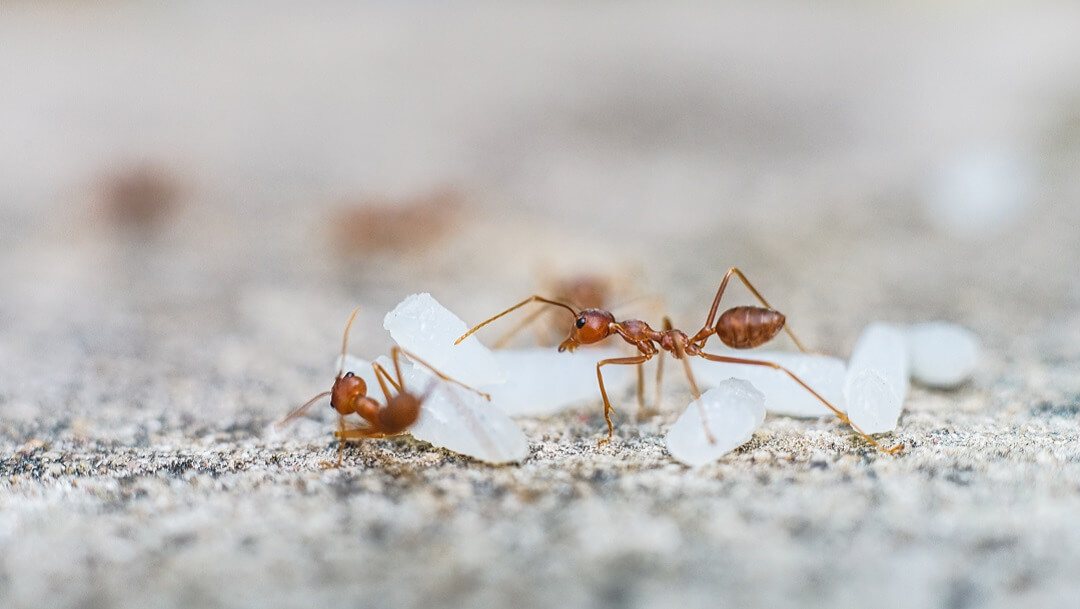

Few household pests are more frustrating than finding a trail of ants marching across your kitchen countertop. Whether they’re searching for crumbs, sugary spills, or moisture around your sink, ants can quickly become a persistent nuisance once they discover a reliable food source. While seeing a few ants may not seem like a major problem, they often indicate that a much larger colony is located nearby.
At Insight Pest Management, we help homeowners throughout Ventura County identify the source of kitchen ant infestations and develop long-term solutions—not just temporary fixes. According to Associate Certified Entomologist Israel Alvarez, eliminating the ants you can see is only part of the solution. Understanding why they’re entering your kitchen is the key to preventing them from returning.
Why Are Ants Invading My Kitchen?
Your kitchen provides nearly everything ants need to survive.
Food crumbs, sugary spills, pet food, standing water, and even tiny grease residues can attract foraging worker ants. Once one ant discovers a food source, it leaves behind a pheromone trail that guides hundreds of other workers directly to the same location.
Common reasons ants enter kitchens include:
- Accessible food crumbs
- Sweet drinks or sticky spills
- Pet food left out overnight
- Moisture around sinks or plumbing
- Easy entry through cracks or gaps
- Outdoor colonies located near the home
The sooner these attractants are removed, the easier it becomes to interrupt the colony’s food trail.
Common Kitchen Ants in Southern California
Several ant species commonly invade Ventura County homes.
Argentine Ants
Argentine ants are the most common kitchen invaders in Southern California. They form massive colonies containing multiple queens and readily invade homes searching for water and sweet foods.
Odorous House Ants
These small brown ants are attracted to sugary foods and often nest beneath flooring, inside walls, or beneath landscaping near foundations. When crushed, they produce a distinctive odor that gives them their name.
Carpenter Ants
Although carpenter ants are less commonly associated with kitchens, they may forage indoors if moisture-damaged wood or nearby nesting sites are present.
Because different species behave differently, proper identification helps determine the most effective long-term solution.
1. Eliminate Food Sources
The first step in controlling kitchen ants is removing what attracted them.
Wipe countertops daily, clean spills immediately, and vacuum crumbs beneath appliances and cabinets. Store cereals, sugar, flour, pet food, and snacks in sealed containers instead of their original packaging.
Even small amounts of food residue can support continued ant activity.
2. Remove Moisture
Many ant species need consistent access to water.
Repair leaking faucets, plumbing connections, or refrigerator water lines. Dry sinks before bedtime when possible and avoid leaving standing water in pet bowls overnight.
Reducing moisture makes your kitchen less attractive to foraging ants.
3. Disrupt Ant Trails
Ants rely on pheromone trails to guide other workers to food.
After cleaning visible ants, wipe countertops and floors using household cleaners that remove these invisible chemical trails. Simply killing the ants without cleaning the trail often allows additional workers to continue following the same route.
Pay particular attention to:
- Countertops
- Baseboards
- Window sills
- Sink areas
- Pantry shelves
4. Seal Entry Points
Ants frequently enter through tiny openings that homeowners never notice.
Inspect areas around:
- Windows
- Doors
- Plumbing penetrations
- Utility lines
- Foundation cracks
- Baseboards
Sealing these openings with caulk or other appropriate materials helps reduce future entry.
5. Keep Your Kitchen Less Attractive
Small daily habits can significantly reduce the likelihood of future infestations.
Helpful practices include:
- Empty trash regularly.
- Clean grease from stovetops.
- Avoid leaving dirty dishes overnight.
- Store ripe fruit in the refrigerator when practical.
- Sweep floors frequently.
- Keep pantry shelves clean.
These simple sanitation measures remove many of the food sources ants depend on.
6. Schedule Professional Ant Control
If ants continue returning despite your efforts, the colony itself may still be active nearby.
At Insight Pest Management, every ant service begins with a thorough inspection
. Rather than simply treating visible ants, our technicians identify the species involved, locate likely nesting areas, evaluate entry points, and determine what conditions are supporting the infestation.
Associate Certified Entomologist Israel Alvarez explains that successful ant management focuses on the colony—not just the ants currently visible in the kitchen.
Food Safety and Ant Infestations
Although ants are not generally considered as significant a health concern as cockroaches or rodents, they can still contaminate food and food preparation surfaces while searching for resources.
If ants have crawled through open food containers, it’s generally safest to discard those products. Cleaning countertops, cutting boards, and food preparation areas after ant activity also helps maintain a sanitary kitchen.
Preventing infestations not only reduces nuisance activity but also helps protect stored food from contamination.
When Should You Call a Professional?
Professional treatment is recommended when:
- Ants return repeatedly after cleaning.
- Multiple ant trails appear throughout the kitchen.
- Activity spreads to other rooms.
- Outdoor colonies seem to be entering continuously.
- DIY efforts provide only temporary relief.
Persistent infestations often indicate that the colony remains active nearby and requires a more comprehensive management approach.
Frequently Asked Questions
If the colony remains active nearby, new worker ants will continue following established pheromone trails until the food source or colony is addressed.
Food crumbs, sugary spills, grease residue, pet food, moisture, and accessible entry points commonly attract ants.
Most kitchen ants are primarily nuisance pests, but they can contaminate food and food preparation surfaces as they travel.
If ants repeatedly return despite cleaning, sealing entry points, and removing food sources, a professional inspection can identify the underlying cause of the infestation.
Argentine ants and odorous house ants are among the most common kitchen invaders throughout Ventura County.
Minor problems may be resolved through sanitation and exclusion, but recurring infestations often require professional identification of the colony and customized treatment.
Related Resources
Learn more about ant behavior and professional ant management:
Keep Your Kitchen Ant-Free
Kitchen ants rarely disappear on their own. While cleaning and removing food sources can reduce activity, long-term control often depends on identifying the colony, eliminating attractants, and preventing future entry.
At Insight Pest Management, Associate Certified Entomologist Israel Alvarez and our experienced team provide science-based ant inspections and customized treatment plans designed specifically for Ventura County homes. If ants keep returning to your kitchen, contact Insight Pest Management today to schedule a professional inspection and enjoy lasting protection for your home and family.