


Across the U.S., many gardeners face a delicate balancing act: how to control pests without harming bees and other pollinators that keep our ecosystems thriving. Whether you’re growing tomatoes, herbs, or flowering plants, maintaining a healthy garden often requires tackling garden pests like aphids, whiteflies, and caterpillars—but harsh insecticides can threaten honey bees, butterflies, and other beneficial insects.
At Insight Pest Management, we believe in helping pollinators while keeping your property bug-free. With thoughtful practices and pollinator-safe pest control, you can enjoy a vibrant garden filled with blooms, buzzing bees, and thriving plants—all without risking harm to your hive, pets, or the environment.
Let’s dig in (literally) and explore how to get your hands dirty safely with these natural and effective pest management strategies.
1. Understanding the Role of Pollinators
Before you reach for a spray, it’s important to understand how vital pollinators are to our world. Bees and butterflies transfer pollen between flowers, enabling the pollination of roughly 75% of all flowering plants and about a third of our food crops.
Without bees and other pollinators, our ecosystem would struggle to produce fruits, vegetables, and even seeds for future generations. Beyond honey bees, birds, fish, and other beneficial insects also depend on this delicate balance.
However, increasing pesticide use—especially from toxic chemicals and insecticides—has contributed to declining pollinator populations. To maintain both beauty and biodiversity, gardeners must focus on pollinator-safe pest solutions that protect without harm.
2. Identify “Bad Bugs” Versus Beneficial Insects
Not every insect in your garden is a threat. While aphids and caterpillars may feed on plants, ladybugs, bees, and birds help keep the ecosystem balanced. Recognizing the difference between bad bugs and beneficial insects allows you to target problems more precisely.
Common Pests:
- Aphids – Sap-sucking insects that distort new growth.
- Whiteflies – Tiny winged bugs that damage vegetables like tomatoes.
- Caterpillars – Leaf chewers that can defoliate plants quickly.
Beneficial Helpers:
- Bees – Essential for pollination and crop yield.
- Ladybugs – Voracious aphid eaters.
- Butterflies – Important pollinators for many flowers.
Before acting, always inspect your plants carefully. Sometimes other beneficial insects are already doing the work for you.
3. Choose Natural, Organic Pest Control Options
When possible, select organic or natural products that control pests without threatening pollinators. Options such as insecticidal soaps, neem oil, and garlic sprays can suppress garden pests while remaining safe for bees when applied properly.
A few pollinator-safe pest solutions include:
- Insecticidal soaps – Effective against soft-bodied pests like aphids and whiteflies.
- Neem oil – Derived from the neem tree; disrupts pest feeding without harming pollinators when dry.
- Diatomaceous earth – Natural powder that kills crawling insects mechanically, not chemically.
- Homemade sprays – Mixtures of soap and water or diluted vinegar can safely remove pests from leaves.
These methods are effective and environmentally friendly, reducing pesticide use and protecting pollinator populations.
4. Time Applications Wisely: Spray Early Morning or Late Evening
If you must spray, timing is everything. Honey bees and other pollinators are most active during mid-day when flowers are open and nectar is abundant. Applying insecticides during these hours increases the risk of exposure.
To safely treat your garden, apply products in the early morning or late evening when bees are in their hive and pollinators are inactive. Always follow label directions and avoid spraying directly onto blooming plants or flowers where bees may feed.
5. Attract Beneficial Insects Naturally
A pollinator-friendly garden thrives when nature’s helpers are invited in. Ladybugs, birds, and bees work together to control pests naturally.
Here’s how to attract them:
- Plant blooming plants like basil, lavender, and sunflowers that draw in bees and butterflies.
- Provide shallow water dishes or birdbaths for hydration.
- Avoid synthetic fertilizers that can disrupt soil microbes.
- Incorporate herbs like dill and basil, which serve as both culinary delights and pollinator magnets.
The goal isn’t to kill every insect, but to restore balance so garden pests never dominate.
6. Keep the Garden Clean and Balanced
Good hygiene is key to a bug-free but bee-friendly environment. Remove dead plants, fallen fruits, and excess weeds that harbor pests.
Loosen soil regularly to improve aeration and discourage burrowing insects. Keep an eye out for specific pests like aphids clustering under leaves or whiteflies near tomatoes and vegetables.
By cleaning regularly and maintaining a balanced landscape, you’ll reduce pest pressure without needing harsh chemicals.
7. Companion Planting: Let Nature Work for You
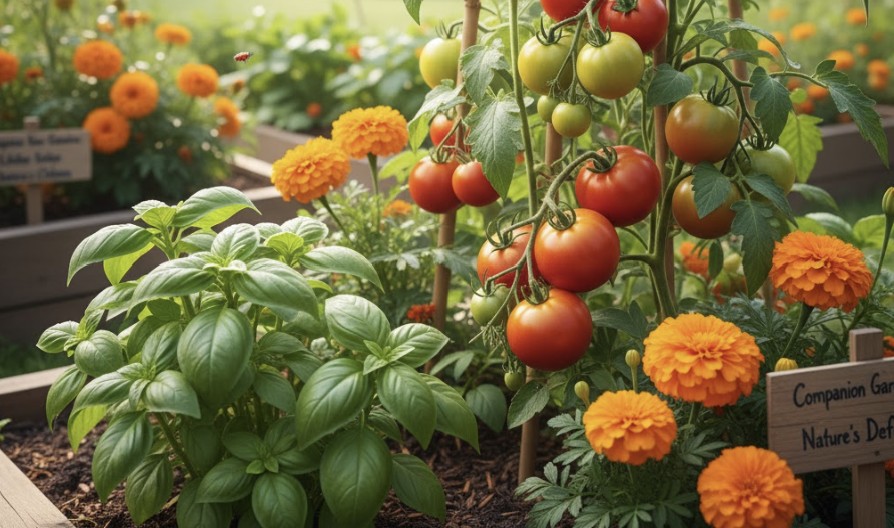
Companion planting is one of the oldest and most effective ways to deter pests naturally. Some plants emit scents or substances that repel bad bugs while attracting beneficial insects.
Try pairing:
- Tomatoes with basil to repel whiteflies.
- Marigolds near vegetables to discourage aphids.
- Lavender and rosemary to bring in bees and other pollinators.
This simple organic technique not only beautifies your garden but also enhances pollination and crop yield.
8. Provide Habitat for Pollinators
Helping pollinators means giving them safe places to nest, feed, and thrive. Create an inviting landscape by including native plants that bloom from spring through fall. The variety ensures that bees and butterflies always have access to nectar and pollen.
Other helpful tips:
- Leave a few patches of bare ground for solitary bees to burrow.
- Set up bee houses or small hives for mason bees.
- Avoid disturbing hive areas or mowing too close to flowering plants.
The goal is to support pollinator populations while keeping garden pests in check naturally.
9. Avoid Broad-Spectrum Insecticides
One of the biggest threats to bees is the use of broad-spectrum insecticides that kill indiscriminately. These chemicals can linger on plants, contaminating pollen and nectar that pollinators consume.
Whenever possible, choose targeted insecticides or biological controls that affect only specific pests. Products labeled as “bee-safe” or “low-toxicity” are better choices for sustainable pest management.
For instance, insecticidal soaps break down quickly in the environment and don’t harm bees once dry. The same goes for certain organic sprays derived from natural substances like chrysanthemum oil.
10. Consult the Professionals for Pollinator-Safe Pest Control
Sometimes, despite your best efforts, pests persist. When that happens, it’s best to contact experts trained in integrated pest management (IPM).
At Insight Pest Management, our team uses pollinator-safe pest solutions tailored to your garden, home, or landscape. We combine organic and environmentally friendly techniques to protect both your plants and pollinators.
Our approach includes:
- Identifying specific pests before treatment.
- Using non-toxic methods like traps and exclusion.
- Timing applications to avoid harming activepollinators.
- Recommending long-term tips to maintain a healthyecosystem.
By trusting professionals, you’ll enjoy a bug-free home and garden—without compromising the safety of bees and other beneficial insects.
The Bigger Picture: Building a Bee-Safe Future
Each year, declining pollinator populations remind us of the importance of mindful pesticide use and environmental protection. Bees are indicators of a healthyecosystem—when they thrive, our plants, crops, and fruits thrive too.
As gardeners and homeowners, it’s our responsibility to support pollinators while keeping pests under control. By using organic products, planting flowers, and avoiding toxic chemicals, we can create spaces where both plants and pollinators flourish side by side.
Final Buzz: Protecting Bees While Staying Pest-Free
You don’t have to choose between a beautiful garden and a safe haven for bees. With the right tools, timing, and techniques, it’s possible to stay bug-free while helping pollinators thrive.
From insecticidal soaps to natural repellents and smart planting tips, small actions can make a big difference for your local ecosystem and your home’s peace of mind.
If you’re unsure how to balance pest control with pollinator safety, let the experts at Insight Pest Management help. We specialize in safe, effective, and environmentally conscious pest solutions that protect your garden, hive, and pets.
Call (805) 628-2881 today or schedule a consultation online to learn more about pollinator-safe pest management that keeps your garden buzzing—and your home bug-free.