
'/%3E%3Cpath%20fill='%23b2b2b2'%20d='M241%20382q0%2016%2017%2026%2017%2011%2042%2011t42-11q16-11%2017-26V269H241'/%3E%3Cpath%20fill='%239f7e00'%20d='M241%20379q0%2014%208%2023%209%209%2021%209%2014%200%2021-9%209-9%209-23V269h-59'/%3E%3Cpath%20d='M241%20339v-70h59v110q0%2014-9%2023l-6%205v-68h-15v72q-8%200-14-4v-68zm59%2040c0%2022%2015%2032%2029%2032%2021%200%2030-18%2030-32v-40h-59'/%3E%3Cpath%20fill='%239f7e00'%20d='M266%20277v5h2v12h-3v-5h2v-5h-9v5h2v5h-4v9h3v18h-5v10h34v-10h-5v-18h3v-9h-4v-5h2v-5h-9v5h2v5h-3v-12h2v-5zm42%20101q0%2010%206%2017%206%206%2015%207%2010-1%2016-7%206-7%206-17v-29h-43'/%3E%3Ccircle%20fill='%230044ad'%20cx='329.5'%20cy='372'%20r='6'/%3E%3Cellipse%20fill='%230044ad'%20cx='300'%20cy='340'%20rx='16'%20ry='21'/%3E%3C/svg%3E)
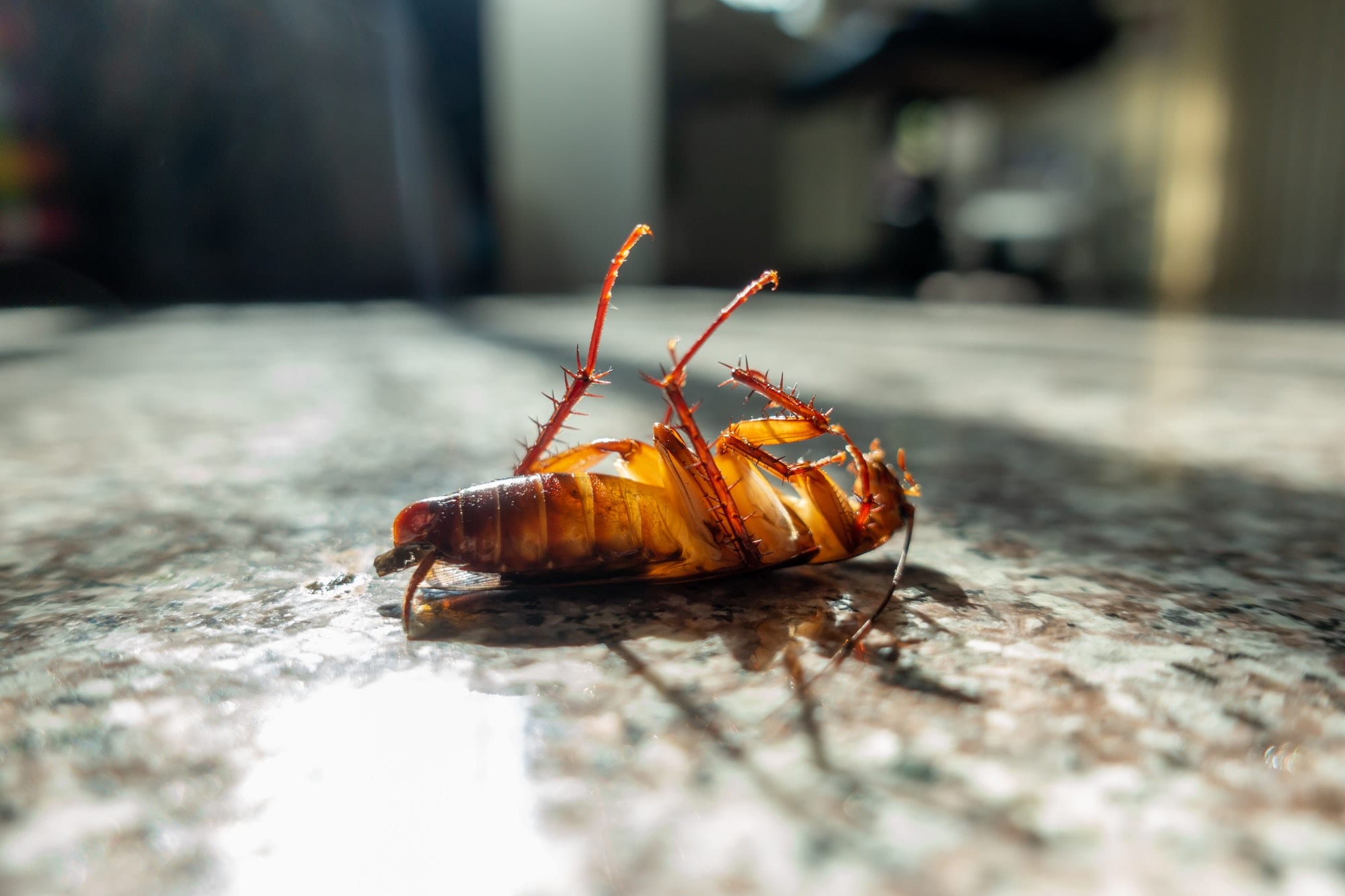

Cockroach infestations are rarely solved by spraying insecticides alone. Modern pest management relies on understanding why cockroaches are present, where they are hiding, and what conditions allow them to thrive. At Insight Pest Management, our approach begins with a thorough inspection rather than a one-size-fits-all treatment. By combining scientific knowledge with years of field experience, we develop customized solutions that address both existing cockroach populations and the conditions that allow them to survive.
Associate Certified Entomologist Israel Alvarez explains that every cockroach infestation is different. The species involved, the size of the infestation, available food and moisture sources, and the structure itself all influence the most effective treatment strategy. That is why professional cockroach control focuses on Integrated Pest Management (IPM)—a comprehensive approach that combines inspection, monitoring, sanitation, exclusion, and carefully targeted treatments to achieve long-term results.
Rather than relying on repeated pesticide applications, Integrated Pest Management seeks to eliminate the root causes of an infestation while minimizing unnecessary pesticide use whenever possible.
What Is Integrated Pest Management?
Integrated Pest Management, commonly called IPM, is a science-based pest management strategy that combines multiple control methods into one comprehensive program.
Instead of depending on insecticides as the primary solution, IPM uses a combination of inspection, monitoring, habitat modification, exclusion, sanitation, and targeted treatments to control existing infestations while reducing the likelihood of future problems.
Because cockroach species behave differently, identifying the pest before treatment begins is one of the most important parts of the entire process.
Why Cockroach Identification Comes First
Southern California is home to several cockroach species capable of invading homes and businesses. Although they may appear similar to homeowners, different species often hide in different locations, reproduce differently, and respond best to different treatment strategies.
According to Israel Alvarez, successful cockroach control begins by determining exactly which species is present. Identifying the cockroach allows technicians to understand where it is likely nesting, how it entered the structure, and which IPM strategies will provide the greatest long-term success.
Rather than treating every infestation the same way, Insight Pest Management develops recommendations based on the biology and behavior of the specific cockroach involved.
What Happens During a Professional IPM Inspection?
Every Integrated Pest Management program starts with a detailed inspection.
Rather than focusing only on where cockroaches have been seen, technicians evaluate the entire property to determine why the infestation developed.
During an inspection, technicians typically look for:
- Areas of cockroach activity
- Moisture problems and plumbing leaks
- Food and water sources
- Harborage areas where cockroaches hide
- Structural gaps and entry points
- Conditions that support continued activity
This information allows the treatment plan to address both the infestation itself and the environmental conditions contributing to it.
Monitoring the Infestation
Monitoring is one of the most valuable components of an IPM program.
Sticky monitoring traps are commonly placed in strategic locations throughout a structure. These monitors help technicians determine where cockroaches are most active, identify travel routes, and measure whether populations are increasing or declining over time.
Rather than guessing where treatments should be applied, monitoring provides objective information that helps guide treatment decisions while reducing unnecessary pesticide use.
Habitat Modification and Sanitation
Cockroaches thrive where food, water, and shelter are readily available.
Integrated Pest Management emphasizes reducing these resources whenever possible. Habitat modification may include correcting plumbing leaks, improving ventilation, reducing excess moisture, and eliminating clutter that provides hiding places.
Sanitation is equally important. Removing food residue, grease buildup, accessible garbage, and other food sources helps make the environment less favorable for cockroach survival.
These improvements not only support current treatment efforts but also reduce the likelihood of future infestations.
Exclusion Helps Prevent Future Infestations
Preventing cockroaches from entering a structure is another important component of IPM.
Exclusion involves identifying and sealing gaps, cracks, utility penetrations, and other openings that cockroaches use to enter homes and businesses.
Common exclusion measures include:
- Sealing foundation cracks
- Caulking gaps around plumbing
- Closing utility penetrations
- Repairing damaged weather stripping
- Reducing openings around doors and windows
While exclusion alone will not eliminate an active infestation, it significantly reduces opportunities for new cockroaches to enter once the existing population has been controlled.
Targeted Treatment Instead of Routine Spraying
One of the biggest differences between Integrated Pest Management and traditional pest control is how treatments are applied.
Rather than applying insecticides broadly throughout a structure, IPM uses targeted treatments only where they are needed.
Depending on the infestation, professionals may utilize carefully selected bait products, insect growth regulators, or other targeted materials that are appropriate for the species and conditions identified during the inspection.
This focused approach helps maximize effectiveness while minimizing unnecessary pesticide applications.
Why Follow-Up Visits Matter
Cockroach control is rarely a one-time event.
Follow-up visits allow technicians to evaluate monitoring devices, inspect previously active areas, and determine whether additional adjustments are necessary.
Because cockroach populations change over time, follow-up inspections help confirm that treatments are working as expected and that environmental improvements continue supporting long-term control.
Israel Alvarez emphasizes that successful IPM programs involve ongoing evaluation rather than assuming the problem has been solved after a single service.
Long-Term Prevention
The ultimate goal of Integrated Pest Management is long-term prevention.
After active cockroach populations have been reduced, continued monitoring, moisture control, sanitation improvements, and exclusion measures help maintain an environment that is less attractive to future infestations.
Regular inspections can also identify new concerns before they develop into larger problems, allowing homeowners to address issues proactively rather than reactively.
This preventative philosophy is one of the reasons IPM has become the preferred approach for professional cockroach management.
Why Integrated Pest Management Is More Effective
Integrated Pest Management works because it addresses the entire infestation—not just the visible cockroaches.
Rather than relying solely on repeated pesticide applications, IPM combines inspection, species identification, monitoring, sanitation, habitat modification, exclusion, targeted treatments, and follow-up evaluations into one coordinated strategy.
By understanding why cockroaches are present and correcting the conditions supporting them, pest management professionals can often achieve more reliable and longer-lasting results than routine spraying alone.
Frequently Asked Questions
Integrated Pest Management is a science-based approach that combines inspection, monitoring, sanitation, exclusion, habitat modification, and targeted treatments to control pests while minimizing unnecessary pesticide use.
Different cockroach species behave differently and often require different treatment strategies. Identifying the species helps technicians develop a customized management plan.
A professional inspection evaluates cockroach activity, moisture issues, food sources, hiding places, entry points, and other conditions contributing to the infestation before treatment recommendations are made.
Monitoring devices help identify where cockroaches are active, track population changes, and measure treatment success throughout the IPM process.
Not always. IPM may include targeted pesticide applications when appropriate, but they are only one part of a broader strategy that emphasizes inspection, prevention, and long-term management.
Follow-up visits allow technicians to evaluate treatment results, inspect monitoring devices, identify new activity, and make adjustments that help ensure lasting control.
Experience the Benefits of Science-Based Cockroach Control
Successful cockroach management requires much more than simply spraying insecticides. By combining inspection, monitoring, sanitation, exclusion, targeted treatments, and ongoing evaluation, Integrated Pest Management addresses both the infestation and the conditions that allowed it to develop in the first place.
At Insight Pest Management, Associate Certified Entomologist Israel Alvarez and our experienced team use a customized, inspection-first approach to help homeowners and businesses throughout Ventura County achieve long-term cockroach control. If you’re dealing with recurring cockroach activity, contact Insight Pest Management today to schedule a professional inspection and learn how Integrated Pest Management can provide a smarter, more effective solution.