
'/%3E%3Cpath%20fill='%23b2b2b2'%20d='M241%20382q0%2016%2017%2026%2017%2011%2042%2011t42-11q16-11%2017-26V269H241'/%3E%3Cpath%20fill='%239f7e00'%20d='M241%20379q0%2014%208%2023%209%209%2021%209%2014%200%2021-9%209-9%209-23V269h-59'/%3E%3Cpath%20d='M241%20339v-70h59v110q0%2014-9%2023l-6%205v-68h-15v72q-8%200-14-4v-68zm59%2040c0%2022%2015%2032%2029%2032%2021%200%2030-18%2030-32v-40h-59'/%3E%3Cpath%20fill='%239f7e00'%20d='M266%20277v5h2v12h-3v-5h2v-5h-9v5h2v5h-4v9h3v18h-5v10h34v-10h-5v-18h3v-9h-4v-5h2v-5h-9v5h2v5h-3v-12h2v-5zm42%20101q0%2010%206%2017%206%206%2015%207%2010-1%2016-7%206-7%206-17v-29h-43'/%3E%3Ccircle%20fill='%230044ad'%20cx='329.5'%20cy='372'%20r='6'/%3E%3Cellipse%20fill='%230044ad'%20cx='300'%20cy='340'%20rx='16'%20ry='21'/%3E%3C/svg%3E)

Not all cockroach infestations are the same. While German cockroaches and brown-banded cockroaches are two of the few cockroach species that spend nearly their entire lives indoors, they behave very differently once they establish themselves inside a home or business. Understanding those differences is essential because the species involved often determines where cockroaches hide, how quickly infestations grow, and which Integrated Pest Management (IPM) strategies provide the best long-term results.
At Insight Pest Management, every cockroach service begins with proper identification. Associate Certified Entomologist Israel Alvarez explains that many homeowners assume all cockroaches behave the same way, but German and brown-banded cockroaches occupy different areas of a structure, respond differently to environmental conditions, and require customized treatment plans. Identifying the species is the first step toward eliminating the infestation efficiently.
German Cockroach vs. Brown-Banded Cockroach at a Glance
| Characteristic | German Cockroach | Brown-Banded Cockroach |
| Adult Size | ½–⅝ inch | About ½ inch |
| Color | Light brown with two dark stripes behind the head | Light brown with two pale bands across wings |
| Preferred Habitat | Warm, humid kitchens and bathrooms | Warm, dry upper areas of homes |
| Moisture Needs | High | Moderate |
| Common Indoor Locations | Under sinks, behind appliances, cabinets | Closets, furniture, electronics, ceilings |
| Egg Case | Carried by female until hatching | Attached to hidden surfaces before hatching |
| Primary Food Sources | Human food and food residue | Food, paper, glue, fabrics, starches |
| Most Common in Homes | Very common | Less common but widespread |
Why These Two Cockroach Species Are Often Confused
German and brown-banded cockroaches are similar in size, which often leads homeowners to mistake one for the other. Both species spend almost their entire lives indoors and reproduce quickly, making them persistent household pests.
Despite these similarities, their preferred environments are almost opposite.
German cockroaches seek moisture and are closely associated with kitchens, bathrooms, and food preparation areas. Brown-banded cockroaches tolerate much drier conditions and commonly establish harborages throughout the home, especially in elevated locations.
Understanding these behavioral differences helps explain why infestations often appear in completely different parts of a house.
Identifying German Cockroaches
German cockroaches are the most common indoor cockroach pests in Southern California.
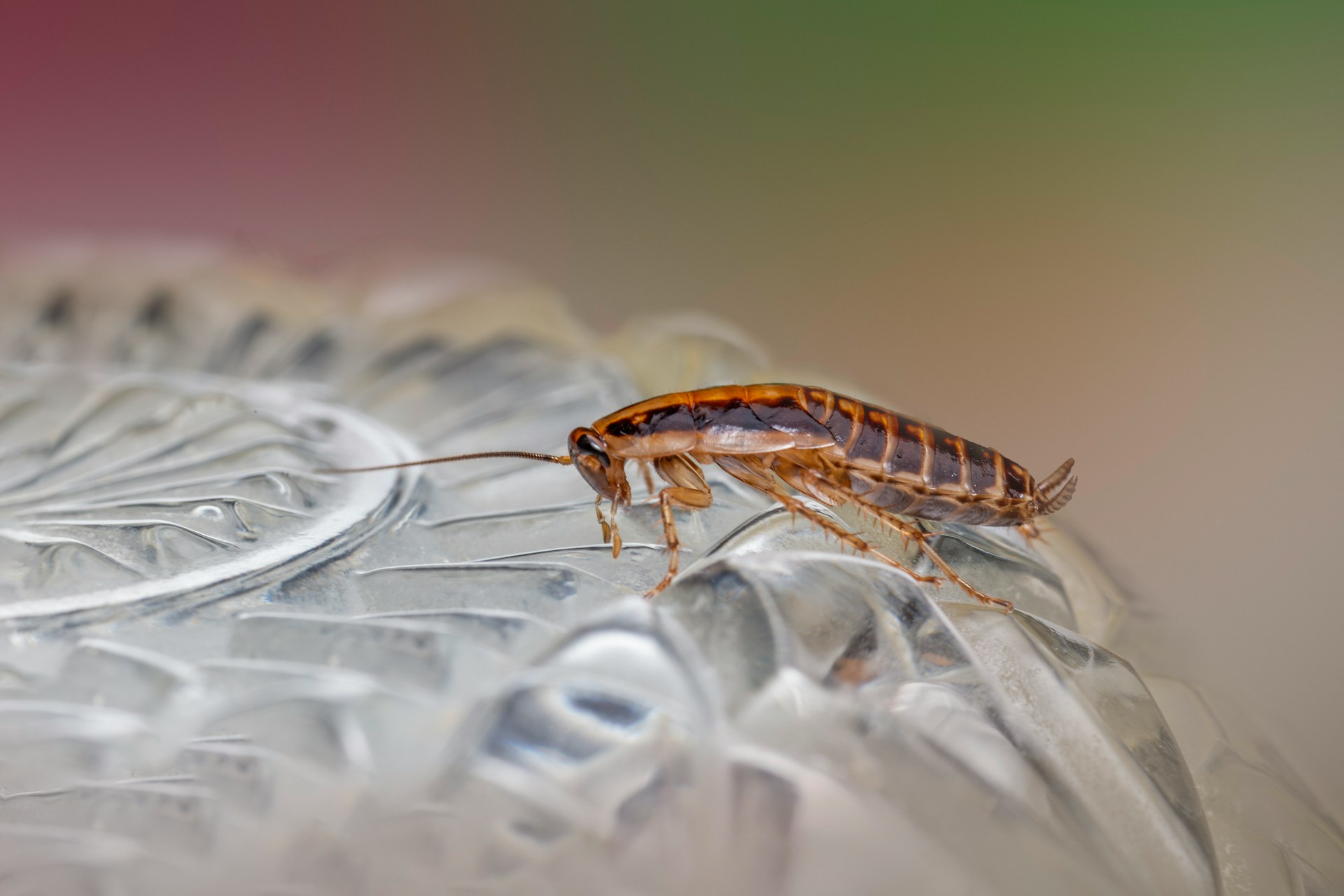
Adults are light tan to brown and can be identified by two dark, parallel stripes running from the head toward the wings. They are relatively small but reproduce extremely quickly, allowing infestations to grow rapidly if left untreated.
Common Hiding Places
German cockroaches typically hide:
- Behind refrigerators
- Beneath dishwashers
- Under sinks
- Inside kitchen cabinets
- Around plumbing penetrations
- Inside wall voids
- Near water heaters
Because they depend heavily on moisture, they usually remain close to kitchens, bathrooms, and utility rooms.
Identifying Brown-Banded Cockroaches
Brown-banded cockroaches are less dependent on moisture than German cockroaches, allowing them to spread throughout an entire structure.
Adults are light brown with two lighter-colored horizontal bands crossing their wings and abdomen, giving the species its common name.
Unlike German cockroaches, they frequently establish harborages well above floor level.
Common Hiding Places
Brown-banded cockroaches are often found:
- Behind picture frames
- Inside closets
- On bookshelves
- Behind wall decorations
- Inside furniture
- Around televisions and electronics
- Near ceilings
- Inside upper cabinets
Because they prefer warmer, drier conditions, homeowners often discover them in bedrooms, living rooms, offices, and storage areas rather than kitchens.
Habitat Preferences
One of the biggest differences between these two species is where they choose to live.
German cockroaches require consistent access to moisture. Even small plumbing leaks, condensation around appliances, or damp cabinets create ideal conditions for their survival.
Brown-banded cockroaches, however, can thrive in much drier environments. They commonly infest rooms with little plumbing, allowing them to spread farther throughout a home.
According to Associate Certified Entomologist Israel Alvarez, identifying where cockroaches are being found often provides important clues about which species is present before a detailed inspection even begins.
Reproduction and Colony Growth
Both species reproduce quickly, but they protect their eggs differently.
Female German cockroaches carry their egg capsule until just before the eggs hatch. This behavior helps protect developing young and contributes to the species’ remarkable reproductive success.
Brown-banded cockroaches deposit their egg capsules beneath furniture, cabinets, shelves, and other protected surfaces several weeks before hatching.
These different reproductive behaviors influence where technicians search during inspections and monitoring.
Feeding Habits
German cockroaches strongly prefer human food sources. Grease, crumbs, food residue, pet food, and spilled beverages all support growing populations.
Brown-banded cockroaches have a more varied diet.
In addition to food products, they may feed on:
- Paper products
- Book bindings
- Wallpaper paste
- Fabrics
- Starches
- Glue
This broader diet allows them to survive in rooms where little food is available.
Health Risks
Both German and brown-banded cockroaches can contaminate surfaces as they travel throughout a structure.
Cockroach allergens—including shed skins, saliva, and droppings—may contribute to allergy and asthma symptoms, particularly among sensitive individuals and children.
Because German cockroaches frequently occupy kitchens and food preparation areas, they are often associated with a greater potential for food contamination.
Brown-banded cockroaches create similar sanitation concerns but are more likely to contaminate personal belongings, furniture, and storage areas due to their wider distribution throughout the home.
Why Correct Identification Matters
Although both species require professional attention, successful management begins with identifying the correct cockroach.
German cockroach infestations often concentrate around kitchens and plumbing fixtures where moisture is abundant.
Brown-banded cockroach infestations require technicians to inspect higher, drier locations that may otherwise be overlooked.
This is why Insight Pest Management begins every cockroach service with a thorough inspection rather than applying the same treatment to every infestation.
Professional Treatment Through Integrated Pest Management
Integrated Pest Management (IPM) provides a customized approach that addresses each infestation based on the species involved.
An IPM program may include:
- Comprehensive inspection
- Species identification
- Sticky monitoring devices
- Habitat modification
- Exclusion of entry points
- Sanitation recommendations
- Targeted bait placements
- Follow-up monitoring
Rather than relying on routine pesticide applications alone, IPM focuses on correcting the environmental conditions supporting cockroach activity while using carefully targeted treatments where appropriate.
Preventing Future Cockroach Problems
Long-term cockroach prevention begins by making the home less attractive to both species.
Helpful prevention measures include:
- Repair plumbing leaks promptly.
- Store food in sealed containers.
- Clean food residue from kitchens regularly.
- Reduce clutter that creates hiding places.
- Seal cracks around plumbing and utility penetrations.
- Eliminate excess moisture whenever possible.
Routine inspections also allow potential infestations to be identified before populations become established.
Related Reading:
- How Pest Control Professionals Control Cockroach Pests With Integrated Pest Management
- Are Cockroaches Dangerous?
- Cockroach Control Services in Ventura County
Frequently Asked Questions
German cockroaches prefer warm, humid environments like kitchens and bathrooms, while brown-banded cockroaches prefer warmer, drier areas throughout the home.
German cockroaches are generally the most common indoor cockroach pest encountered in Southern California.
Like other cockroach species, brown-banded cockroaches can contaminate surfaces and contribute to indoor allergens, although they rarely bite people.
Unlike German cockroaches, brown-banded cockroaches prefer elevated, warm, dry locations such as shelves, closets, picture frames, and upper cabinets.
Yes. Although uncommon, both species can infest the same structure if suitable food, shelter, and environmental conditions are available.
Different cockroach species behave differently and occupy different areas of a structure. Correct identification allows pest management professionals to develop the most effective treatment strategy.
Let Insight Pest Management Identify the Problem
German and brown-banded cockroaches may both live indoors, but their behavior, hiding places, and colony development differ significantly. Identifying which species is present is one of the most important steps toward effective long-term control.
At Insight Pest Management, Associate Certified Entomologist Israel Alvarez and our experienced team use detailed inspections and Integrated Pest Management strategies to accurately identify cockroach species and develop customized treatment plans. If you’ve discovered cockroaches in your Ventura County home, contact Insight Pest Management today to schedule a professional inspection and receive a science-based solution tailored to your infestation.