
'/%3E%3Cpath%20fill='%23b2b2b2'%20d='M241%20382q0%2016%2017%2026%2017%2011%2042%2011t42-11q16-11%2017-26V269H241'/%3E%3Cpath%20fill='%239f7e00'%20d='M241%20379q0%2014%208%2023%209%209%2021%209%2014%200%2021-9%209-9%209-23V269h-59'/%3E%3Cpath%20d='M241%20339v-70h59v110q0%2014-9%2023l-6%205v-68h-15v72q-8%200-14-4v-68zm59%2040c0%2022%2015%2032%2029%2032%2021%200%2030-18%2030-32v-40h-59'/%3E%3Cpath%20fill='%239f7e00'%20d='M266%20277v5h2v12h-3v-5h2v-5h-9v5h2v5h-4v9h3v18h-5v10h34v-10h-5v-18h3v-9h-4v-5h2v-5h-9v5h2v5h-3v-12h2v-5zm42%20101q0%2010%206%2017%206%206%2015%207%2010-1%2016-7%206-7%206-17v-29h-43'/%3E%3Ccircle%20fill='%230044ad'%20cx='329.5'%20cy='372'%20r='6'/%3E%3Cellipse%20fill='%230044ad'%20cx='300'%20cy='340'%20rx='16'%20ry='21'/%3E%3C/svg%3E)
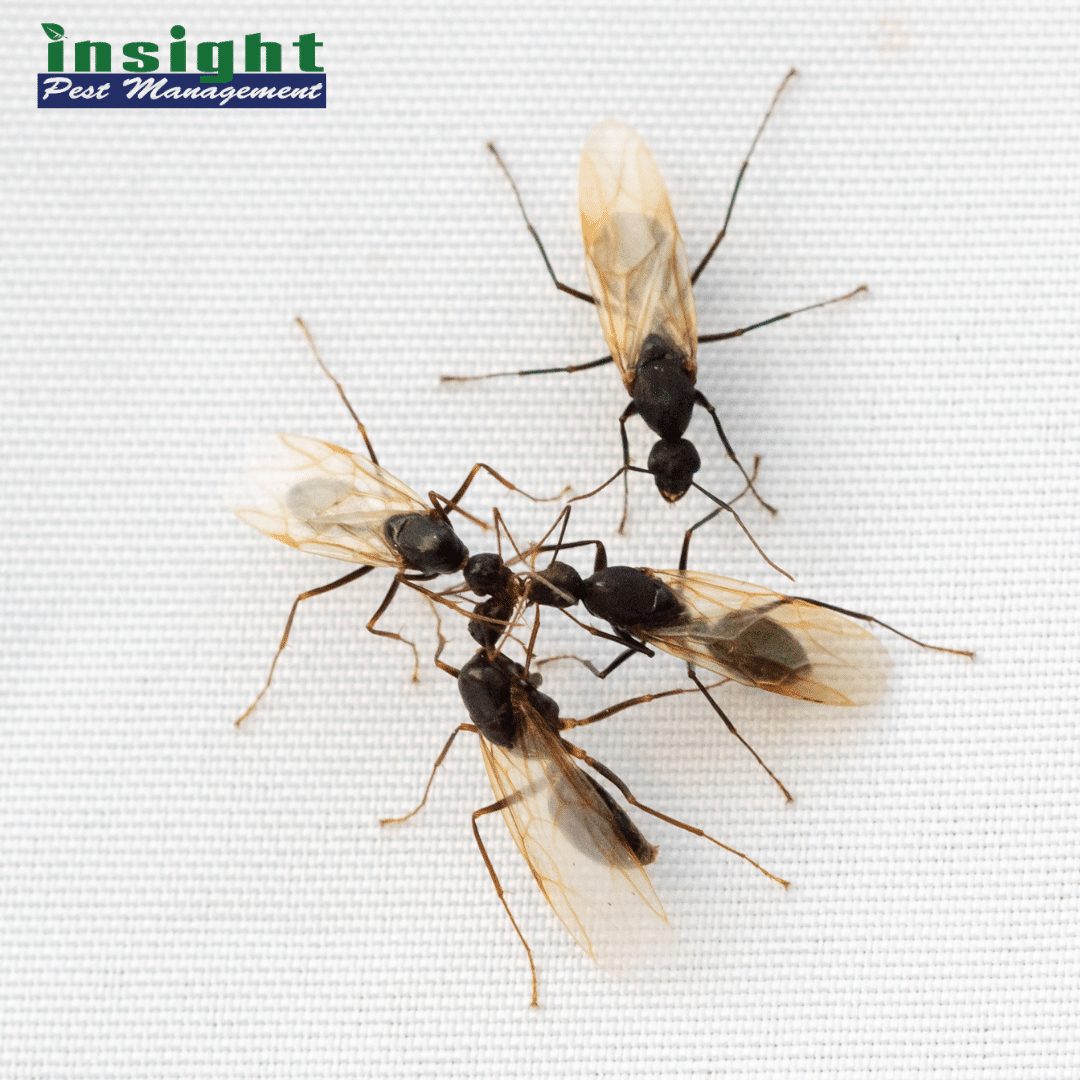

Some ants have wings, but most of the ants you see do not. Winged ants are usually reproductive males and females produced by a mature colony. Their purpose is to leave the nest, mate, and potentially establish new colonies.
Worker ants—the ants commonly seen traveling in trails, collecting food, or entering kitchens—are wingless. Queens and males develop wings for a reproductive event known as a nuptial flight or swarm. After mating, a successful female typically sheds her wings and searches for a suitable nesting site.
Seeing a few flying ants outdoors can be a normal seasonal event. Finding a large number emerging inside your home may indicate an ant colony nesting within or close to the structure.
Why Do Some Ants Have Wings?
An ant colony contains different groups, or castes, that perform specialized jobs.
These generally include:
- Queens: Reproductive females responsible for laying eggs
- Males: Reproductive ants whose primary role is mating
- Workers: Wingless females that forage, maintain the nest, and care for developing ants
- Soldiers: Larger workers present in some species
When an established colony has sufficient resources, it may produce winged reproductive ants called alates. These ants leave the original nest to mate with reproductive ants from other colonies.
The wings allow them to travel beyond the immediate nesting area, helping disperse the population and reduce close breeding within a single colony.
What Is an Ant Swarm?
An ant swarm occurs when winged males and females leave one or more colonies around the same time. The flight may last for a relatively short period, but the sudden appearance of many insects makes it highly noticeable.
Swarming often occurs when environmental conditions favor survival, such as after changes in temperature, humidity, or rainfall. The timing varies by ant species and local conditions.
A Southern California homeowner may notice winged ants around windows, patio doors, outdoor lights, or sun-warmed walls. Some swarmers land quickly, while others collect near bright areas.
The event can look alarming, but the location of the swarm tells you more than the number of insects alone.
What Happens After Flying Ants Mate?
After mating, males generally die. A successfully mated female lands, removes or loses her wings, and searches for a protected place to begin a colony.
She may shelter in soil, wood, a wall void, beneath a stone, or another site appropriate for her species. If she survives and the location provides favorable conditions, she lays eggs and raises the colony’s first workers.
Colony development takes time. The swarmers seen today didn’t come from a nest established yesterday. A large indoor emergence can therefore indicate that ants have occupied a concealed area long enough to produce reproductive members.
Are All Winged Ants Queens?
No. A swarm contains both reproductive males and females.
Males and future queens can differ in size and body structure, but those differences aren’t always easy to see without magnification and species knowledge. A larger winged ant may be a female reproductive, but size alone shouldn’t be used for identification.
Not every female successfully starts a colony. Many swarmers are eaten by predators, exposed to unsuitable conditions, or unable to locate an appropriate nesting site.
Are Flying Ants Dangerous?
Flying ants aren’t automatically more dangerous than wingless workers. Wings indicate a reproductive role, not an increased desire to attack people.
Whether an ant can bite or sting depends on its species. Some ants have defensive behaviors capable of causing discomfort, while others pose little direct risk.
The larger concern is what their presence may reveal:
- A mature ant colony near the building
- Moisture-damaged wood
- Openings around windows or doors
- A colony inside a wall, attic, or crawl space
- An insect that has been mistaken for a termite
Avoid handling unidentified ants with bare hands. If identification matters, photograph or collect a specimen safely in a sealed container.
Flying Ants vs. Termites
Winged ants and termite swarmers are easily confused. Both may emerge in large numbers, gather near windows, and shed their wings after a flight.
However, ants and termites are different insects that require different treatment strategies.
| Characteristic | Winged ant | Winged termite |
| Antennae | Elbowed or bent | Relatively straight |
| Waist | Narrow and pinched | Broad, without a distinct pinch |
| Front and rear wings | Front wings longer than rear wings | Four wings approximately equal in length |
| Wing veins | Usually less dense and visible | Often more numerous |
| Body shape | Clearly segmented | More uniformly shaped |
The University of California Statewide Integrated Pest Management Program recommends comparing the insect’s abdomen, wings, and antennae when distinguishing ants from termites. UC IPM identification guide
Don’t rely on color alone. Both ants and termites can appear dark when they’re in their reproductive stage.
Why Correct Identification Matters
Ant and termite management aren’t interchangeable.
Ants generally don’t consume wood. Carpenter ants excavate galleries in wood to create nesting space, but they feed on insects and various food sources rather than digesting the wood itself.
Termites consume cellulose and may damage structural lumber and other wood components. Their presence can require specialized inspection and treatment.
A pile of discarded wings near a window could come from either pest. The wings should be examined with the insects and surrounding evidence rather than used alone for identification.
What Does It Mean When Flying Ants Are Inside?
The answer depends on the number of ants, where they appeared, and whether the event repeats.
One or Two Flying Ants
A small number may have flown through an open window or door, especially during an outdoor swarm. Check screens and weatherstripping, but an isolated sighting doesn’t confirm an indoor colony.
Many Flying Ants Near a Window
Swarmers are attracted to light, so ants emerging from an indoor nest may gather at windows while trying to escape. Look for activity around trim, wall gaps, baseboards, and nearby light fixtures.
Ants Emerging From a Wall or Ceiling
This is stronger evidence of a concealed colony. Do not simply seal the visible opening while ants are active. They may find another route into the room.
Repeated Swarms
Multiple indoor swarms or recurring activity in the same location should be inspected. They may indicate an established nest within the structure or immediately outside it.
Where Might the Colony Be Located?
Ant nests can occur in many locations, depending on the species.
Possible sites include:
- Soil beside the foundation
- Wall voids
- Window and door frames
- Attics
- Crawl spaces
- Beneath concrete slabs
- Potted plants
- Tree cavities
- Moist or damaged wood
- Landscape timbers
- Spaces beneath rocks or pavement
- Areas around plumbing leaks
Following worker trails may help reveal where ants enter, but the visible route doesn’t always lead directly to the main colony. Some ant species maintain multiple connected nesting sites.
Why Are Flying Ants Appearing After Rain?
Changes in soil moisture, temperature, and humidity can trigger reproductive activity in some ant species. Rain may also alter outdoor nesting conditions or encourage ants to move toward drier shelter.
Ventura County’s weather can produce noticeable shifts in pest activity. A warm period after rain may bring swarmers into view around landscapes, patios, and structures.
Rain itself doesn’t create an ant colony. It may simply produce favorable conditions for a mature colony to release the reproductive ants it has already developed.
Do Flying Ants Lose Their Wings?
Yes. Mated female ants typically shed their wings before attempting to establish a nest. Small scars may remain where the wings were attached.
Discarded wings don’t necessarily mean a queen successfully founded a colony in that exact location. However, clusters of wings indoors—especially with live insects—warrant closer inspection.
Males generally have a much shorter adult life and do not start colonies.
Are Flying Ants Carpenter Ants?
Some winged ants are carpenter ant reproductives, but many belong to other species. It’s not accurate to identify every large flying ant as a carpenter ant.
Carpenter ants are often associated with wood affected by moisture, although they can use other suitable sites. Evidence may include:
- Large ants traveling indoors
- Coarse material pushed from a nesting opening
- Activity around damp wood
- Ant trails at night
- Winged ants emerging from a wooden area
- Sounds within a quiet wall in severe cases
Because carpenter ants and termite swarmers may both appear near wood, professional identification helps prevent the wrong treatment from being applied.
How to Prevent Flying Ants Indoors
You cannot prevent every outdoor ant swarm, but you can make it harder for ants to enter and establish colonies in the building.
Seal Exterior Openings
Repair damaged screens and close gaps around doors, windows, utility lines, siding, and the foundation.
Correct Moisture Problems
Fix plumbing, roof, irrigation, and drainage leaks. Replace or repair moisture-damaged wood where needed.
Trim Vegetation
Keep branches and shrubs from touching the structure. Ants can use vegetation as a bridge to roofs, windows, and upper walls.
Store Food Properly
Keep pantry goods, pet food, and sweets in sealed containers. Wipe up spills and remove crumbs.
Manage Outdoor Food Sources
Clean barbecue areas, secure garbage, remove fallen fruit, and avoid leaving pet food outside.
Watch Ant Trails
A trail of workers may reveal an entry point or food source. Avoid spraying the visible ants immediately if doing so will make it harder to determine where they’re traveling.
Should You Spray Flying Ants?
Killing visible swarmers may remove the insects in the room, but it doesn’t necessarily reach the colony that produced them.
Repellent sprays can also scatter some ant populations or disrupt trails without solving the underlying problem. The best treatment depends on the species, nest location, and extent of activity.
An inspection provides the information needed to choose targeted baits, exclusion, moisture correction, exterior treatment, or another appropriate method.
If termites haven’t been ruled out, accurate identification should come before treatment.
What to Do When You Find Flying Ants
Take a few simple steps:
- Photograph the insects from several angles.
- Save an intact specimen if it can be collected safely.
- Note where and when they appeared.
- Look for discarded wings.
- Check for nearby worker trails.
- Avoid sealing an active emergence point.
- Schedule an inspection if activity is heavy or recurring.
Vacuuming visible insects can provide short-term cleanup. Empty the vacuum afterward and continue monitoring the area.
Frequently Asked Questions About Flying Ants
A swarm may last only a short time, but repeated indoor activity can indicate a nearby colony.
Not always. A few may enter from outside, but many emerging indoors can indicate a hidden colony.
Mature colonies release reproductive ants when temperature, moisture, and other conditions are favorable.
Most ants do not damage wood, but carpenter ants can excavate wood to create nesting areas.
Consider an inspection when large numbers appear indoors, swarms keep returning, or ants emerge from walls or ceilings.
Professional Ant Identification and Control
Insight Pest Management provides residential and commercial ant control throughout Ventura County and surrounding Southern California communities.
Led by Associate Certified Entomologist Israel Alvarez, the Insight team identifies the insect involved, examines nesting conditions and entry routes, and recommends a targeted plan. Israel brings nearly 20 years of hands-on pest management experience to solving local ant problems.
Professional service may include:
- Species identification
- Interior and exterior inspection
- Nest and trail evaluation
- Moisture and sanitation recommendations
- Targeted treatment
- Entry-point guidance
- Follow-up monitoring
If winged insects are emerging indoors, guessing whether they’re ants or termites can delay the correct response. Schedule an inspection with Insight Pest Management for science-based identification and a prevention-focused treatment plan.
Insight Pest Management serves Newbury Park, Thousand Oaks, Camarillo, Simi Valley, Moorpark, Oxnard, Westlake Village, Chatsworth, Winnetka, Calabasas, Sherman Oaks, Wood Ranch, Malibu, Porter Ranch, Simi Valley, Ventura and nearby communities.